


BEDFORD — The Indiana Court of Appeals reversed one of Lawrence County’s most high-profile murder cases, reopening the post-conviction legal battle for a man serving more than six decades behind bars.
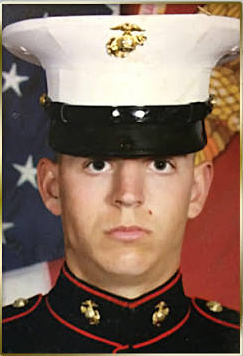
Evan J. Schaffer, who was convicted of murder and sentenced to 63.5 years in prison for the April 2017 shooting death of 25-year-old U.S. Marine Veteran Justin Lampkins in a Bedford McDonald’s drive-thru, has successfully won an appeal in his Post-Conviction Relief (PCR) petition.
Indiana Court of Appeals Overturns Trial Court Denial
The Indiana Court of Appeals issued a certified opinion reversing Lawrence Superior Court 1 Judge John M. Plummer III’s previous denial of Schaffer’s PCR petition (Case No. 25A-PC-01682).
In the 16-page opinion authored by Judge Felix (with Judges May and Mathias concurring), the appellate court determined that Schaffer was denied a fair, impartial post-conviction hearing due to judicial conduct that breached the court’s duty of neutrality.
The appellate ruling highlighted several key issues with the lower court’s handling of the hearing:
- Judicial Partiality & Threats: During the evidentiary hearing, the PCR court questioned Schaffer’s trial attorneys about their “duty to report” one another to the Indiana Supreme Court Disciplinary Commission for alleged trial errors. The court repeatedly interrupted defense counsel’s objections, appeared defensive, and implicitly threatened disciplinary referrals, which created a chilling effect on the proceedings and gave the impression of acting as an advocate for the State.
- Prejudging Attorney Credibility: The appellate court noted that the PCR judge made improper comments before hearing evidence, suggesting that experienced trial counsel would not make mistakes and was merely “throwing himself under the bus” to secure a retrial.
- Procedural Errors on Self-Defense Claims: The trial court had previously summarily dismissed Schaffer’s claims regarding improper self-defense jury instructions on the grounds of “harmless error.” The Court of Appeals ruled this was error, stating Schaffer was statutorily entitled to a full evidentiary hearing on those ineffective assistance of counsel claims regardless of the perceived likelihood of success on the merits.
As a result, the Court of Appeals reversed the denial and remanded the case back to Lawrence County with instructions to conduct a brand-new evidentiary hearing.
Timeline: Change of Judge Officially Granted
Following the certified decision from the higher court, developments unfolded quickly in Lawrence Superior Court 1:
- May 14, 2026: The Indiana Court of Appeals issues its opinion reversing the PCR denial and remanding for a new evidentiary hearing.
- July 13, 2026: Lawrence Superior Court 1 formally receives the certified appellate decision and schedules a new PCR hearing for July 28, 2026.
- July 20, 2026: Schaffer’s defense attorney, Stacy R. Uliana, files a Verified Motion for Change of Judge.
- July 21, 2026: The motion is officially granted. Judge John M. Plummer III is removed from presiding over the matter, and Special Judge Robert R. Cline is assigned to assume control of the case.
Background: The 2017 Drive-Thru Shooting
The charges stem from a fatal altercation around 1:00 a.m. on April 23, 2017, at the McDonald’s drive-thru in Bedford. According to court documents, after someone honked a horn in line, Schaffer exited his vehicle, approached Justin Lampkins’s truck, and struck him through the open window.
The incident escalated when Schaffer pulled a handgun. Lampkins exited his truck holding a “tire-knocker” club, placed his hand on Schaffer’s neck, and pushed him back. Schaffer then drew his pistol and shot Lampkins once in the chest. Lampkins died from the gunshot wound, and Schaffer fled before being apprehended shortly after by police.
At his 2018 trial, where Schaffer was represented by defense attorneys David Shircliff, Jennifer Shircliff, and Bruce Andis, a Lawrence County jury rejected self-defense arguments. Schaffer was convicted of murder, pointing a firearm (Level 6 felony), carrying a handgun without a license (Class A misdemeanor), and battery (Class B misdemeanor). He was sentenced to 63.5 years in the Indiana Department of Correction, a conviction that was initially affirmed on direct appeal in 2020.
What Happens Next?
Post-Conviction Relief is a specialized civil proceeding that allows convicted individuals to challenge their convictions or sentences on constitutional grounds, such as ineffective assistance of trial or appellate counsel.
With the Court of Appeals vacating the previous denial and Special Judge Robert R. Cline taking over the bench, Schaffer’s petition to challenge his murder conviction will now receive a completely fresh, impartial evidentiary hearing in Lawrence County.

