

WASHINGTON, D.C. — Hot tubs and spas may offer a relaxing retreat, but federal officials warn that they carry serious, life-threatening hazards if proper safety precautions and equipment standards are not met.
The U.S. Consumer Product Safety Commission (CPSC) is highlighting the critical risks of electrocution, hair entrapment, body entrapment, and drowning associated with home spas and whirlpools.
According to historical data from the CPSC, 49 incidents—including 13 deaths—have been reported since 1978 in which individuals’ hair was drawn into suction fittings, trapping victims underwater. In another tragic case, a 16-year-old girl drowned after being pulled against a bottom drain, creating a powerful vacuum seal that held her under.
The Science Behind Entrapment
Under normal operation, pipes leading from a spa’s drain pull water into the filtration unit, creating moderate suction. However, if a bather’s body, hair, or clothing blocks the opening, the suction force increases exponentially.
This extreme vacuum can trap an adult or child underwater. In severe cases involving young children sitting on uncovered drain outlets, the suction can cause catastrophic internal injuries or evisceration.
To prevent these hazards, federal safety guidelines and the Virginia Graeme Baker Pool and Spa Safety Act require public spas to feature anti-entrapment drain covers and dual-outlet systems per pump to distribute suction force safely. Safety advocates strongly urge residential owners to retrofit older units with these same protections.
Preventing Electrocution Around Water
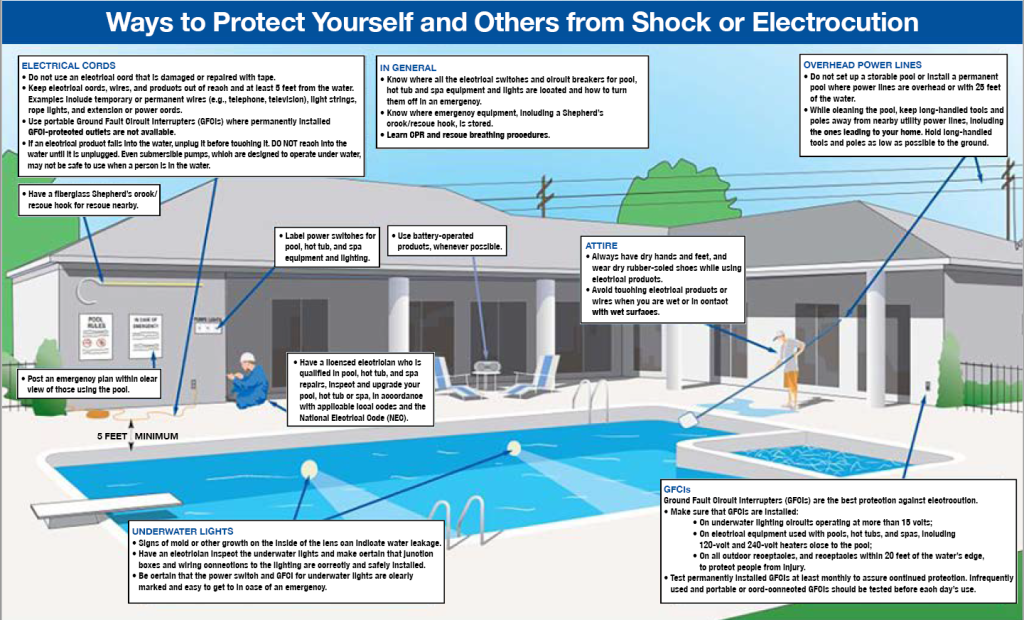
Electricity and water pose a lethal combination. CPSC tracking over 13 years documented 60 deaths and nearly 50 severe electrical shocks tied to hazards in and around swimming pools, hot tubs, and spas.
Primary causes of electrical incidents include:
- Aging or deteriorating electrical wiring.
- Faulty underwater lighting systems.
- Portable electrical devices, such as radios or extension cords, can fall into the water.
Experts emphasize that the risk of fatal shock increases significantly when nearby electrical outlets and circuits lack Ground-Fault Circuit-Interrupter (GFCI) protection.
Essential Hot Tub & Spa Safety Checklist
The CPSC recommends that hot tub and spa owners adopt the following safety protocols:
- Inspect Drain Systems: Ensure the spa features dual drains and domed, anti-entrapment drain covers. Have a qualified technician inspect the spa regularly and replace any cracked, loose, or missing covers immediately.
- Locate Emergency Cut-Offs: Know the exact location of the pump’s electrical shut-off switch so it can be flipped instantly in an emergency.
- Secure Hair & Clothing: Keep long hair tied back, secured in a swim cap, or away from suction fittings.
- Enforce Drain Rules: Never allow children to sit on, play with, or swim near spa drains.
- Upgrade Electrical Systems: Hire a licensed electrician to inspect the installation to ensure compliance with local codes and the National Electrical Code (NEC). Ensure junction boxes and wiring are placed at least five feet away from the water’s edge.
- Eliminate Corded Electronics: Keep all extension cords, radios, and electrical appliances away from the spa area.
- Monitor Temperatures & Alcohol Use: Maintain water temperatures at or below 104°F (40°C), and avoid alcohol consumption, which impairs judgment and increases drowning risks.
- Maintain Strict Supervision: Never permit young children to use a spa without active adult oversight, and secure spas with locked safety covers when not in use.
To report an unsafe hot tub, spa product, or related injury, consumers can visit SaferProducts.gov or call the CPSC Hotline at 800-638-2772.

