

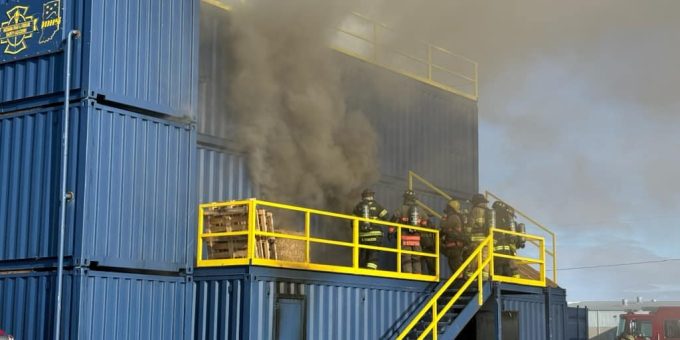
INDIANA — Governor Mike Braun announced the successful completion of Indiana’s revolutionary “Hub-and-Spoke” regional fire training network today, marking a massive operational victory for the state’s public safety infrastructure.
The strategy systematically eliminates rural “training deserts” by placing state-of-the-art, live-burn training facilities within a 30-mile or 45-minute drive of every career and volunteer fire department in Indiana.
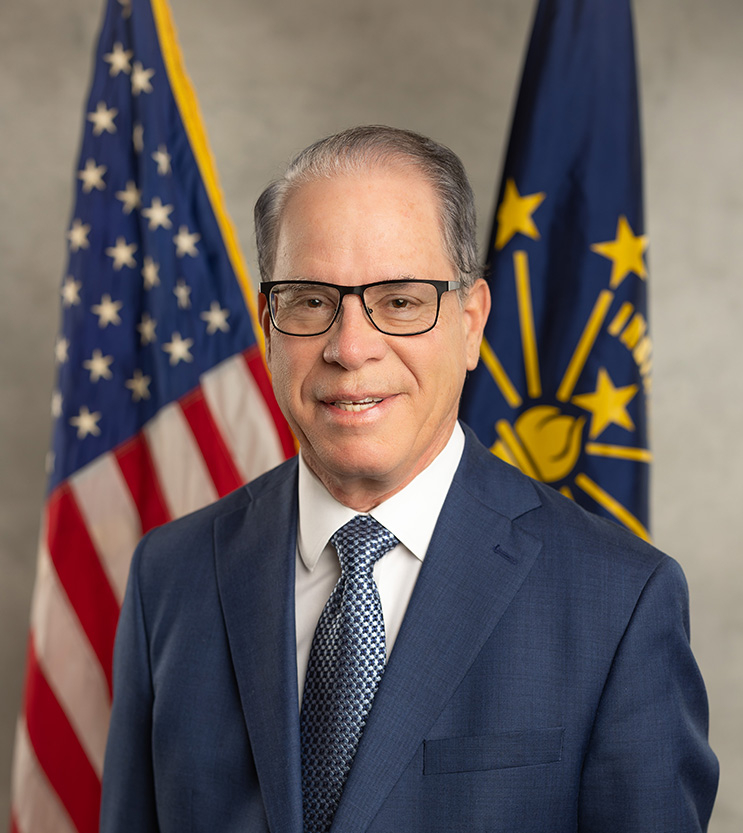
“This is a great accomplishment for our state, especially our first responders,” Gov. Braun said. “We saw a gap, and we filled it. Now, firefighters are able to be trained within 30 miles of their community. This reduces their travel time, the wear and tear on their engines, and allows for greater access to ensure our rural communities have what they need to serve Hoosiers.”
Addressing Strategic Shortfalls in Rural Public Safety
Historically, volunteer and small-town fire departments—which comprise over 70% of Indiana’s total firefighting force—struggled with inconsistent training baselines. Volunteer personnel frequently found it difficult to balance hours of travel time to distant metropolitan academies with their primary employment.
To address the vulnerability, the Indiana General Assembly passed a historic, first-ever dedicated funding package totaling $17.7 million for firefighter training and equipment.
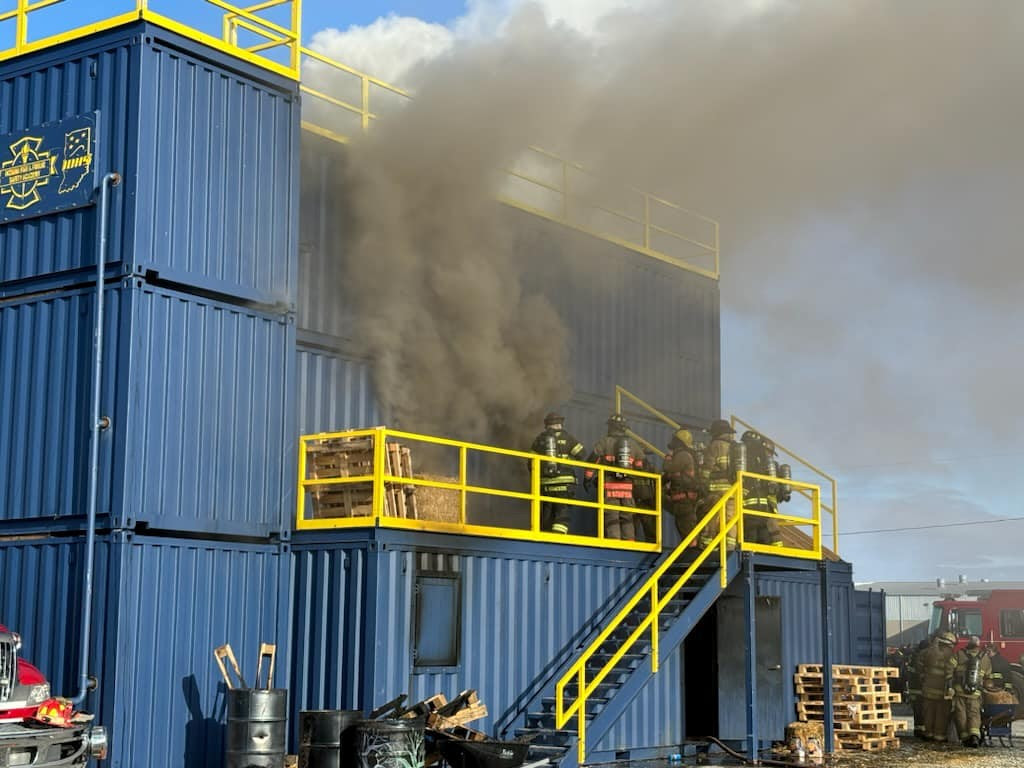
The structural funds were divided into two targeted segments administered by the Indiana Department of Homeland Security (IDHS) and the Indiana Fire and Public Safety Academy:
- $7.7 Million Infrastructure Investment: Directed entirely into the construction of 14 new physical, regional training hub sites across the state.
- $10 Million Volunteer PPE Allocation: Invested directly into purchasing brand-new, modern personal protective equipment (PPE)—such as turnout gear and self-contained breathing apparatuses (SCBA)—issued to underserved volunteer fire departments.
The 14 New Regional Training Hubs
The 14 newly operational training sites are strategically scattered across Indiana. While the state funded the advanced construction of the towers and burn structures, the facilities are locally owned and maintained by their host communities, who agree to keep the gates open to all regional departments.
| Site Location | County | Regional Coverage Focus |
| Corydon | Harrison County | Southern Border Corridor |
| Covington | Fountain County | West-Central Rural Reach |
| Chrisney | Spencer County | Southwest Ohio River Region |
| Hartford City | Blackford County | East-Central Gas Belt Region |
| Linton | Greene County | Southwest Mining & Rural Area |
| Paoli | Orange County | Southern Uplands |
| Plainfield | Hendricks County | Central Metro Sub-Hub |
| Rensselaer | Jasper County | Northwest Ag Corridor |
| Rushville | Rush County | Southeast Rural Farming Communities |
| Seymour | Jackson County | I-65 South Transit Corridor |
| Vincennes | Knox County | Lower Wabash Valley |
| Wabash | Wabash County | Northeast Industrial & Rural Corridor |
| Washington Twp. | Daviess County | West-Central Amish & Rural Communities |
| Winchester | Randolph County | Far East Border Communities |
A ‘Game-Changer’ for Inter-Agency Tactics
All 14 completed complexes are outfitted with specialized equipment packages, structural towers, and ventilation props designed to let firefighters experience structural live-fire behavior at industry-standard levels. The standardized setups allow rural departments to achieve critical Firefighter I and Firefighter II state certifications locally.

“The new Hub-and-Spoke site has proved to be a true game-changer for Vincennes and Knox County,” said Jeff Latta, Division Chief of Training of the Vincennes Fire Department. “Live fire training has always been a challenge for our community, but we now have a dedicated facility to train with and provide our firefighters with actual live fire training. With Vincennes and Vincennes Township, this facility has provided better opportunities for our departments to train together and work on inter-agency tactics.”
State Fire Marshal Steve Jones echoed the long-term impact on safety metrics. “The Hub-and-Spoke program has been crucial to improving training for firefighters across the state,” Jones stated. “No matter where they live, firefighters now have access to basic training equipment to do their job and return home safely at the end of a run.”

