

INDIANA — As a punishing heat wave grips large swaths of the country this week, safety advocates are issuing an urgent warning to families: a parked vehicle can become a deadly greenhouse in a matter of minutes.
With temperatures soaring, national non-profit organization Kids and Car Safety is urging parents, caregivers, and pet owners to remain hyper-vigilant. The warning comes during the peak of summer, a time when routine disruptions and extreme outdoor temperatures combine to create a lethal environment inside vehicles.
The Reality of How Fast a Car Heats Up
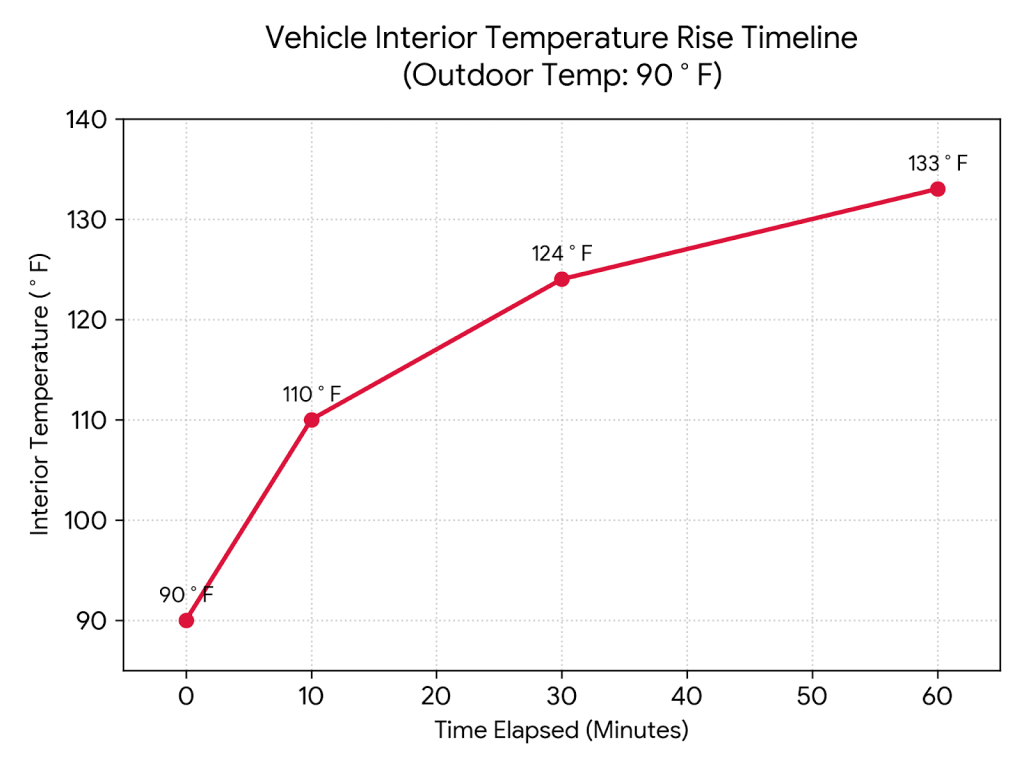
Many caregivers do not realize how rapidly the atmosphere inside a vehicle changes. Even on relatively mild days, internal vehicle temperatures can surge by 20 degrees in just 10 minutes.
When ambient outdoor temperatures reach heat-wave levels, the interior of a car essentially acts like an oven, trapping solar radiation through the glass. For children and pets—both of whom heat up significantly faster than adults—the situation becomes critical almost instantly.
The Fatal Statistics
On average, approximately 40 children and hundreds of pets die in hot cars every year in the United States. Safety data highlights several sobering trends about these preventable tragedies:
- The Unintentional Factor: In more than half of all hot car deaths, the person responsible unknowingly left the child in the vehicle due to a lapse in awareness, often brought on by extreme fatigue, stress, or a sudden change in daily routine.
- The Age Risk: Toddlers and infants are by far the most vulnerable. Eighty-six percent (86%) of children who die in hot cars are age 3 and younger.
- Accidental Lock-Ins: Roughly 25% of hot car fatalities occur when a child wanders outside, climbs into a parked vehicle on their own to play or rest, and becomes trapped inside without the ability to escape.

“No parent ever believes this could happen to them, but these tragedies affect loving, attentive families every year,” said Amber Rollins, Executive Director of Kids and Car Safety. “A small change in routine, fatigue, and a loss of awareness of a quiet baby in the back seat can have irreversible consequences.”
Crucial Safety Protocols for Families
Kids and Car Safety recommends adopting several simple, daily habits to protect children and pets during this heat wave and throughout the rest of the year:
- Look Before You Lock: Make it an absolute habit to open the back door and visually check the back seat every single time you park your vehicle, regardless of whether you think a child is with you.
- The “Stuffy” Strategy: Keep a large stuffed animal in your child’s car seat. When you buckle your child in, move the stuffed animal to the front passenger seat as a bright, unmistakable visual cue that your child is in the back.
- Secure Parked Vehicles: Always lock your car doors and trunk when the vehicle is parked in the driveway or garage, and keep keys completely out of reach so children cannot sneak inside.
- Create a Childcare Safety Net: Instruct your childcare provider to call you immediately if your child does not arrive at their scheduled drop-off time without prior notice.
- Act Fast If a Child Is Missing: If a young child goes missing around the home, check the inside, floorboards, and trunks of all vehicles in the area immediately—even if the vehicles are locked.
What to Do If You See a Crisis
Good Samaritan laws protect citizens who act to save lives. If you see a child or a pet left unattended in a vehicle during this hot weather, do not wait for symptoms of heatstroke to appear. Call 911 immediately. If they show signs of distress, take immediate action to remove them from the vehicle and cool them down.

