

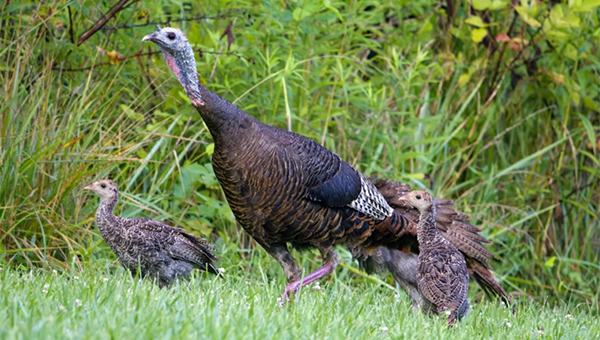
INDIANA — The Indiana Department of Natural Resources (DNR) is asking outdoor enthusiasts, landowners, and casual observers across the state to step up as citizen scientists this summer. Starting July 1, the DNR will officially open its annual Wild Turkey Brood Count, relying on public reports to gauge the reproductive success and health of Indiana’s wild turkey population.
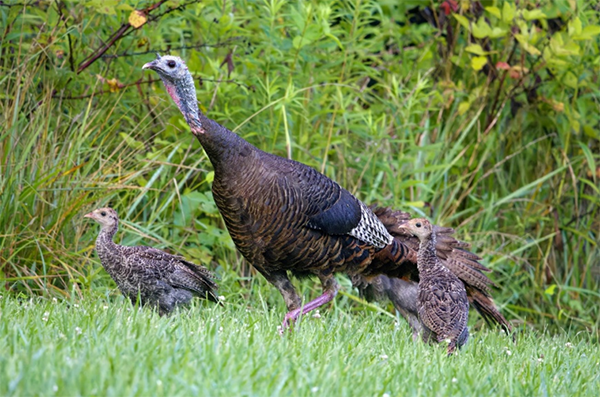
The observation window runs from July 1 through August 31, 2026.
Young turkeys, known as poults, typically begin hatching in May and will continue to emerge over the next several months. The DNR is asking the public to keep an eye out for and report two specific types of sightings:
- Turkey hens with poults (active reproductive broods)
- Adult hens without poults (broodless hens)
Reporting an observation online takes only a few minutes. No account registration or login is required to submit data. Observers will simply be asked to provide the date of the sighting, the county in which it occurred, and an accurate count of how many adult hens and young poults were spotted together.
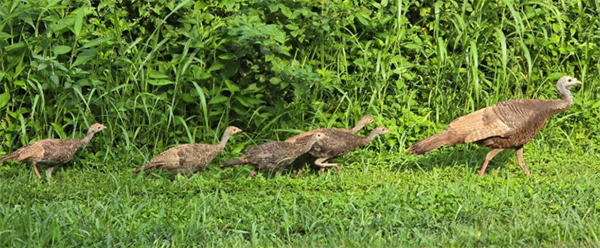
The summer brood survey is far more than a simple headcount. The DNR has been collecting these community-driven reports annually since 1993 to calculate the state’s Wild Turkey Production Index.
Because summer brood survival is considered the primary factor dictating long-term turkey population trends, this index is a critical tool for state biologists. The data directly informs scientists about regional population surges or declines, which in turn guide hunting regulations, bag limits, and localized habitat conservation strategies.
The state is looking to build on the strong momentum generated during last summer’s tracking window. In 2025, the DNR received more than 2,500 individual observation reports spanning all 92 Indiana counties. State wildlife officials hope to exceed that total this year to ensure an even more robust and statistically accurate data set.
Identification Tip: When recording observations, remember that female turkeys (hens) are smaller than males, generally dull brown in color, and lack a visible beard. By late August, fast-growing poults can approach adult size, so observers are encouraged to look closely at flock dynamics to distinguish older poults from adult hens.
To submit your summer wildlife sightings or to read past annual wild turkey production reports, visit the Indiana Division of Fish and Wildlife portal at dnr.IN.gov and search for “Turkey Brood Reporting.”