

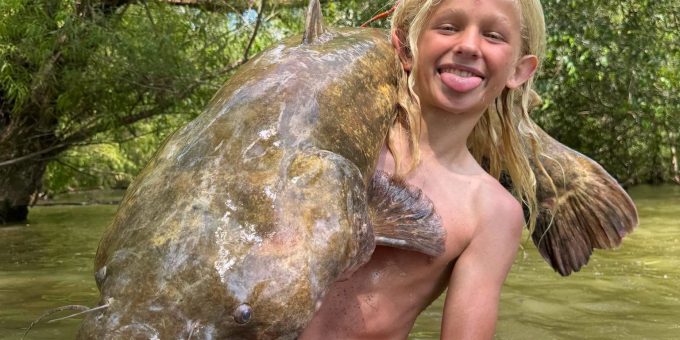
SANTA CLAUS — A 10-year-old southern Indiana boy proved his grit this summer by landing a massive catfish utilizing a daring and raw-handed fishing method known as noodling.
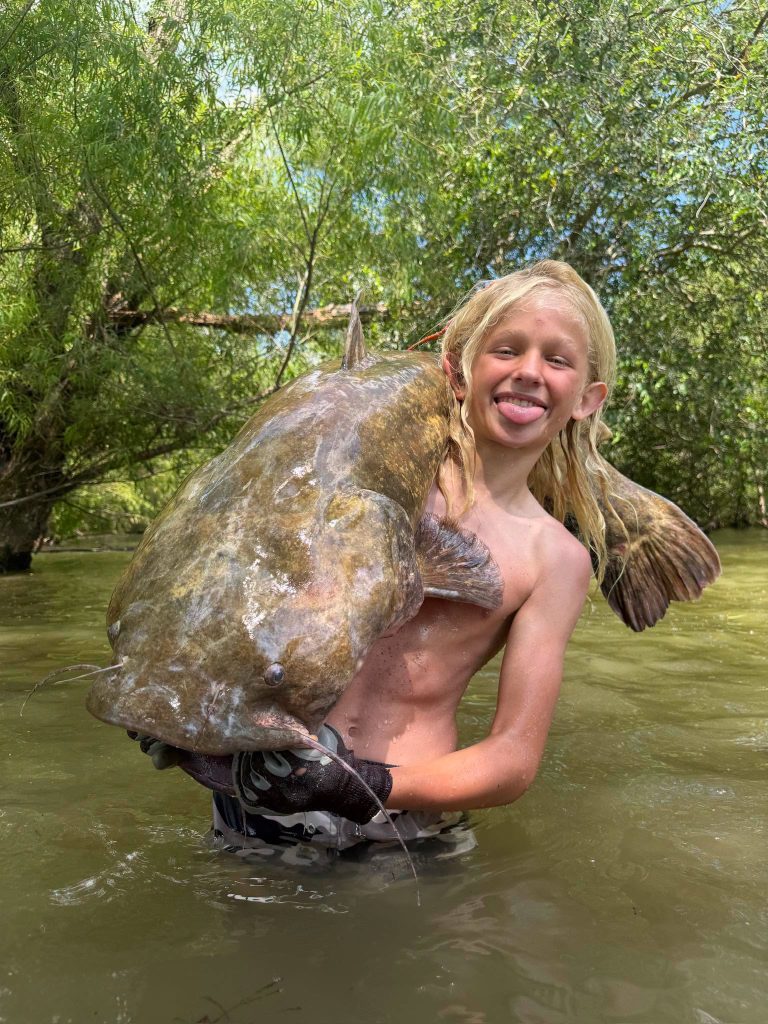
According to Sway’s mother’s Facebook post, Sway, a 65-pound outdoor enthusiast who lives just outside Santa Claus, Indiana, caught the river monster in Kentucky using his own arm as bait. Also known across the Midwest and South as hand-fishing, grabbling, or hogging, noodling is a traditional technique where an angler uses absolutely no gear—no hooks, rods, reels, or artificial bait.
Instead, the process relies entirely on bare hands, feet, and a lot of nerve.
The sport takes advantage of catfish’s natural spawning habits during the late spring and summer months. At this time of year, catfish seek out dark, secluded underwater environments, such as hollowed-out logs, deep mud banks, and rock crevices, to lay and guard their eggs.
To catch them, a noodler wades or dives into murky water to locate an active hole. Once found, the fisherman blocks the exit and shoves their bare arm deep inside. Feeling threatened, the protective catfish will aggressively attack the invading hand, biting down hard. The noodler then clamps their fingers around the fish’s gills or lower jaw and wrestles the thrashing animal to the surface.
While catfish lack sharp canine teeth, their jaws are lined with rows of rough, sandpaper-like teeth designed for gripping prey. A large, fighting fish can easily bruise or scrape an angler’s arm, but the physical bites are only part of the danger. Noodling carries serious safety risks, including the risk of drowning if a hand gets wedged in a deep rock formation, or the sudden shock of reaching into a hole occupied by snapping turtles, muskrats, or venomous snakes.
Because of these hazards, noodling is traditionally practiced in tight-knit teams. Although noodling is a legal act in Kentucky, it is illegal in the state of Indiana and strictly enforced.
Sway grew up exploring the outdoors and assisting his mother, Allison Hunter Voges, who relocates snakes in Southern Indiana. He caught his first catfish with a rod and reel at age five, but had been determined to try hand-fishing once he was old enough.
This summer, his mother finally gave him the green light when the family located a promising underwater hole. The catch proved to be a major physical challenge, as the water level was deep enough to submerge the 10-year-old’s head.
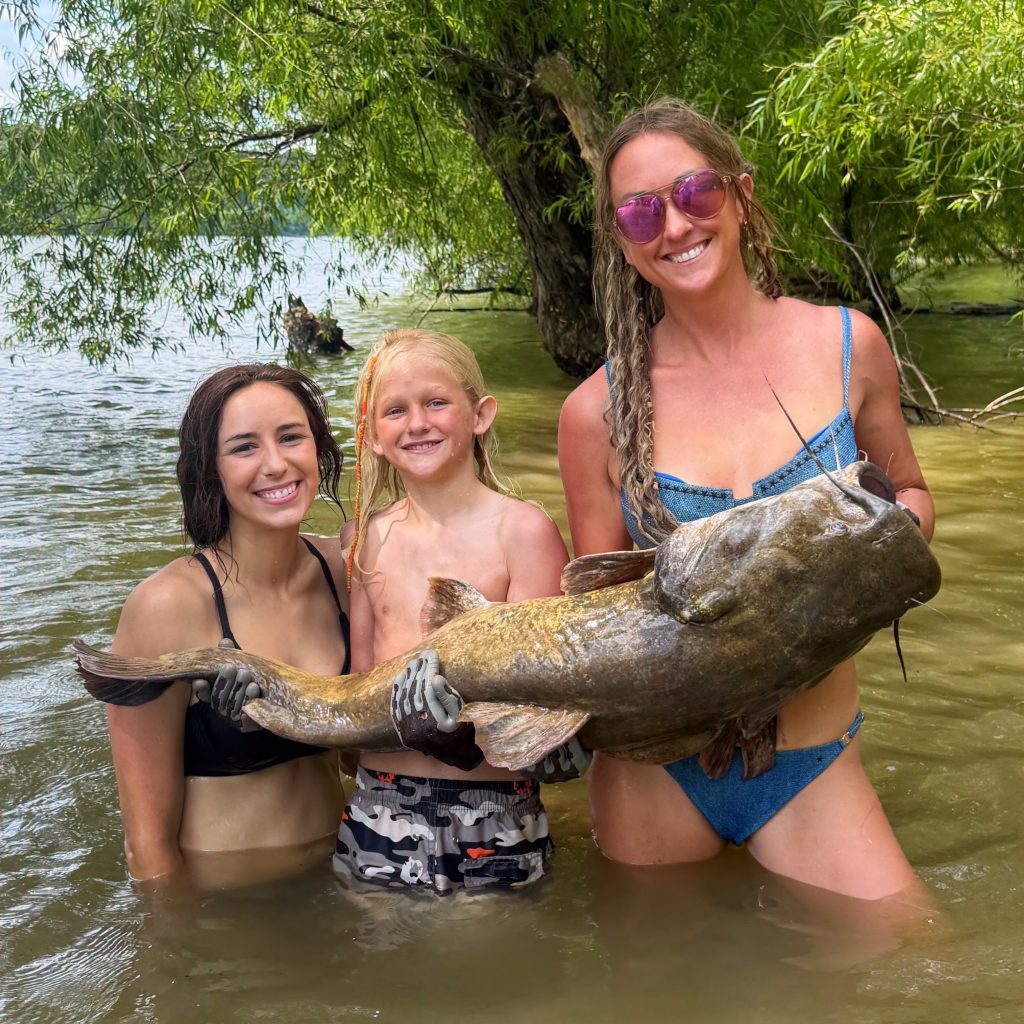
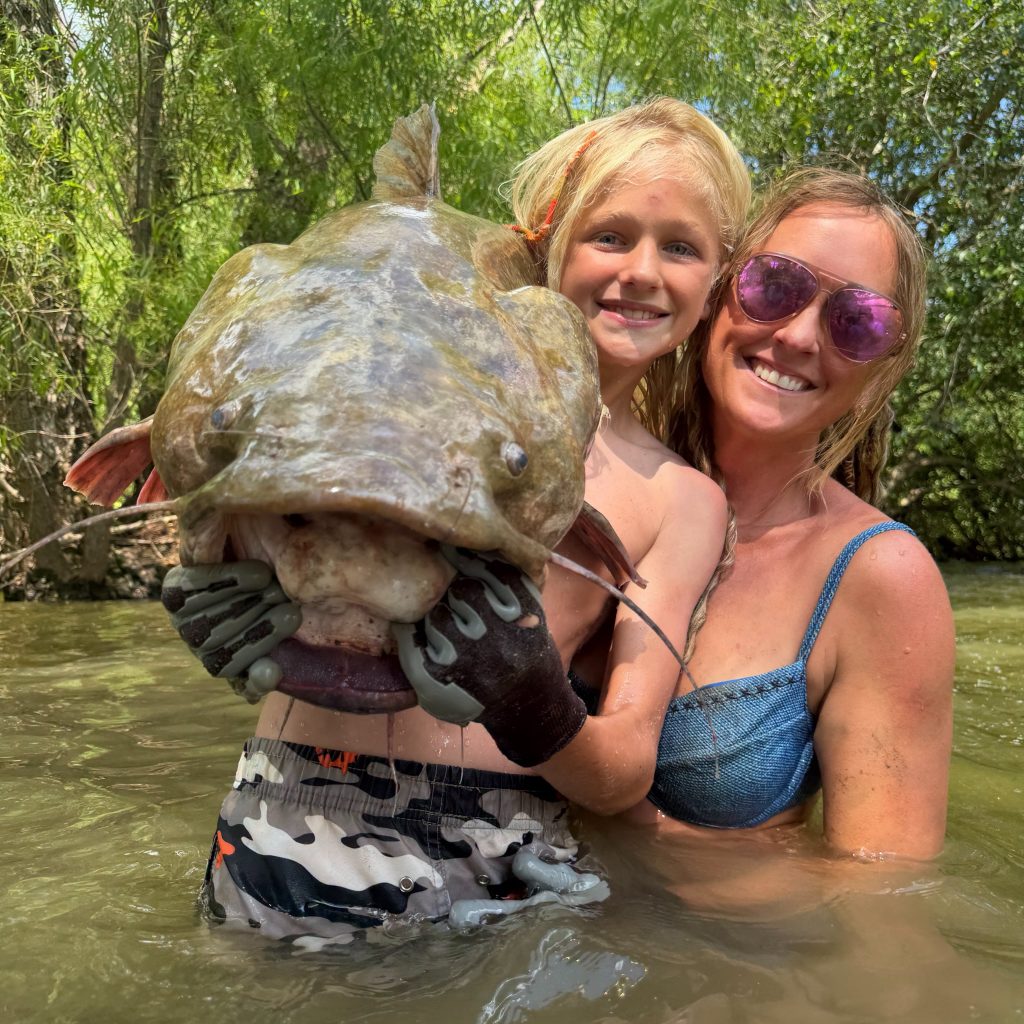
With the assistance of family friend Alyssa, who helped block the hole, Sway dove down into the water. Despite being bitten multiple times and temporarily losing his grip on the fish twice, Sway persevered. He ultimately emerged from the water, hoisting a flathead catfish estimated to be at least half his own body weight.
Hand-fishing was historically restricted in many states to protect spawning populations, but it has seen a massive legal resurgence over the past two decades. Today, it is illegal in Indiana and legal in 17 other states under standard licensing rules. According to his family, the thrilling, hard-fought catch has officially hooked the young Hoosier on his bold new summer hobby.