

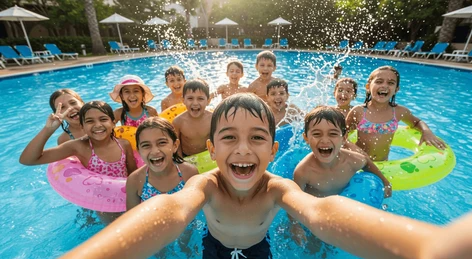
INDIANA – Child drowning is a silent death. Unlike what is often depicted in movies, there is rarely any splashing, waving, or screaming to alert a parent or caregiver that a child is in dire trouble—and it can happen in the mere seconds it takes to answer a quick phone call.
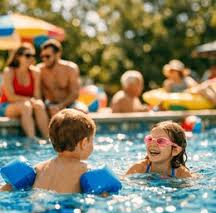
Data from the U.S. Consumer Product Safety Commission (CPSC) reveals a sobering reality: nationwide, approximately 300 children under the age of 5 drown in swimming pools every year, typically in a pool owned by their own family. Furthermore, more than 2,000 children in that same vulnerable age bracket are rushed to hospital emergency rooms annually to be treated for severe submersion injuries.
CPSC research highlights just how quickly a normal afternoon can turn tragic. An analysis of childhood pool submersions revealed critical behavioral patterns:
- 77% of child drowning victims had been missing from their supervisor’s line of sight for 5 minutes or less.
- 69% of the victims were not expected to be at or in the pool at the time of the incident, yet they were ultimately discovered in the water.
- 75% of all submersion victims were toddlers between 1 and 3 years old.
- 65% of the children in that toddler demographic were boys.
While physical barriers are not entirely childproof, they serve as a critical defense system. If a child manages to slip out of a supervisor’s sight, a proper barrier delays their access to the water, giving parents vital extra minutes to locate them.
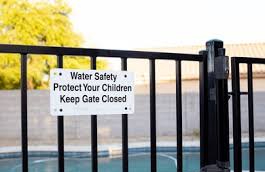
Homeowners should audit their properties to ensure they meet standard safety guidelines:
1. Fences and Gates
A safety fence must completely isolate the pool from the rest of the yard.
- The barrier must stand at least 4 feet high and possess zero foot-holds or hand-holds that a toddler could use to climb it.
- Vertical fence slats must be spaced less than 4 inches apart so a curious child cannot squeeze through the gaps.
- Gates must be self-closing and self-latching. Homeowners must maintain these latches regularly and ensure they are positioned high up, completely out of a child’s reach.
- Never prop a pool gate open for convenience.
2. Door Alarms
When a residential house forms one side of the pool’s perimeter barrier, every single door leading directly from the home to the pool deck must be armed with an audible alarm. The keypad or bypass switch must be mounted high on the wall out of a child’s reach, allowing adults to pass through smoothly without disabling the primary alert system.
3. Power Safety Covers
As an alternative or supplementary measure to door alarms, a motorized power safety cover can be deployed. To ensure true rescue security, a cover should meet ASTM international standards, meaning it must be structurally capable of holding the combined weight of two adults and a child. Caregivers should note that a child can drown in just inches of liquid, making pooled rainwater on top of a loose cover a severe hazard.
4. Above-Ground Pools
For families utilizing above-ground pools, steps and access ladders must be physically locked, secured, or completely removed from the pool structure whenever the facility is not actively in use.
Foundational Pool Safety Rules
If a child goes missing, always check the pool first. Walk directly to the edge of the water and scan the entire area—including the very bottom of the pool and the surface—before searching anywhere else. Seconds matter.
- Designated Watchers: Never leave a minor unsupervised near water. During backyard barbecues or social gatherings, adults should explicitly take turns acting as the designated “water watcher,” maintaining constant eye contact with the pool free from cell phone or conversational distractions.
- Lessons Are Not Armor: Do not assume a young child is safe simply because they have completed swimming lessons. Swimming lessons do not make a child “drown-proof.”
- Ditch the Inflatables: Inflatable water wings, rafts, and plastic toys should never be used as a substitute for active adult supervision. Furthermore, all toys must be removed from the pool area when swimming is over, as bright objects can lure a wandering toddler back to the water’s edge.
- Learn CPR: It is vital that parents, grandparents, older siblings, and babysitters are fully certified in Cardiopulmonary Resuscitation (CPR). Keeping dedicated rescue equipment and a working telephone poolside with emergency numbers clearly posted can mean the difference between a close call and a tragedy.

