

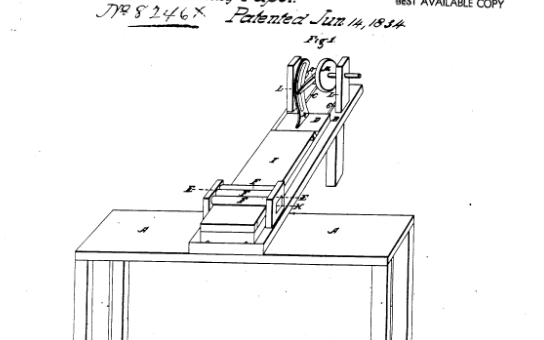
INDIANA – This week marks a major milestone in industrial history. In June of 1834, the very first mechanized process for manufacturing sandpaper was officially recorded in the United States.
The breakthrough came from Isaac Fisher, Jr. of Springfield, Vermont. Fisher revolutionized the production of the abrasive material by patenting a modern method for evenly coating sheets using a machine constructed of wood or metal. Before his invention, rough abrasive paper was largely handmade and uneven.
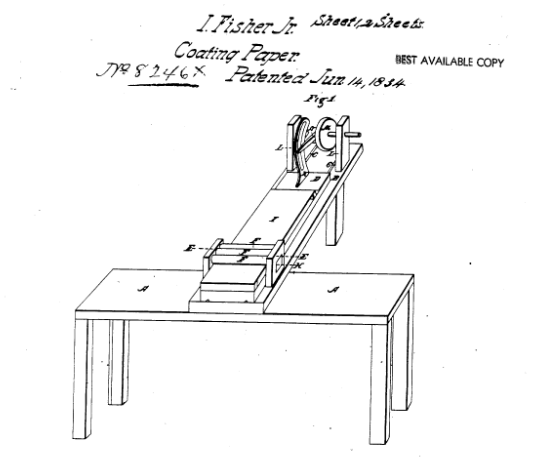
For history buffs and industrial researchers, the original U.S. patent documents for Fisher’s creation—historically referred to in some archives as a process for “softening glass”—are entirely accessible to the public.
The U.S. Patent and Trademark Office (USPTO) hosts these historic records digitally on its official website. By utilizing the USPTO’s Patent Public Search tool, users can dive into the archives to view the original text and the detailed technical illustrations of the manufacturing bench Fisher designed to build his product.
When using the USPTO’s Patent Public Search system, look for the document viewer tab located on the right side of the screen. You can easily toggle the first action button to switch into “image view,” which allows you to view the original handwritten layouts and schematic drawings exactly as they were filed nearly two centuries ago.
Where to Conduct Your Own Patent Research
If you are interested in exploring historical innovations or looking up modern patents on cutting-edge technologies, several robust local and national regional resources are available to guide your search:
- In Indiana (Local Access): The Indianapolis Public Library is officially designated by the federal government as a Patent and Trademark Resource Center (PTRC). The library provides free access to specialized databases, search tools, and trained staff members who can assist the public in navigating complex patent landscapes.
- Academic Guides: The Purdue University Libraries maintain a comprehensive, publicly accessible “LibGuide” for Patent Databases. This digital portal serves as an excellent reference map for learning how to structure patent queries and find historical records.
- National Headquarters: For an in-depth, hands-on research experience, independent researchers can visit the physical public search rooms at the USPTO headquarters located in Alexandria, Virginia.
- International Scope: If your research extends beyond American borders, the World Intellectual Property Organization (WIPO) offers the “PatentScope Simple Search” tool, which allows users to scour millions of international patent applications and historical documents from global registries.

