

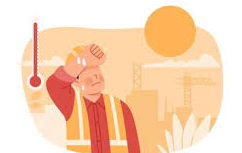
INDIANA – As summer temperatures climb sharply across the region, meteorologists and public health officials are issuing urgent reminders for residents to take proactive measures against extreme heat.
According to the National Weather Service (NWS), excessive heat consistently ranks as one of the top weather-related killers in the United States, outpacing fatalities from tornadoes, hurricanes, and lightning combined in an average year.
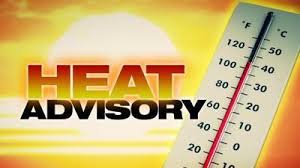
The primary danger during a summer heatwave is the hidden impact of humidity. The NWS emphasizes that high humidity levels prevent sweat from evaporating efficiently off the skin, which severely hinders the body’s natural cooling mechanism. To track this danger, meteorologists rely on the Heat Index—a measurement combining air temperature and relative humidity to determine what the environment actually “feels like” to the human body.
Understanding NWS Heat Alerts
When the heat index is projected to reach dangerous levels, the NWS initiates a tiered system of alerts to notify the public:
- Excessive Heat Outlook: Issued when the potential exists for an excessive heat event to develop within the next 3 to 7 days.
- Excessive Heat Watch: Issued when conditions are favorable for an excessive heat event in the next 24 to 72 hours, providing a warning to prepare.
- Heat Advisory: Activated within 12 hours of the onset of dangerous conditions, typically when the heat index is expected to reach $100^{\circ}\text{F}$ to $104^{\circ}\text{F}$ for multiple days, or hit $105^{\circ}\text{F}$ for any duration.
- Excessive Heat Warning: The highest level of alert, issued when the heat index is expected to comfortably surpass $105^{\circ}\text{F}$ for a prolonged period, posing an immediate threat to public health.
Recognizing the Signs: Heat Exhaustion vs. Heat Stroke
Medical professionals urge the public to closely monitor themselves and neighbors for the progressive symptoms of heat-related illnesses. Understanding the distinct line between heat exhaustion and a life-threatening heat stroke is vital for survival.

| Condition | Common Symptoms | Required Action |
| Heat Exhaustion | Dizziness, headache, excessive sweating, pale or clammy skin, nausea, muscle cramps, and a rapid but weak pulse. | Move to a cool, air-conditioned place. Loosen clothing. Sip cool water. Apply cool, wet cloths to the skin. |
| Heat Stroke (Medical Emergency) | Body temperature climbing above $103^{\circ}\text{F}$, confusion or altered mental state, hot, red, dry skin (no sweating), a rapid and strong pulse, vomiting, and loss of consciousness. | Call 911 immediately. Move the person to a cooler environment. Use ice baths or cool cloths to lower body temperature. Do not give the person anything to drink. |
Critical Safety Protocols
To mitigate the risks of prolonged environmental exposure, health officials recommend adhering to the following safety protocols throughout the high-temperature months:
- Rethink Your Fan Use: The NWS explicitly warns against relying solely on portable electric fans when indoor temperatures exceed $90^{\circ}\text{F}$. When the air is that hot, fans merely blow scorching air across the body, which can actually accelerate dehydration. Seeking an air-conditioned environment or utilizing public cooling centers is required.
- Ditch the Salt Tablets: Individuals should avoid taking salt tablets during hot weather unless explicitly directed to do so by a personal physician.
- Hydrate Correctly: Drink plenty of water continuously, even if you do not feel actively thirsty. Avoid heavy meals, caffeine, and alcoholic beverages, which exacerbate dehydration.
- Look Before You Lock: Officials stress that children, seniors, and pets must never be left unattended in a parked vehicle for any length of time. On a $70^{\circ}\text{F}$ day, the internal temperature of a car can skyrocket past $100^{\circ}\text{F}$ in less than twenty minutes, turning a closed cabin into a deadly trap.
Special attention should be consistently paid to vulnerable populations, including infants, older adults, individuals with chronic cardiovascular or respiratory conditions, and outdoor laborers. Residents are urged to monitor local atmospheric forecasts and secure localized safety guidance by visiting the National Weather Service’s digital heat resources page.

