

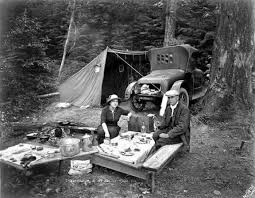
INDIANA — Taking a road trip across Indiana today means relying on a vast network of multi-lane interstates, illuminated rest stops, and a hotel or motel at nearly every exit. But a century ago, hitting the open road in the Hoosier State was a true wilderness adventure—one that required a tent, a toolkit, and a healthy dose of grit.
During the 1920s, automobile ownership was a brand-new phenomenon for the average Hoosier family. As the state scrambled to pave over dirt paths and lay out the foundation of the modern state highway system, a unique piece of forgotten Americana was born: the roadside tourist camp.
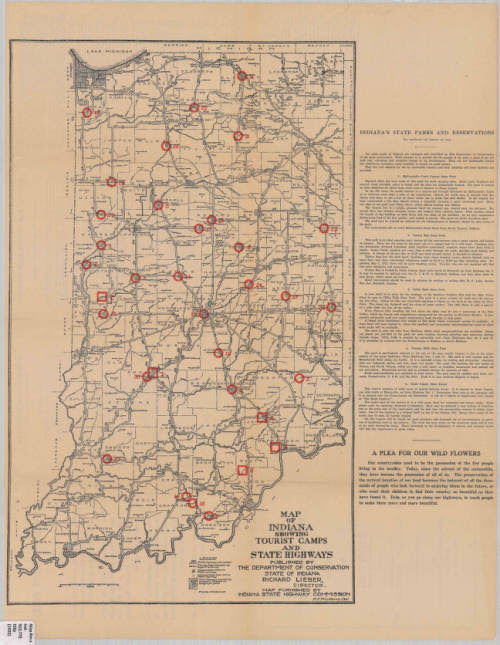
A historical 1922 map preserved within the Indiana State Library’s digital collection offers a fascinating window into this bygone era, detailing the precursor to the modern American motel.
The Birth of the ‘Car Park’
In the early 1920s, the concept of a “motel” (a portmanteau of “motor hotel”) did not yet exist. If a motorist was traveling between major destinations like Indianapolis, Fort Wayne, or Evansville, finding lodging outside of major city centers was nearly impossible.
To accommodate the sudden influx of automotive travelers, municipalities and private landowners began establishing “tourist camps,” also widely known as car parks.
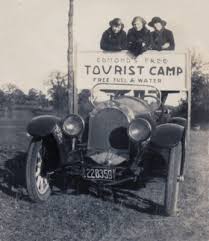
These camps were the 1920s equivalent of a modern KOA campground, designed specifically for the mobile tourist. Travelers were entirely self-sufficient, expected to pack their own heavy canvas tents, bedding, and food supply. However, the camps provided crucial infrastructure that made the rugged journey bearable, frequently offering:
- Shared outdoor cooking grills and brick fire pits
- Public shower houses and rudimentary plumbing
- Picnic tables and clearings to park vehicles
- Children’s play areas and small general stores selling ice and kerosene
Mapping Indiana’s Early Roadways
The 1922 map from the Indiana State Library highlights just how rapidly these camps proliferated along the state’s earliest designated auto trails—such as the historic Dixie Highway and the National Road (U.S. 40).
On the reverse side of the artifact, the map provides a logistical blueprint for the 1920s road-tripper. Packed with vital travel advice, the guide details everything from campfire safety protocols to what specific amenities awaited travelers at each designated county campground.
Historians note that these camps were incredibly democratic spaces, bringing together Americans of all socio-economic backgrounds who shared a mutual fascination with the freedom of the automobile.
By the late 1920s and early 1930s, the simple tourist camp began to evolve. Property owners realized that travelers would pay a premium for convenience, leading to the construction of “tourist cabins”—small, permanent wooden structures built alongside the parking spaces.
Eventually, these individual cabins were connected under a single roof, evolving into the classic, neon-lit motor courts and roadside motels that dominated Indiana’s landscape by the mid-century.
Today, while the physical remnants of Indiana’s 1922 tourist camps have largely vanished beneath concrete and modern development, their legacy lives on every time a traveler pulls off the highway for a night’s rest.

