

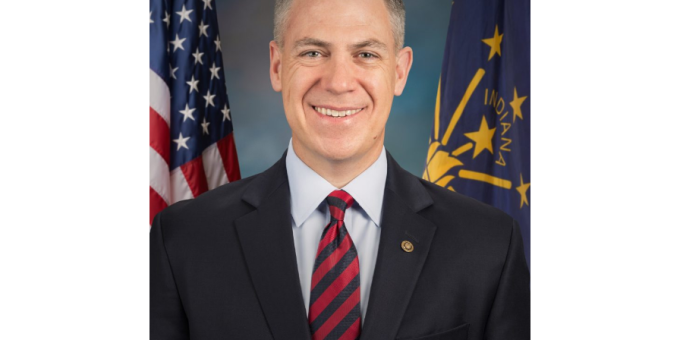
WASHINGTON, D.C. – Senator Jim Banks (R-Ind.) filed a brief in the Indiana Supreme Court supporting Indiana’s pro-life law. The brief was submitted in Individual Members of the Medical Licensing Board of Indiana v. Anonymous, which involves a challenge to Indiana’s pro-life law brought under the Religious Freedom Restoration Act.
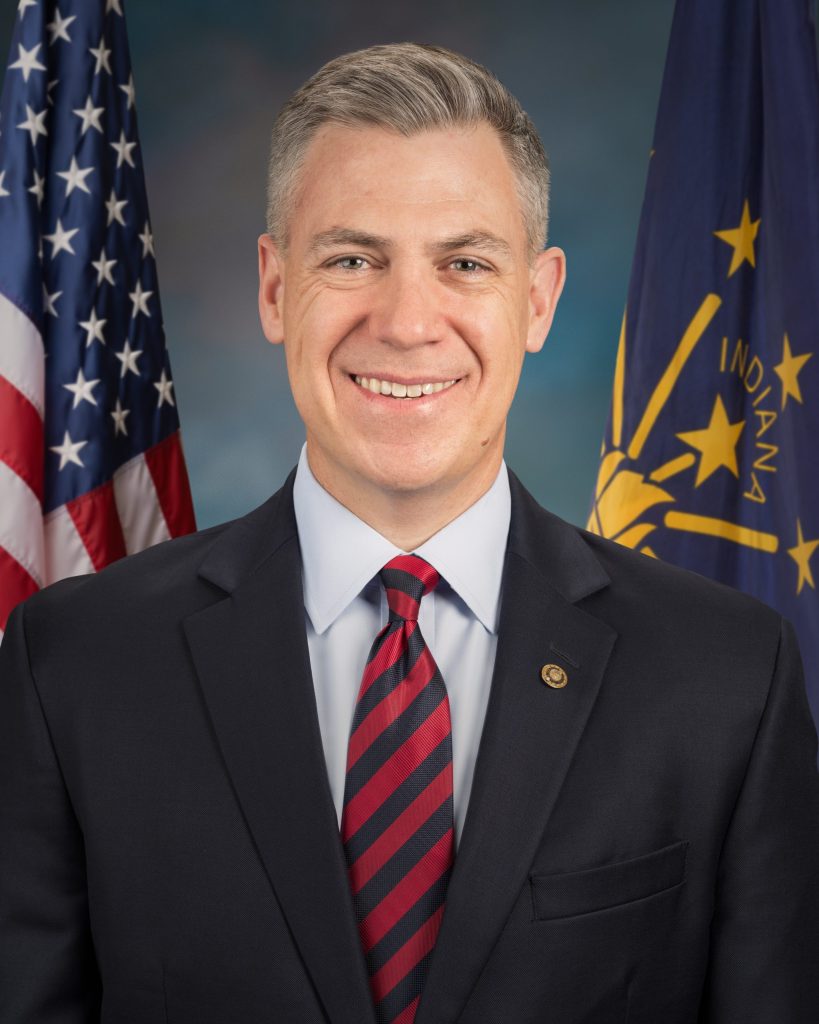
Senator Banks argues in his brief that: (1) There is no religious right to an abortion; (2) Laws protecting religious freedom do not protect killing and other forms of violence, including when the victims are unborn; and (3) The tradition of Indiana and the United States is to protect the unborn as persons entitled to the right to life.


Indiana attorneys James Bopp, Jr., and John Westercamp served as local counsel on the brief.
Senator Jim Banks (R-Ind.): “There is no religious right to an abortion, it’s that simple. Every unborn child deserves the right to life, and the Indiana Supreme Court has a responsibility to ensure our state’s pro-life law remains in full effect.”
James Bopp, Jr.: “Indiana’s compelling governmental interest in protecting unborn life is not a loophole to be argued around. It holds under the federal constitution, the state constitution, and RFRA. Every unborn child in Indiana is entitled to that protection, and no legal theory changes that fact.”
John Westercamp: “Religious liberty may never be used as a pretext to justify violence against innocent life. I’m proud to work with Senator Banks as he petitions the Indiana Supreme Court to protect life.”
Read the full brief here.
Background:
A trial court judge in Marion County became the first judge in the world to identify a religious right to abortion. Individual Members of the Medical Licensing Board of Indiana v. Anonymous involves a challenge to Indiana’s pro-life law by Hoosier Jews for Choice, which is seeking religious exemptions from Indiana’s law under the state’s Religious Freedom Restoration Act (RFRA). Hoosier Jews for Choice alleges that its members have a religious belief that pregnant women should be able to receive abortions even where their lives or health are not at serious risk, and argues that the state’s restrictions on abortion impermissibly burden this belief.
The Marion County Superior Court agreed and held that Indiana’s pro-life law shall not apply to anyone whose religious beliefs support abortion.
The Indiana Supreme Court agreed to hear the case and will now decide whether the state’s pro-life law infringes the religious freedom of residents who support abortion.
Summary of Argument:
“In 2022, Indiana became the first state in the country to pass a pro-life law, following the Supreme Court’s ruling in Dobbs v. Jackson Women’s Health, 597 U.S.215 (2022), that states can act to protect unborn life at all stages. S.E.A. 1 continues a longstanding tradition of protecting the right to life of all persons within a jurisdiction, including those who are unborn.
“The trial court enjoined S.E.A. 1 as to a certified religious class under the Indiana Religious Freedom Restoration Act, Ind. Code §§ 34-13-9-1 et seq. (2022) (“RFRA”).
“More than fifty years ago, the Indiana Supreme Court held Indiana’s interest in protecting unborn life “valid and compelling’”’ from the moment of conception.” Cheaney v. State, 285 N.E.2d 265, 270 (Ind. 1972). Cheaney remains good law, and the General Assembly has codified treatment of the unborn as persons deserving of the protection of the laws. Ind. Code § 16-34-2-1.1(a)(1)(E) (2022). Indiana’s interest in doing so is deeply rooted in the “history and tradition” of the United States, and Dobbs restored to the states the ability to act upon it. See New York State Rifle & Pistol Ass’n v. Bruen, 597 U.S. 1, 22 (2022).
“Just as Indiana has an interest in protecting unborn life, it has an interest in rejecting religious claims to end that life. There is no religious right to take a human life. Countless judicial decisions affirm the states’ compelling interest in denying requests for an exemption from laws against private violence. Courts reject these requests even where practitioners’ views are sincerely held and even though such laws contain other exemptions. The government has the same compelling interest in denying religious claims to abortion that it has in denying religious requests for murder and other forms of violence.
“The promises of the American Founding and guarantees of the American legal tradition are for all persons. The Indiana Supreme Court should reverse the judgment of the trial court and give Indiana’s pro-life law its full effect.”

