

INDIANA – It is a scenario that unfolds in homes across the country every single day: a tired parent, a late hour, and an infant who will not stop crying. While crying is entirely normal behavior for an infant, federal health officials warn that a lack of support during these high-stress moments is fueling a silent, preventable crisis.
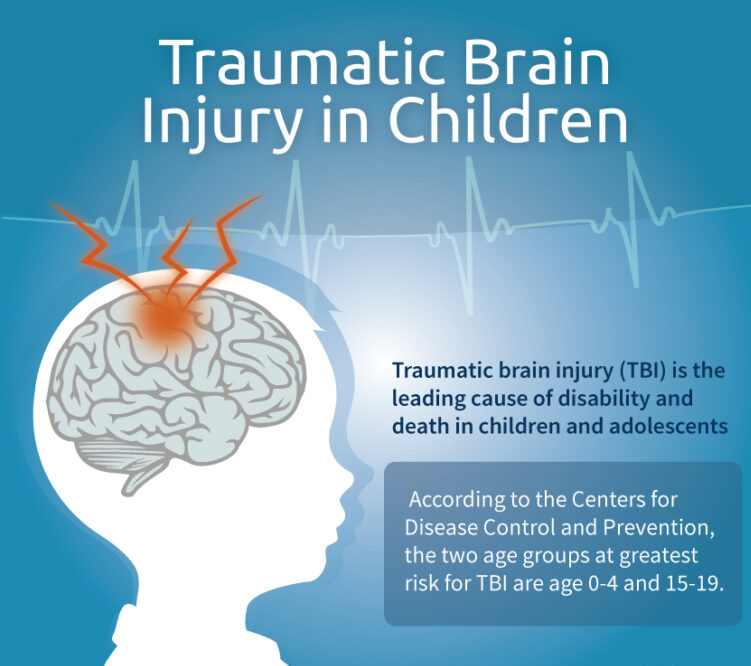
According to data from the Centers for Disease Control and Prevention (CDC), Abusive Head Trauma (AHT)—which includes shaken baby syndrome—remains a leading cause of child abuse deaths in children under five years old. Even more staggering, AHT accounts for roughly one-third of all child maltreatment fatalities in the United States.
Public health advocates and medical professionals emphasize that understanding the anatomy of an infant’s vulnerabilities and providing immediate, structural support to caregivers is the only way to reverse these statistics.
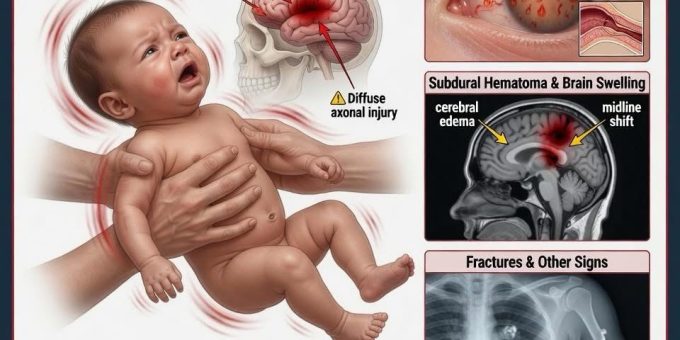
Abusive head trauma occurs when a parent or caregiver, often overwhelmed by frustration or anger due to prolonged crying, violently shakes, throws, or hits a baby.
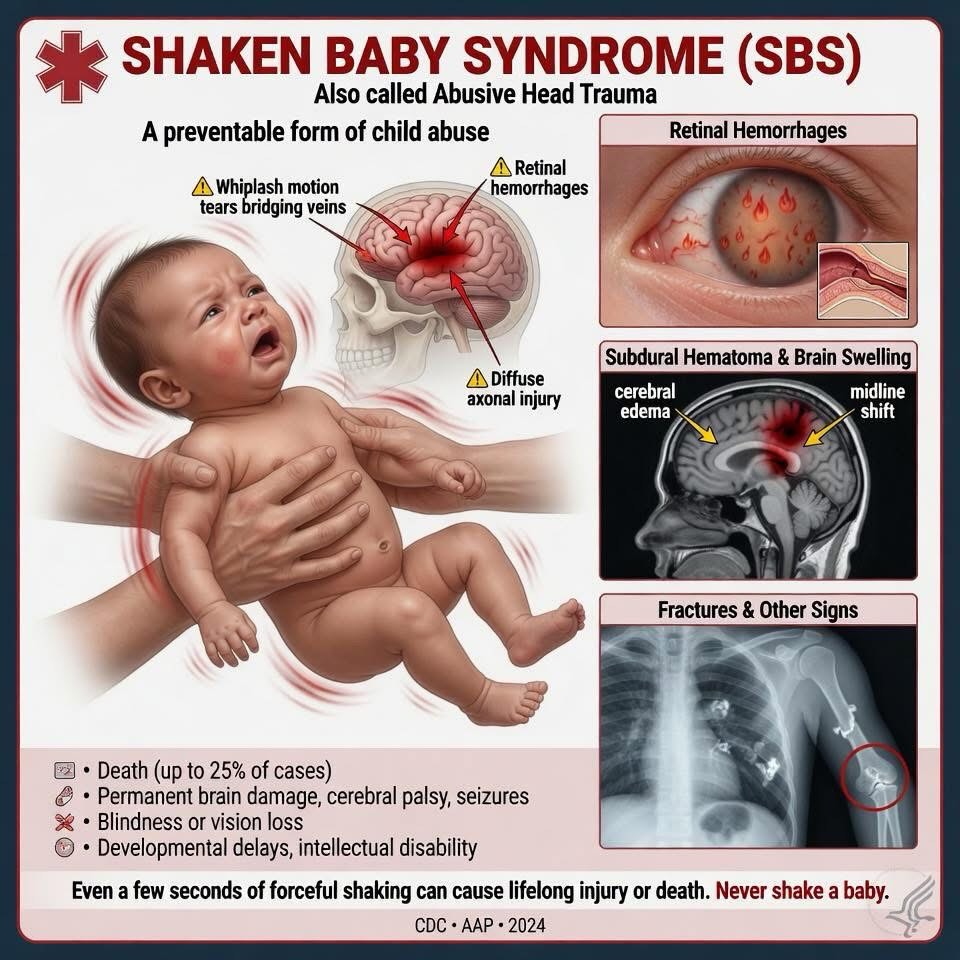
Because infants have weak neck muscles, relatively heavy heads, and fragile, rapidly developing brains, these physical forces cause catastrophic damage. The violent motion or blunt impact causes the brain to slam against the skull, resulting in immediate bleeding around the brain or behind the eyes.
Abusive Head Trauma Consequences:
- One in four victims dies from their injuries
- Nearly 100% of survivors suffer serious, long-term health complications.
- Common lifelong impacts include vision problems, physical disabilities, developmental delays, and severe hearing loss.
The CDC notes that infants under one year old are at the absolute highest risk.
A cornerstone of preventing AHT is educating the public on normal infant development. Many caregivers mistake inconsolable crying as a sign of bad parenting or behavioral issues. In reality, infant crying naturally intensifies in the first few months of life—frequently peaking between 4 and 20 weeks of age—before gradually improving as the child grows.
Public health experts stress that shaking or hitting a child is never the answer. If a baby will not stop crying, caregivers should first check for physical signs of illness and contact a pediatrician if they suspect the child is sick.
For parents facing a high-stress moment, experts offer a clear, step-by-step protocol to de-escalate their own frustration and keep the child safe.
Try basic soothing techniques: First response
Attempt to calm the infant by swaddling them snugly in a blanket, holding them directly against your bare skin for skin-to-skin comfort, or offering a pacifier. Rock gently, sing, or talk softly. If environmental changes help, take a brief walk with a stroller or go for a short drive in the car.
Put the baby down in a safe place when getting upset
If your frustration begins to rise, recognize that parenting is incredibly hard work and your body is hitting a limit. Place the baby safely on their back in their crib, ensure there are no loose blankets or hazards, and physically walk away from the room.
Focus on calming yourself: 5-10 minute buffer
Step into another room to take deep breaths, call a trusted friend, or count to ten. Do not return to hold the baby until your internal heart rate and temper have lowered. Return to visually check on the baby every 5 to 10 minutes while they are in the crib.
Call a professional support hotline: Immediate help
If you do not have an immediate friend or neighbor to lean on, reach out to professional support networks. For postpartum mothers or loved ones experiencing severe emotional distress, the National Maternal Mental Health Hotline provides free, confidential, 24/7 support at 1-833-852-6262 (call or text).
The CDC emphasizes that preventing child maltreatment does not fall solely on the shoulders of parents; friends, family members, and employers must build a protective framework around new families.
“Anyone can play a role in preventing abusive head trauma,” the CDC states.
Community members can actively intervene by offering to give a tired parent a physical break or validating how difficult the infant stage can be. Furthermore, advocates push for modern workplace policies—such as paid parental leave—that support working families during the critical 4-to-20-week window when infant crying is at its peak.
Finally, experts issue a strict warning regarding childcare safety: never leave an infant alone with any individual who has a history of violence, a known temper, or who is easily irritated.
If you suspect a child is in immediate danger or has suffered an injury, call 911 or contact local emergency medical services immediately.

