

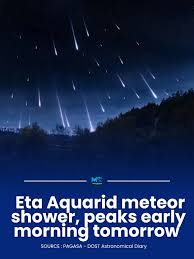
INDIANA – Skywatchers are in for a treat as the annual Eta Aquarid meteor shower reaches its peak overnight on May 5–6, offering a dazzling display of “shooting stars” across the night sky. The event, which runs through May 28, is one of the year’s most anticipated meteor showers, particularly for observers willing to rise before dawn.
The Eta Aquarids are created by debris left behind by Halley’s Comet, one of the most famous comets in human history. As Earth passes through the comet’s trail of dust and rocky particles each year, those fragments burn up in the atmosphere, producing bright streaks of light. Observations of Halley’s Comet date back more than 2,000 years, and each pass along its 76-year orbit continues to seed the solar system with material that fuels multiple meteor showers, including the Eta Aquarids and the Orionids in October.
According to the American Meteor Society, the 2026 peak will occur in the early hours before sunrise on May 6. During this window, Earth moves through the densest part of the debris stream, maximizing meteor activity.
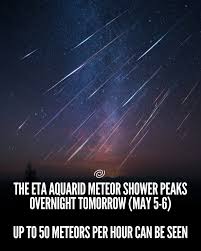
Viewing conditions vary significantly by location. Observers in the Southern Hemisphere will have the best vantage point, with as many as 50 meteors per hour under ideal dark-sky conditions. In the Northern Hemisphere, including much of the United States, the rate is typically lower—between 10 and 30 meteors per hour—but still worthwhile for dedicated stargazers.
The meteors appear to radiate from the constellation Aquarius, which rises in the eastern sky before dawn. However, you don’t need to look directly at Aquarius; meteors can streak across any part of the sky. The key is to find a dark location away from city lights, allow your eyes to adjust for at least 20–30 minutes, and look up.
Astronomers recommend heading out during the pre-dawn hours, when the radiant point is higher in the sky, and meteor rates increase. This year’s viewing conditions are relatively favorable, with minimal interference from moonlight during peak hours.
For the best experience:
- Choose a dark, open area with minimal light pollution
- Bring a reclining chair or blanket for comfort
- Dress warmly, as early mornings can be chilly
- Avoid looking at your phone to maintain night vision
For those hoping to photograph the event, having the right equipment can make a big difference. The Canon EOS R7 is often recommended as a strong option for beginners interested in astrophotography. With its fast shooting capabilities and good low-light performance, it can help capture long-exposure images of meteors streaking across the sky.
Using a tripod, a wide-angle lens, and long exposure settings will increase your chances of catching a meteor on camera. Patience is key—photographing meteor showers often involves taking many shots over an extended period.
Meteor showers like the Eta Aquarids offer more than just a visual spectacle—they provide a tangible connection to the history of our solar system. Each streak of light represents a tiny fragment of a comet that has been traveling through space for thousands of years before meeting its fiery end in Earth’s atmosphere.