

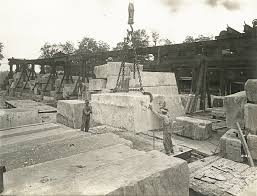
BEDFORD — This year, Southern Indiana marks a historic milestone as the Indiana Limestone Company celebrates 100 years since its pivotal 1926 formation, a merger that forever changed the landscape of American architecture.

Known globally as the “Limestone Capital of the World,” Bedford is the heart of a stone belt that has provided the literal foundation for the nation’s most iconic monuments. While quarrying in Lawrence County dates back to the early 1800s, it was the massive consolidation of 24 local companies a century ago that streamlined production and propelled Indiana Limestone onto the world stage.
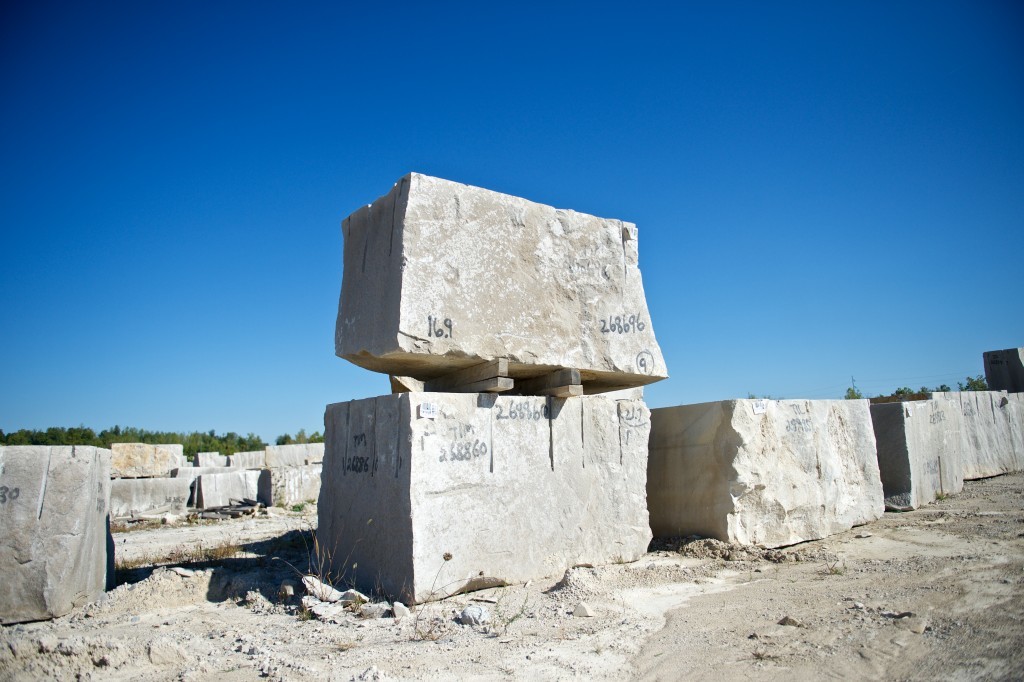
Indiana Limestone Company is prized by architects for its “free-stone” nature, meaning it can be planed and carved in any direction without splitting. This durability and beauty led to its use in a staggering list of American landmarks:
- The Empire State Building: Completed in 1931, using stone from Bedford’s PM&B Quarry.
- The Pentagon: The world’s largest office building is clad in Indiana grey limestone.
- The National Cathedral: A masterpiece of Gothic carving sourced from the local stone belt.
- 35 State Capitols: From Indianapolis to various states across the Union.
Since its founding, Indiana Limestone Company has continued to grow and evolve with the changing technologies and markets. Today, ILCO is proud to be a part of the Polycor family of brands, having been acquired by Canadian-based Polycor, the world’s largest dimension stone quarry company, in 2018. Nothing has changed from an operations and service perspective, and the same level of quality and trust that has been Indiana Limestone Company’s foundation, which is shared collectively by Polycor across all of its family of brands.
Deep Roots in Lawrence County
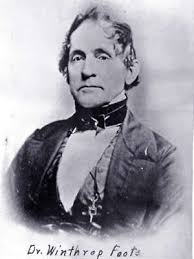
The history of the stone is inseparable from the people of Bedford and Mitchell. In 1830, Dr. Winthrop Foote, often called the “Father of the Limestone Industry,” opened the first commercial quarry near Mitchell.
By the early 20th century, the industry had become the lifeblood of the regional economy. The 1926 merger enabled the industry to withstand the era’s competitive pressures, ensuring that Bedford remained the primary source for major construction projects during the building boom of the late 1920s.
After the Great Fires in Chicago (1871) and Boston (1872), Indiana Limestone became the preferred building material because it showed the least damage compared to brick and wood.
Today, the legacy is celebrated annually at the Limestone Heritage Festival, which will hold its 2026 edition on Saturday, June 6. Visitors can witness live stone carving, explore historic “Blue Hole” quarries, and see the craftsmanship that earned limestone the title of Official State Stone in 1971.
Joe Palooka Statue

The “Joe Palooka” Statue in Oolitic, Indiana, features a 9-foot statue of the famous comic-book boxer, carved entirely from local limestone. In 1948, Ham Fisher, creator of Joe Palooka, dedicated this limestone statue to Bedford, Indiana. The 10–foot–20,000–pound statue was made by Indiana Limestone Company, Inc. Palooka was eventually moved to Oolitic, Indiana, for safekeeping. You can still see him standing tall and proud today.
Land of Limestone Exhibit
The original home of the Indiana Limestone Company was built in 1926 in Bedford, Indiana. It’s now on the National Register of Historic Places and is the go-to place for all things limestone. There are over 200 photos, news stories, and documents telling the tale of how Indiana limestone came to be the best in the country.

Located at 405 I Street in Bedford, the exhibit is open to the public Monday through Friday, from 9:00 a.m. to 5:00 p.m. The exhibit is free to attend.
As the industry looks toward the next hundred years, Bedford continues to export its “grey gold,” proving that while architectural styles change, Indiana Limestone remains a timeless classic.

