

BLOOMINGTON – Mayor Kerry Thomson announced today that the City’s contract for Flock LPR services expired on March 5, 2026, and that, following a months-long evaluation, the City decided not to renew it.
On April 15, 2026, Bloomington Police Chief Michael Diekhoff submitted a report on Bloomington’s use of Flock, followed by a memo from Mayor Thomson to the Bloomington Common Council. Both will be presented at the Council’s April 22 meeting.
The evaluation was already underway before the Bloomington Common Council’s March 5, 2026, resolution calling for additional oversight of the City’s Flock cameras and requesting a report from BPD regarding access to Flock data. The review included consultation with Bloomington Police Department (BPD) leadership and investigative teams, the City’s legal team, Flock representatives, and community partners, and included an assessment of operational use, legal considerations, and documented case applications.
As the City transitions away from Flock, it will evaluate other technologies and providers that better balance public safety needs with privacy protections, transparency, accountability, and public trust.
As part of the review, Mayor Thomson directed immediate steps to narrow and govern the system’s use during the transition period. Access to Flock data will be limited to Bloomington Police Department personnel only. There will be no outside data sharing.
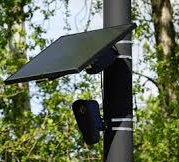
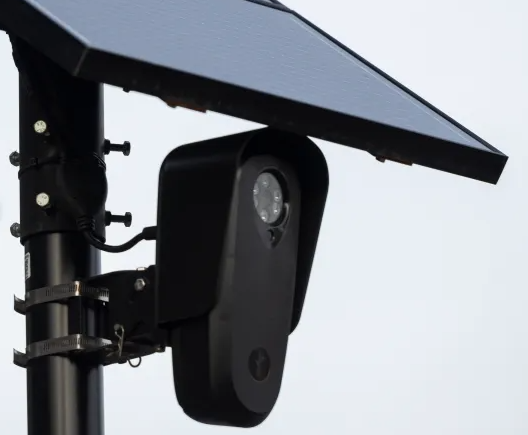
The City’s Flock-related equipment includes 11 permanently mounted license plate reader cameras, four permanently mounted video cameras, and four mobile trailer systems equipped for license plate reading, video recording, and gunshot detection.
Other local jurisdictions, including Indiana University and Monroe County, operate similar systems under their own authority and policies.
Bloomington is not alone in reassessing how automated license plate reader technology should be governed. In March 2026, the City of Boulder, Colorado, announced it would continue using license plate reader technology while launching a bid process and renegotiating terms with its current provider, Flock
License plate reader cameras capture an image of the rear of a vehicle and its license plate as the vehicle travels on a public roadway. Per BPD policy and reporting, the system does not use facial recognition; does not contain, collect or reveal vehicle registration information such as a driver’s name or address; and does not create profiles based on personal traits or demographic information. Search results show a still image and timestamp tied to a vehicle observation, not a personal identity profile.
Within BPD, access is limited to sworn officers and data analysts. Users are required to complete training, use individually assigned log-ins, connect searches to an active event number, and identify a valid reason for each search. Search activity is logged, and those logs are subject to audit every 60 days. The Police Department also maintains a 30-day retention period for Flock data unless material was entered as evidence in a criminal case.
BPD is not participating in Flock’s national network, and the data collected by Bloomington cameras was shared only with other Indiana law enforcement agencies as authorized by department policy. Under the Mayor’s direction, that sharing will discontinue. Bloomington cameras will no longer be visible to other agencies on the network, and outside agencies will not be able to query Bloomington camera data.
The City’s review considered documented examples of how BPD had used the system in support of investigations and resolution of cases, including the safe recovery of a kidnapping victim, identification of a suspect in a homicide investigation near the county line, and identification of a suspect who later confessed in a roadside sexual assault case. The department also cited cases in which vehicle data helped support homicide investigations within Bloomington and aided another Indiana agency in locating evidence connected to a murder investigation.
“We take civil liberties seriously. We take public safety seriously. Those are shared obligations of good government,” said Mayor Kerry Thomson. “This review made clear that if this tool is used, it must be used under narrow parameters, strong accountability, and clear public safeguards. We are continuing to evaluate whether other options may better serve the community.”
“Due diligence takes time. We do not make decisions like this to satisfy a moment. We review the full picture, weigh the impacts meticulously, and respond for the good of the whole community,” said Thomson.
“Everyone in Bloomington deserves to be safe and to feel safe,” said Chief Michael Diekhoff. “The goal is to support good police work with tools that are effective, carefully governed, and understood by the public. As Bloomington moves away from Flock, we must do so responsibly and without creating avoidable gaps in public safety.”
Additional information regarding Flock system use will be presented to the Bloomington Common Council by Bloomington Police Chief Michael Diekhoff at its April 22 meeting.

