

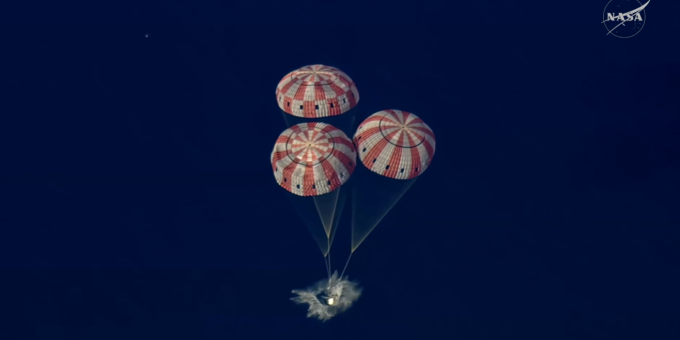
HOUSTON, TX — On the 56th anniversary of the Apollo 13 launch, a new generation of lunar heroes returned to the heart of Mission Control. On Saturday, April 11, the four astronauts of NASA’s Artemis II mission arrived at Ellington Field to a thunderous welcome, marking the end of the first human voyage to the moon in over half a century.
NASA
The crew—Commander Reid Wiseman, Pilot Victor Glover, Mission Specialist Christina Koch, and Canadian Space Agency astronaut Jeremy Hansen—shared emotional reunions with their families before stepping onto a hangar stage to address a jubilant crowd of NASA employees, flight directors, and fellow astronauts.

NASA
Record-Breaking Journey into the Deep
Launched on April 1, 2026, the 10-day mission was more than just a return to the moon; it was a record-breaking push into the cosmic frontier. The crew’s Orion spacecraft, named Integrity, traveled a total of 694,481 miles, reaching a maximum distance of 252,756 miles from Earth.
This feat officially broke the deep-space record set by the Apollo 13 crew in 1970, making the Artemis II astronauts the humans who have traveled farthest from our home planet in history.
“We are bonded forever, and no one down here is ever going to know what the four of us just went through,” Commander Wiseman told the crowd. “It was the most special thing that will ever happen in my life.”
The “Earthset” Moment
While the mission was a rigorous test of the Space Launch System (SLS) and the Orion life-support systems, it also provided a new “Blue Marble” moment for humanity. During their lunar flyby, the crew captured a stunning “Earthset” photograph, showing our vibrant world sinking behind the gray, cratered limb of the moon—a 21st-century echo of the famous “Earthrise” photo taken by Apollo 8.
| Mission Fact | Detail |
| Launch Date | April 1, 2026 |
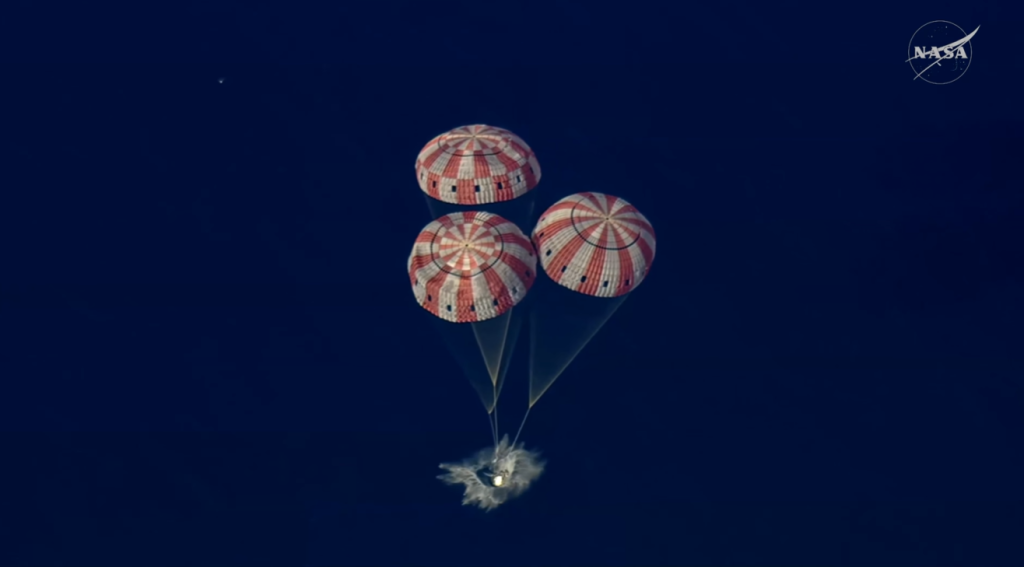
| Splashdown | April 10, 2026 (Pacific Ocean) |
| Recovery Ship | USS John P. Murtha |
| Max Distance | 252,756 miles from Earth |
| Milestones | First woman (Koch), person of color (Glover), and non-U.S. citizen (Hansen) to leave low Earth orbit |
Engineering Success and Minor “Hiccups”
NASA officials have declared Artemis II a “mission well accomplished,” but it wasn’t without its challenges. The crew spent their 10 days validating Orion’s communication, navigation, and life-support systems.
One “mundane” but critical issue identified during the flight was a malfunctioning space toilet. NASA engineers confirmed that a redesign of the waste management system will be prioritized before the longer-duration missions ahead. Additionally, while the modified heat shield performed well during the 25,000 mph reentry, post-flight analysis will continue to ensure the spacecraft’s safety for future surface landings.
The Road to the Moon’s South Pole
The success of Artemis II serves as the foundation for the next several years of lunar exploration:
- Artemis III (Target: Mid-2027): This mission will remain in Earth orbit to test docking procedures between Orion and the commercial lunar landers developed by SpaceX and Blue Origin.
- Artemis IV (Target: Early 2028): This is the high-stakes mission currently slated for the first human lunar landing of the 21st century. It will target the lunar South Pole, a region believed to contain water ice.
- Artemis V and Beyond: NASA intends to begin construction of a permanent “Moon Base” and the Lunar Gateway station by late 2028.
“This was not easy,” Wiseman noted, reflecting on the 50-year gap since the last lunar mission. “Before you launch, it feels like it’s the greatest dream on Earth. Now, it feels like the beginning of something much bigger.”