

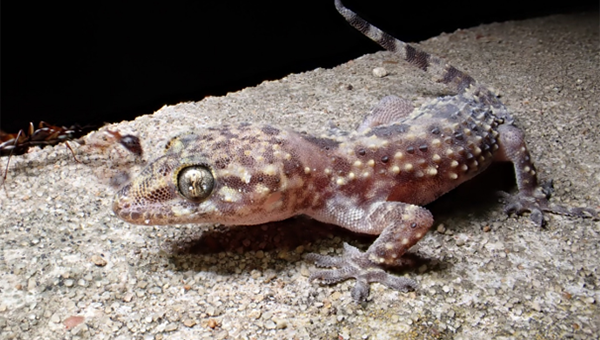
INDIANA — State wildlife officials are asking Hoosiers to keep an eye out for a small, bug-eyed visitor that is increasingly making itself at home in Indiana: the Mediterranean gecko.
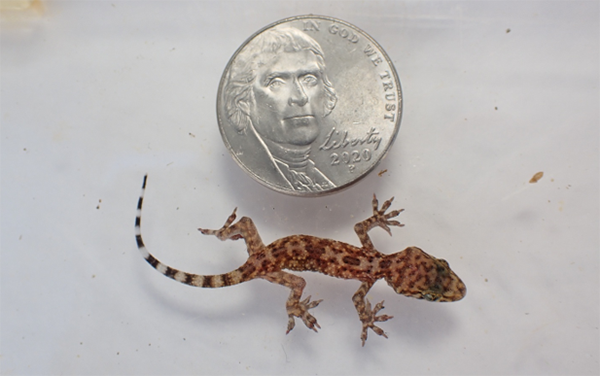
The Indiana Department of Natural Resources (DNR) Division of Fish, Wildlife & Nature Preserves announced it is actively tracking observations of the lizard, which is native to Southern Europe and Northern Africa but has become a common “hitchhiker” across the United States.
Unlike native Indiana reptiles, Mediterranean geckos didn’t arrive by migrating. Instead, they are frequently transported as stowaways on cargo and plant shipments. Because they are almost exclusively found near human infrastructure—such as buildings, greenhouses, and nurseries—they rely on us to survive.
While they thrive in the southern U.S., Indiana’s harsh winters are deadly to the species. To survive the cold season, the geckos must have access to indoor, heated facilities. During the warmer months, residents are most likely to spot them at night, hunting insects near outdoor lights.
Identification: What to Look For
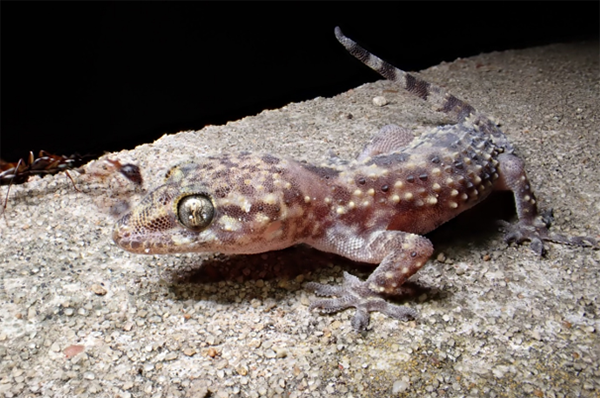
The Mediterranean gecko looks significantly different from any lizard native to Indiana. Residents can identify them by several distinct features:
- Warty Skin: Their bodies are covered in small, bumpy protrusions.
- Distinct Eyes: They have large, bulging eyes with vertical pupils.
- Size: Adults typically reach 4 to 5 inches in length.
- Markings: Younger geckos often display dark banding on their tails.
So far, the DNR herpetology program has tracked nearly 30 observations across the state, the majority of which have come from public reports.
While most of these sightings are believed to be “one-off” stowaways, officials are concerned that three specific sites in Indiana may now host established, breeding colonies.
How to Report a Sighting
The DNR is calling on citizens to help map the spread of this non-native species. If you spot a gecko in your home or business, you are encouraged to report it to State Herpetologist Nate Engbrecht at nengbrecht@dnr.IN.gov.
Reports should include:
- The date of the observation.
- The specific location.
- A clear photograph of the specimen.
The DNR also noted that physical specimens can be transferred to their office for further study. By reporting these sightings, Hoosiers can help biologists better understand how anthropogenic (human-made) environments are allowing non-native species to persist in colder climates.

