

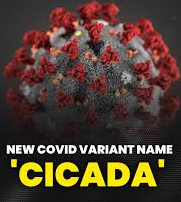
INDIANA — A highly mutated new version of COVID-19 is gaining attention from health officials as it surfaces in wastewater and clinical samples across the United States. Informally dubbed the “Cicada” variant (scientifically known as BA.3.2), the strain has now been detected in at least 25 states, including Indiana, according to the latest surveillance data from the Centers for Disease Control and Prevention (CDC).
The variant earned its buggy nickname due to its unusual evolutionary path. Like its namesake insect, BA.3.2 appeared to “go underground” for years—tracing its lineage back to the original Omicron BA.3 branch from 2022—before resurfacing with a massive surge of new mutations.
The primary concern for scientists is the sheer number of changes in the virus’s spike protein. The Cicada variant carries roughly 70 to 75 mutations, which is significantly more than the dominant strains currently circulating.
- Immune Evasion: These mutations act as a “disguise,” making the virus appear different to our immune systems. This allows it to more easily bypass the defenses built up from previous infections or older vaccine boosters.
- Binding Capacity: While it is better at dodging antibodies, some early lab data suggests it may not bind as efficiently to human lung cells as some previous variants, which could potentially result in less severe illness for those infected.
- Low Prevalence (For Now): Despite its presence in half the country, BA.3.2 currently accounts for less than 1% of sequenced cases in the U.S. However, it recently surged to nearly 30% of cases in parts of Northern Europe, suggesting it has the potential to drive a spring or summer wave.
The Indiana Context
In Indiana, the variant was picked up through wastewater surveillance, which often detects the presence of a virus in a community weeks before people begin showing up at hospitals.
Current CDC data for March 2026 shows that while COVID-19 activity in Indiana is generally “low to moderate,” the Midwest has seen some of the more consistent levels of viral spread this winter compared to the South and West. Health officials in counties like Monroe and Lawrence continue to monitor local sewage samples for spikes that could signal a local outbreak.
Symptoms: Is it a Cold or “Cicada”?
Because the symptoms of the BA.3.2 variant overlap significantly with the common cold, seasonal allergies, and the flu, experts say it is nearly impossible to diagnose without a test.
Commonly reported symptoms include:
- Persistent Cough
- Severe Sore Throat (often reported as a primary early sign)
- Congestion or Runny Nose
- Fatigue and Muscle Aches
- Gastrointestinal Issues (nausea or diarrhea)
- Rare: Loss of taste and smell (becoming less common with newer variants)
“At this point, COVID is becoming a part of our day-to-day lives, similar to the flu,” said Neil Maniar, Director of the Public Health program at Northeastern University. “The biggest focus remains on protecting higher-risk individuals.”
The current 2025–2026 COVID-19 vaccines were designed to target the “JN.1” lineage. While the Cicada variant is genetically distinct from that lineage, health officials say the vaccines still provide a “base layer” of protection that significantly reduces the risk of hospitalization and death.
Prevention Tips:
- Wastewater Tracking: Keep an eye on local Indiana wastewater levels via the CDC’s NWSS dashboard.
- Testing: If you have symptoms and plan to visit high-risk relatives, take an at-home test.
- Ventilation: Opening windows as the weather warms up in Indiana can help dilute viral particles in indoor spaces.

