

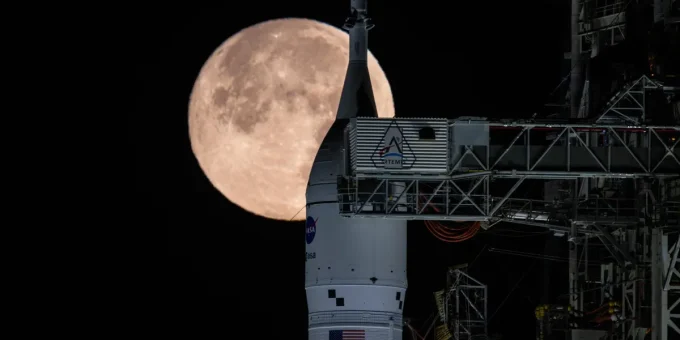
KENNEDY SPACE CENTER, FL — For the first time since the final Apollo mission in 1972, humanity is preparing to return to the vicinity of the Moon. NASA has officially moved the Artemis II mission to the launch pad, with the historic liftoff targeted for Wednesday, April 1, at 6:24 p.m. EDT.
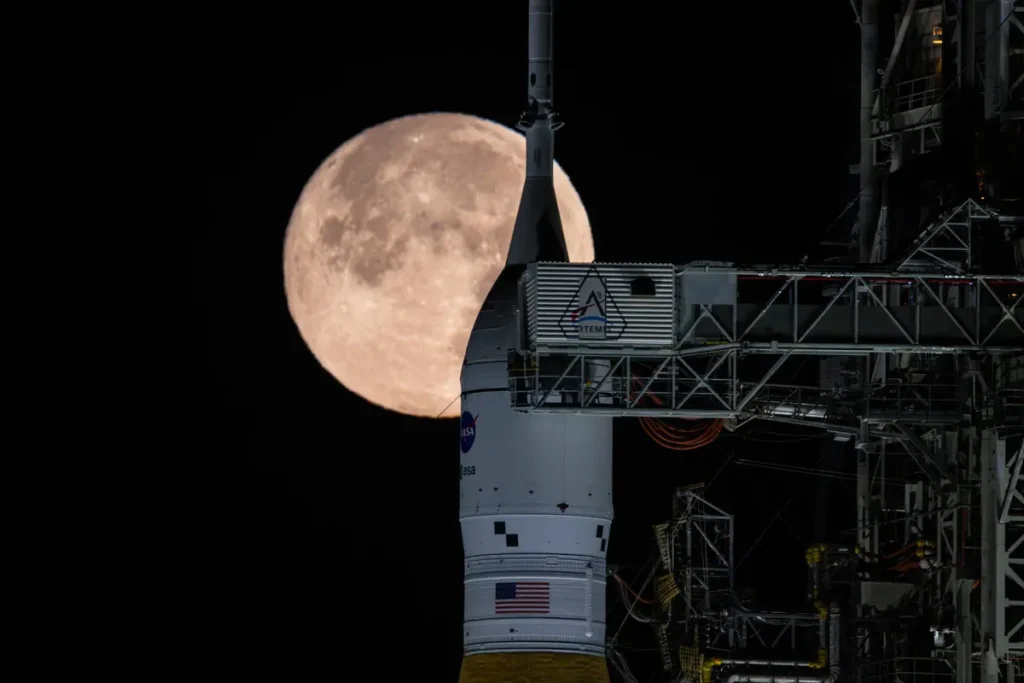
The mission will send a crew of four on a high-stakes, 10-day journey that serves as the ultimate “dress rehearsal” for future lunar landings. After a series of technical delays earlier this year—including repairs to a hydrogen leak and a helium pressurization issue—the Space Launch System (SLS) rocket now stands ready at Launch Complex 39B.
The four-person crew represents a new era of space exploration, featuring several historic firsts for lunar travel:
| Role | Astronaut | Background | Historic Milestone |
| Commander | Reid Wiseman | NASA / U.S. Navy Captain | First lunar mission commander in 50+ years |
| Pilot | Victor Glover | NASA / U.S. Navy Captain | First person of color to travel to the Moon |
| Mission Specialist | Christina Koch | NASA / Electrical Engineer | First woman to travel to the Moon |
| Mission Specialist | Jeremy Hansen | Canadian Space Agency (CSA) | First non-American to travel to the Moon |
The Mission Profile: A 10-Day “Free-Return” Journey
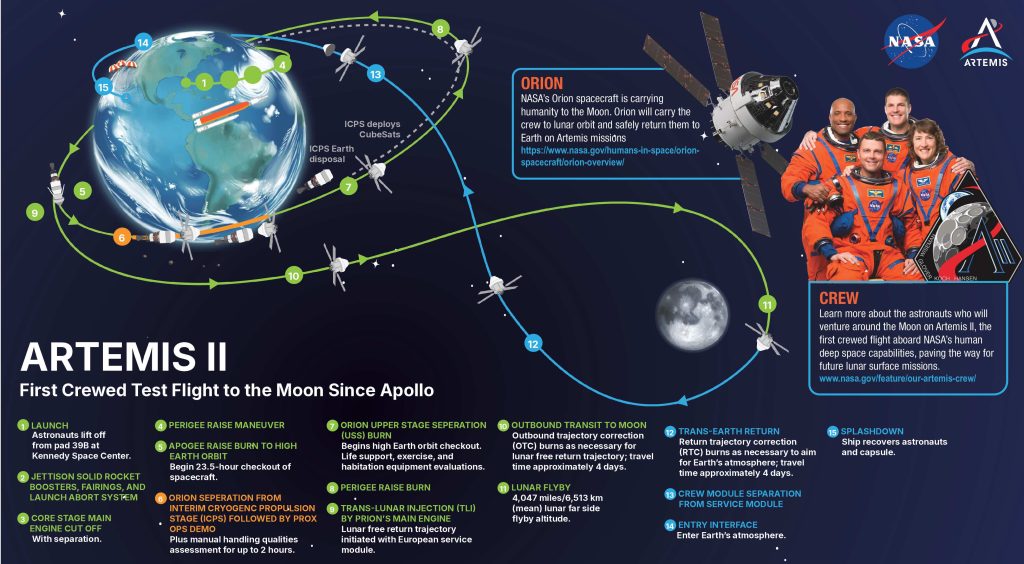
Artemis II is not a landing mission; rather, it is a critical test of the Orion spacecraft’s life-support and navigation systems in deep space.
- Earth Orbit: After launch, Orion will spend roughly 24 hours in a high Earth orbit to allow the crew to perform a “proximity operations” demonstration, practicing manual flying near the spent upper stage of the rocket.
- Trans-Lunar Injection: A massive engine burn will then slingshot the crew toward the Moon.
- The Lunar Flyby: The crew will follow a free-return trajectory, looping around the far side of the Moon at an altitude of approximately 4,700 miles (7,600 km).
- Deep Space Record: During the flyby, the crew is expected to reach a distance of 250,000 miles from Earth—surpassing the record for the farthest humans have ever traveled, previously held by the Apollo 13 crew.
The Artemis II launch comes amidst a significant restructuring of NASA’s lunar timeline. Under the leadership of NASA Administrator Jared Isaacman, the agency announced a “back to basics” approach in early 2026 to ensure safety and technical readiness:
- Artemis III (2027): Originally the landing mission, it has been redefined as a Low Earth Orbit (LEO) mission. It will focus on docking the Orion capsule with commercial landers (SpaceX’s Starship or Blue Origin’s Blue Moon) and testing the new Axiom space suits.
- Artemis IV (Early 2028): This is now the target for the first crewed lunar landing of the 21st century.
- Artemis V (Late 2028): A second landing mission aimed at establishing the first permanent lunar base infrastructure.
How to Watch Live
NASA is providing unprecedented access to the launch. Coverage on NASA+ and YouTube will begin nearly six hours before liftoff to capture the final countdown and “tanking” operations.
- Launch Window: April 1 – April 6, 2026.
- April 1 Liftoff Time: 6:24 p.m. EDT.
- Live Broadcast Starts: 12:50 p.m. EDT.

