


INDIANA — They are the undisputed, neon-glowing kings of the Easter basket. Whether you prefer them fresh and squishy or slightly stale with a crunch, Marshmallow PEEPS® are as much a sign of spring as the blooming daffodils in Southern Indiana.

But as these sugary chicks and bunnies begin to populate local store shelves, many parents and health-conscious adults are looking past the “otherworldly glow” to ask: What exactly are we eating?
According to Beril Hezer, a senior registered dietitian, Peeps are “a big chunk of sugar in a very small package.” A standard serving of five Peeps contains:
| Category | Amount |
| Calories | 140 |
| Total Fat | 0g |
| Sugars | 30g |
| Carbohydrates | 34g |
| Protein | 1g |
Just one serving delivers nearly 60% of the daily recommended limit for added sugars. Because they lack fiber, fat, or protein to slow digestion, these treats cause a rapid spike in blood sugar followed by a nearly immediate “crash.”
The ingredient list for the classic yellow Peep is short but tells a complex story of food science:
- Sugar & Corn Syrup: The primary building blocks. Corn syrup provides the signature chewy texture and prevents the sugar from crystallizing.
- Gelatin: Derived from animal collagen (cows and pigs), gelatin creates the airy, spongy structure. Note: This means Peeps are not vegetarian or vegan.
- Carnauba Wax: This is what gives Peeps their glossy finish. It is harvested from Brazilian palm trees and is the same substance used in car wax and shoe polish. While “wax” sounds unappetizing, it is FDA-approved as a safe glazing agent.
- The Dyes: The bright colors come from synthetic dyes like Yellow #5 and Blue #1 (petroleum-derived) or Carmine (a red dye made from crushed cochineal insects).
In recent years, Peeps made national headlines regarding the use of Red Dye #3. Following animal studies linking the dye to thyroid tumors, the FDA has ordered the removal of Red Dye #3 from all foods by 2027.
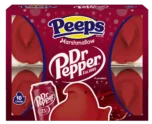
In a proactive move, Just Born Quality Confections (the makers of Peeps) has already phased out the ingredient. Pink and purple Peeps now utilize Carmine or other alternatives, meaning the current 2026 stock is free of the controversial dye.
Indiana’s Sweet Tooth by the Numbers
Peeps aren’t just a snack; they are a cultural phenomenon. In Indiana and across the U.S.:
- 2 Billion: The number of Peeps produced annually.
- 600 Million: The number of Peeps consumed during the Easter season alone.
- The “Stale” Debate: Roughly 25-30% of Peeps fans prefer to eat them after they have been “aged” (left open to the air) to achieve a crunchy exterior.
- Peeps Dioramas: Every spring, libraries and community centers across Indiana host “Peeps Shows,” where residents create elaborate miniature scenes using the candy.
While Peeps offer no meaningful vitamins or minerals, health experts say there is no need to panic. Peeps are best thought of as a treat.

To blunt the sugar spike, experts recommend having your child eat a “couple” of Peeps after a meal that includes protein or healthy fats, rather than on an empty stomach.