

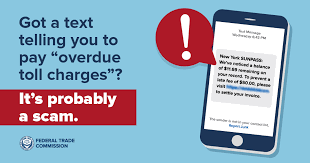
INDIANA – Thousands of Hoosiers are receiving a sternly worded text warning — supposedly sent by a court — that they must immediately pay fines for toll road violations or appear for a hearing.
The text looks authentic. It features official-sounding language and an image of Indiana’s state seal. By scanning a convenient bar code, the texts explain, recipients of the message can quickly and easily “pay their fine” and remedy their predicament — avoiding the need to go to court.

The problem is that the texts come from impostors perpetrating a phishing scam. Phishing is a type of cyberattack where scammers impersonate legitimate organizations to trick victims into clicking malicious links, opening infected attachments, providing credentials or outright making financial payments.
“Don’t fall for these schemes,” said Attorney General Todd Rokita. “Ignore these texts. Just delete them.”
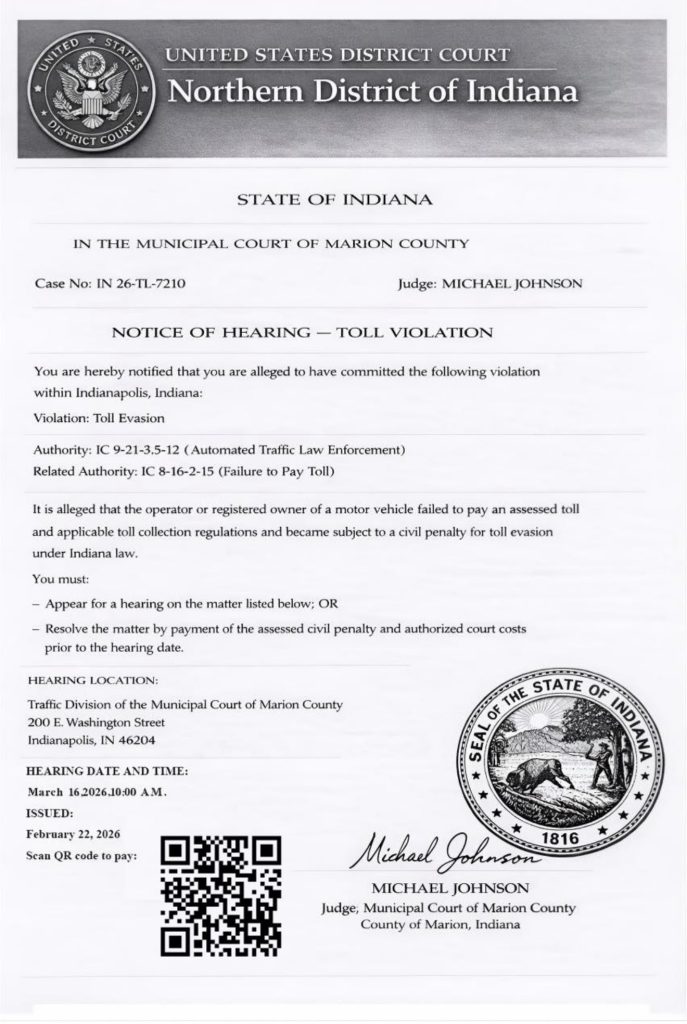
Traditionally, Hoosiers have been well-advised to look for telltale signs of scams, such as: Urgent or threatening language. Website and email addresses that do not match the official domain of the supposed sender — although scammers DO often use names changed only slightly from the real ones. Unusual requests for sensitive personal information, such as passwords, Social Security numbers, or bank details, which legitimate organizations do not ask for via text. Generic greetings and poor grammar. Inaccurate or sloppy renderings of such features as the state seal. While such factors can still be giveaways, the cybercriminals behind these bogus alerts continue becoming more sophisticated in their presentation and tactics — making it more difficult to tell what’s legitimate and what’s not.
The best advice is to avoid doing any business via text. Whereas scammers used to operate primarily by crudely mass-blasting their messages, nowadays their methods are data-driven and highly localized. Modern fraudsters are now served by a growing cottage industry of third-party accomplices operating worldwide that provide specialized products and services — from startup software to dedicated tech support.
A Chinese-language service openly sells “U.S. traffic fine data,” enabling fraudsters to target victims with recent violations — thereby reaching individuals all the more likely to believe the ruse that they are on the hook for unpaid fines related to their recent infractions. Government agencies in the United States have no way currently to stop the scammers before they strike, but leaders worldwide are collaborating to develop better means to keep up with the perpetrators’ technologies and attack cybercrime on a global scale.
“Modern text fraud is an organized and innovative criminal enterprise,” Attorney General Rokita said. “We are doing everything in our power to bring these lawbreakers to justice, but we must maintain a laser focus for now on raising awareness and providing education in orde to help Hoosiers avoid becoming victims in the first place.”
Attorney General Rokita advises Hoosiers to take the following precautions:
- Do Not click on any links in unsolicited email or text messages.
- Do Not provide personal information, such as your driver’s license number or Social Security number.
- Do Not share any card or account information through text messages or unverified links.
- Report the unwanted text messages as junk on the app you use and block the phone number or email address.
- Contact your phone provider for call/text blocking solutions. Many manufacturers have built-in features to block unwanted calls or offer apps to block and label potential spam calls. Click here for a list of resources available.
- Forward spam emails to the FTC at spam@uce.gov and report at reportFraud.ftc.gov.
Important reminder: Legitimate toll notifications from the Indiana Toll Road never arrive via unsolicited text messages demanding immediate payment through a link or QR code. Always verify any alleged toll or violation directly through your account at www.indianatollroad.org or by calling the official customer service line at 574-675-4010.
If you have already provided personal information or money through a link in these email or text messages, file a consumer complaint immediately online at indianaconsumer.com or call 317-232-6330. For more information on avoiding scams, visit the Indiana Attorney General’s website at www.in.gov/attorneygeneral.

