

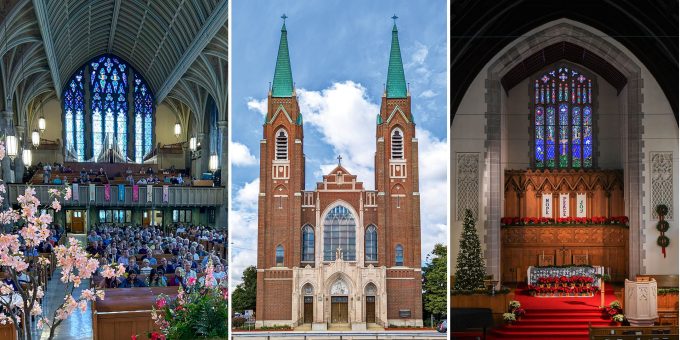
INDIANAPOLIS — Churches and other historic houses of worship stand among the most architecturally distinguished structures in a community, and when congregations shrink, maintenance suffers, and landmarks become threatened.
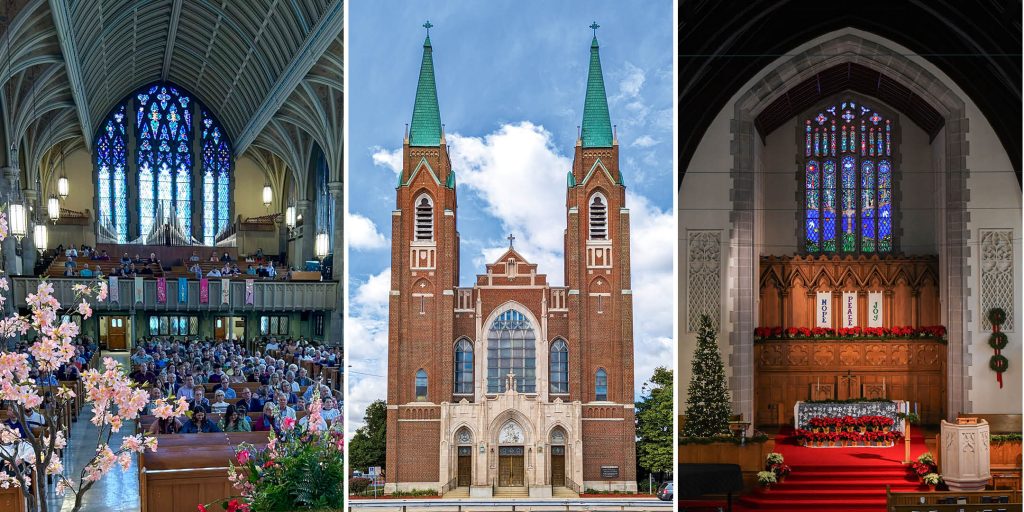
To deal with an increasing volume of calls for help from congregations in historic churches with restoration needs, in 2015, Indiana Landmarks created the Sacred Places Indiana Program with support from Lilly Endowment Inc. In December 2025, Lilly Endowment renewed its support for Sacred Places Indiana with a $10 million grant for ongoing programs to support historic houses of worship, including expert guidance, training, and financial assistance.
“Lilly Endowment’s continued support for Indiana Landmarks’ Sacred Places Indiana program is valuable beyond words,” says David Frederick, director of Sacred Places Indiana. “We’ve already seen the impact that the program is having, not only in terms of support to participating congregations and the historic buildings they steward, but to the communities they serve as well.”
The Sacred Places Indiana Fund awards matching grants in a competitive process to congregations that are committed to good stewardship of their historic structures and have demonstrated signs of organizational health. Applications for the next round of grant funding are now open and will be accepted through June 15, 2026.
If invited to participate in the program, congregations will have the opportunity to apply for planning grants up to $25,000 and capital grants up to $500,000.
Congregations can learn more about the program and grant application process during a Free online informational webinar on Thursday, February 19, from noon to 1:00 p.m. EST. Please RSVP at www.indianalandmarks.org/sacred-places-indiana-fund-webinar/, or call 317-639-4534, 800-450-4534.
In 2025, Indiana Landmarks’ Sacred Places Indiana program provided $2,835,950 to 25 congregations around the state to address capital and planning needs at their historic houses of worship. Other awards supported architectural, rehabilitation, and fundraising studies.