

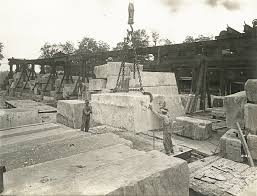
LAWRENCE CO. — While the modern startup world sees companies rise and fall in a flash, Lawrence County is home to several businesses and industries that have leveraged the power of longevity and deep community roots to operate for over a century, proving that heritage is a powerful asset.
These local institutions embody the same principles that enable global brands like Hermès (founded in 1837) and General Electric (founded in 1892) to survive “massive economic and cultural change,” according to a global review by LGT Private Banking.

Sam Taylor, a Business Expert at LLC.org, notes that this kind of endurance isn’t accidental—it’s cultural. “Companies that last 100 years or more have one thing in common: they evolve without losing their identity,” Taylor said. “They know what they stand for but aren’t afraid to change how they deliver it. That’s what separates legacy from longevity.”
The Pillars of Lawrence County’s Longevity
The longest continuous business activity in Lawrence County is firmly tied to two key sectors: the Limestone Industry and Financial/Civic Institutions.
The Indiana Limestone Company (Since the 1860s) 🪨
The Indiana Limestone Company, in Oolitic, remains the county’s defining economic engine, with Bedford known globally as the “Limestone Capital of the World.” The continuous operation of quarrying and fabrication makes this the region’s longest-running economic driver.
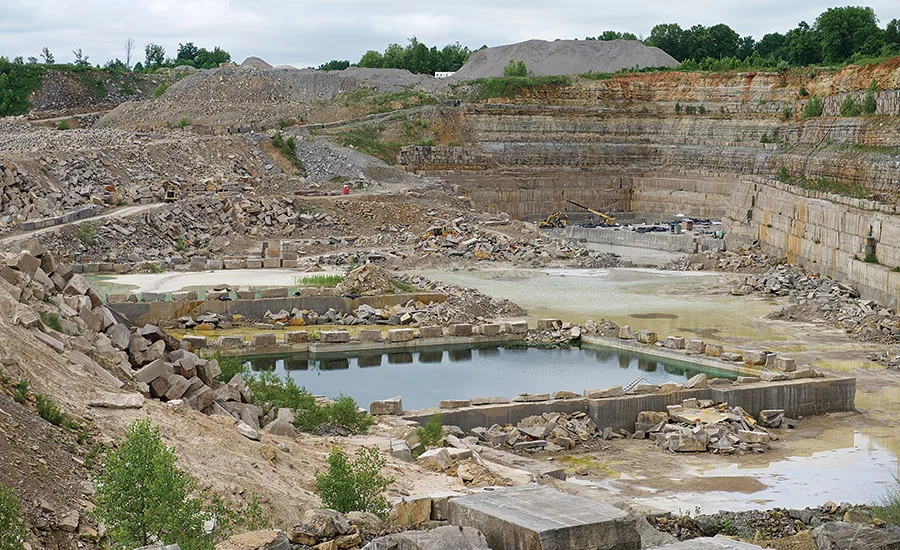
Matthews Brothers Stone Company: John Matthews established a stone operation as early as 1862 (in nearby Monroe County, which shares the stone belt), with the core business of quarrying in the region dating back to the 1860s. The continuous presence of stone mills and quarries, with early documented operations such as Nicholas Coats’ opening near Bedford in 1865, secures the industry’s place as a pillar of continuity.
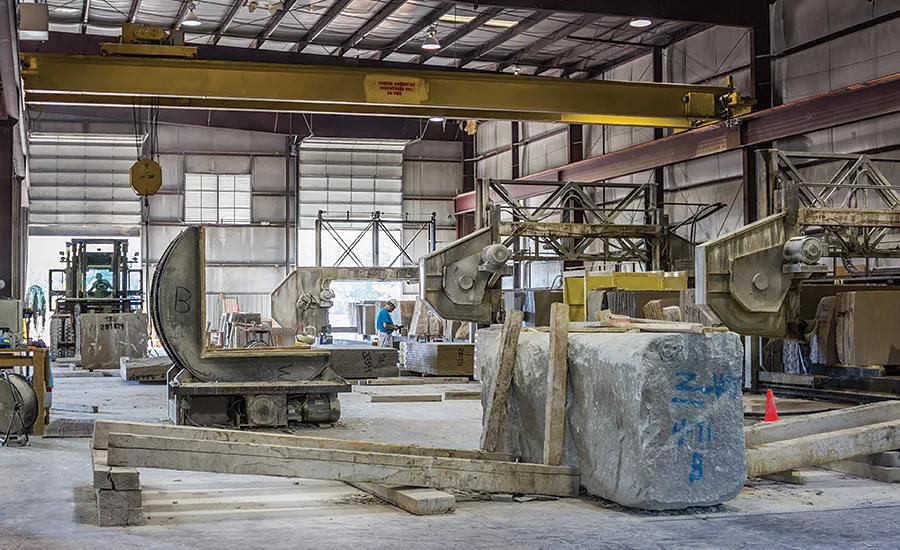
The history of Lawrence County, Indiana, is inextricably linked to the Indiana Oolitic Limestone Industry, which has served as the region’s continuous economic backbone for over 160 years. Known as the “Limestone Capital of the World,” the area has supplied the durable, high-quality stone used in countless iconic American structures.
From Inland Sea to National Monument
The story of the limestone begins over 300 million years ago, when a shallow inland sea covered the Midwest. The decomposition of countless marine organisms formed the unique, fine-grained sedimentary rock known as Salem Limestone (or Indiana Oolitic Limestone), which is easily carved yet incredibly durable upon exposure.
The limestone belt, a narrow corridor spanning roughly 35 miles long and 10 miles wide through Monroe and Lawrence counties, holds this massive, continuous deposit.
The Rise of a Global Industry
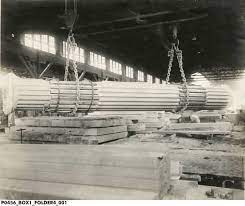
Commercial quarrying in the “stone belt” began in the 1820s, but the industry exploded in the mid-19th century, particularly in Lawrence County:
- Early Operations: The first quarry in Lawrence County opened near Bedford in 1852 by John Glover. The industry quickly gained traction, with operations like Matthews Brothers Stone Company establishing a saw mill in 1864.
- Technological Advances: The introduction of steam-powered channeling machines in 1875 and electric-powered machines in 1895 significantly increased productivity, enabling companies to meet the soaring demand.
- Infrastructure: The development of the Bedford Belt Railway was crucial, connecting the numerous quarries and mills around Bedford to major railway lines (like the Monon), enabling the massive blocks of stone to be shipped across the country.
This growth established the area as the primary source of dimension stone in the U.S.
The Stone That Defined American Architecture
Indiana limestone’s uniformity, ease of fabrication, and weather resistance made it the material of choice for architects during the late 19th and early 20th centuries, especially following major city fires that encouraged the use of fire-resistant materials.
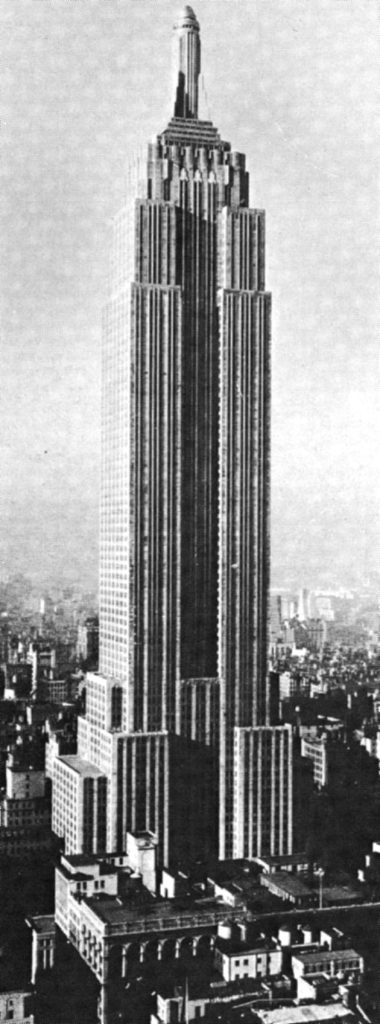
The stone has been used in an estimated 60-80% of all significant stone buildings in the United States, including:
- New York City: The Empire State Building (stone quarried near Oolitic), Rockefeller Center, and Grand Central Terminal.
- Washington, D.C.: The Pentagon, the National Archives, and the National Cathedral.
- State Capitals: Approximately 35 of the 50 U.S. state capitol buildings.
- Universities: Campuses across the country, particularly those built in the Neo-Gothic and Art Deco styles, utilized limestone extensively (e.g., the University of Chicago).
Cultural and Economic Impact
The industry not only built major American landmarks but also shaped the local communities. Towns like Oolitic (named after the type of limestone found there) grew as immigrant families from places like Italy and Germany moved to the county to work in the quarries and mills.
Today, while architectural styles have changed, Indiana limestone remains highly valued for both new construction and restoration projects, ensuring its continued availability and relevance for centuries to come.
Financial and Civic Institutions (Since the Early 1900s)
Banking and civic organizations represent the oldest continuously operating formal institutions serving the community:
- Bedford Area Chamber of Commerce: The Chamber has been continuously supporting the local business community for well over a century, having been officially chartered in April 1916.
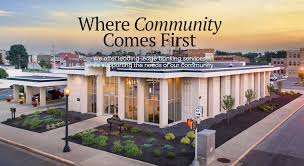
- Bedford Federal Savings Bank: The bank traces its roots back to September 20, 1926, when it was organized as a state-chartered loan and savings association. It continues today as a key financial institution, demonstrating the endurance of local banking services.
A Note on Earliest Commerce
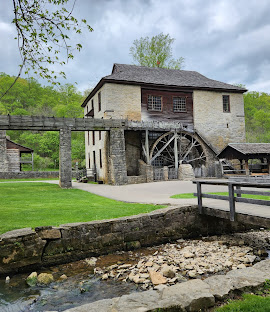
While not a company in the modern sense, the area around Spring Mill State Park shows some of the earliest continuous commerce, with the stone mill there completed in 1818, operating as a vital trade center for decades.
The 5 Traits of Enduring Brands
Lawrence County’s heritage businesses share the characteristics that business experts credit for allowing brands to thrive across generations:
| Trait | Description |
| Purpose Over Product | Constantly reinventing delivery (e.g., modernizing quarry technology) while protecting the essence (Indiana Limestone quality). |
| Adaptation as a Core Value | Constantly reinventing delivery (e.g., modernizing quarry technology) while protecting the core essence (Indiana Limestone quality). |
| Leadership With Continuity | Maintaining a shared vision across generations is common in family-owned businesses, such as those in the limestone and financial industries. |
| Customer Trust as a Currency | Trading on reliability. For stone producers and banks alike, reputation is a long-term investment. |
| Innovation Anchored in Tradition | Successfully blending heritage with relevance, ensuring the brand matters to every new generation. |
As Taylor summarizes, “Legacy brands don’t last because they’re the oldest in the room. They last because they keep earning relevance. Every generation has to rediscover why the brand matters, and great companies make sure that answer never fades.”

