

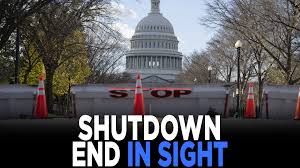
WASHINGTON, D.C. — The House of Representatives voted on Wednesday to approve a spending package, sending the legislation to President Trump’s desk for his signature, ending the longest government shutdown in U.S. history on its 43rd day.
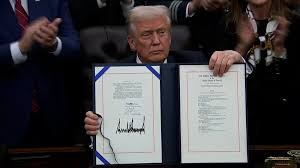
The bill passed by a vote of 222 to 209.
Notably absent from the funding package are any provisions to extend health care subsidies — a central sticking point for Democratic lawmakers. Trump’s signature paves the way for paychecks to flow to government employees, as well as the resumption of critical food and nutrition services relied on by tens of millions of Americans. However, it only extends funding until January 30, giving lawmakers a little over two months to avoid a similar shutdown situation from playing out next year.
The House vote followed a critical shift in the Senate days earlier, where eight members of the Democratic caucus broke ranks to join Republicans in moving the spending measure forward.


In the House vote, six Democrats joined the Republican majority in approving the bill. In contrast, only two Republicans—Representatives Thomas Massie of Kentucky and Greg Steube of Florida—voted against it.
Representative Tom Cole (R-Oklahoma), the chairman of the Appropriations Committee, welcomed the vote, stating, “History reminds us that shutdowns never change the outcome, only the cost paid by the American people. Over the last 43 days, the facts did not shift, the votes required did not shift and the path forward did not change.”
Health Care Subsidies at Center of Standoff
The shutdown hinged on Democrats’ insistence on including an extension of federal health care subsidies set to expire at the end of the year, a measure opposed mainly by congressional Republicans.
The final bill, championed by the Trump administration as devoid of “partisan, ‘poison pill’ provisions demanded by the Democrats,” did not include the health care extension. President Trump had made it clear he would not negotiate on the issue as the shutdown dragged on, leading a crucial group of Senate Democrats to conclude that an off-ramp was necessary due to the severe impacts on:
- Hundreds of thousands of federal workers are missing paychecks.
- Millions of Americans are at risk of losing food assistance (SNAP).
- Millions of travelers are facing significant disruptions to their air travel.
Democratic Backlash and Future Plans
The Democratic defections in the Senate drew a bitter backlash from many House Democrats, who argued that the party should have maintained a firm stance until the healthcare demand was met.

Representative Alexandria Ocasio-Cortez (D-New York) criticized the outcome, stating, “We have federal workers across the country that have been missing paychecks… and we have to figure out what that was for.” She accused the Trump administration of inflicting “cruelty” on the American people during the standoff.
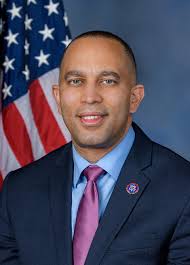
Representative Hakeem Jeffries (D-New York), the Democratic leader, vowed to continue the fight for the subsidies, announcing that party leaders would file a discharge petition—a procedural move to force a vote—to extend the subsidies for three years.
“There are only two ways this fight will end,” Rep. Jeffries said. “Either Republicans finally decide to extend the Affordable Care Act tax credits this year. Or the American people will throw Republicans out of their jobs next year and end the speakership of Donald J. Trump once and for all.”
Key Provisions in the Spending Package
The compromise bill approved by the House includes:
- Funding for the remaining parts of the government through January.
- Full-year funding for programs related to agriculture, military construction, veterans, and legislative agencies for most of 2026.
- A provision ensuring retroactive pay for furloughed federal workers and reversing layoffs made during the shutdown.
- A controversial measure that provides a legal avenue for Republican senators whose phone records were seized by investigators looking into the Jan. 6 attack to sue the government for at least $500,000 each.
Senate leaders quietly added the latter provision, drawing bipartisan anger in the House. Speaker Mike Johnson announced that House Republicans would introduce and fast-track legislation to repeal that specific measure as early as next week.

