

WASHINGTON, D.C. – A recent report from the U.S. Census Bureau’s Current Population Survey Fertility Supplement shows a significant increase in the percentage of childless women across nearly all age groups. The only exception was women ages 45 to 50, who saw a slight decline in childlessness.
The data, which compares 2014 and 2024, reveals a trend of women delaying childbirth, often until their late 30s and 40s.
Key Findings by Age Group
The rise in childlessness was most pronounced among women in their 20s:
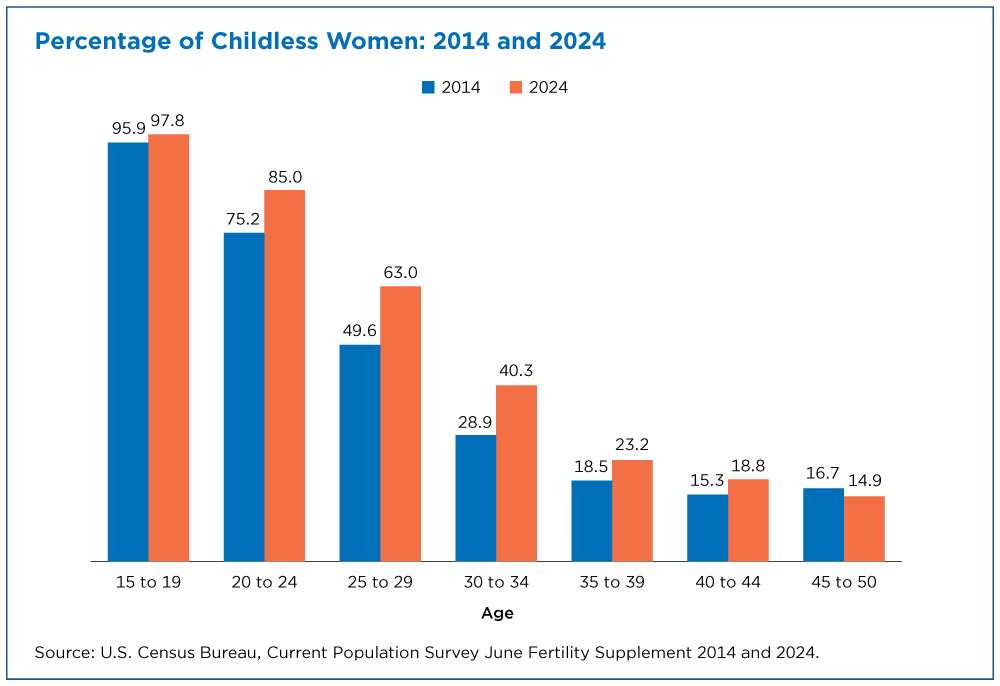
- Ages 20-24: The share of childless women rose from about 75% in 2014 to 85% in 2024.
- Ages 25-29: Childlessness increased from roughly 50% to 63%.
- Ages 30-34: The percentage of childless women grew from approximately 29% to 40%.
- Ages 15-19: The share of childless teens increased from 95.9% to 97.8%, a trend consistent with a long-term decline in teen pregnancies.
The only group to experience a decrease in childlessness was women aged 45-50, whose rate dropped from 16.7% in 2014 to 14.9% in 2024. This suggests a growing number of women are having children later in life.
Why Are Women Waiting?
The trend of delaying motherhood reflects broader societal and economic shifts. The Census Bureau suggests that young adults are prioritizing economic security over starting families, citing rising costs for housing, food, and other necessities. Additionally, factors like women’s increased educational attainment and labor force participation contribute to this demographic shift.

