

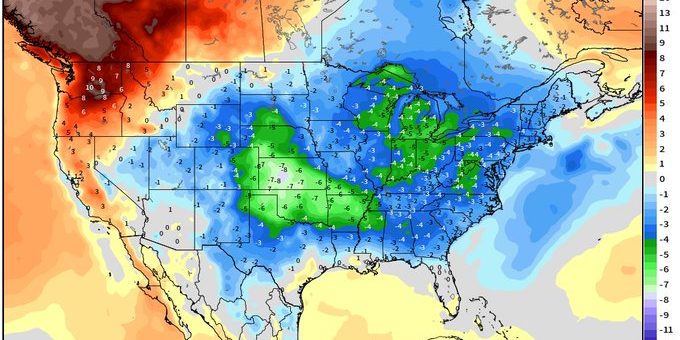
INDIANA – As summer winds down, a weakened polar vortex is expected to bring below-average temperatures to parts of the U.S. this September. This contrasts with the record-breaking heat waves seen earlier in the summer, with forecasts suggesting a significant shift in weather patterns.
The Science Behind the Shift
The polar vortex is a persistent low-pressure system of cold air that is always present around the Earth’s poles. The term “vortex” refers to the counter-clockwise flow of air that helps contain the colder air near the poles. When the polar vortex is strong, it prevents the cold air from escaping the Arctic. However, when it weakens, it can become less stable, allowing fragments of cold air to plunge southward with the jet stream, bringing early cold outbreaks to parts of North America.
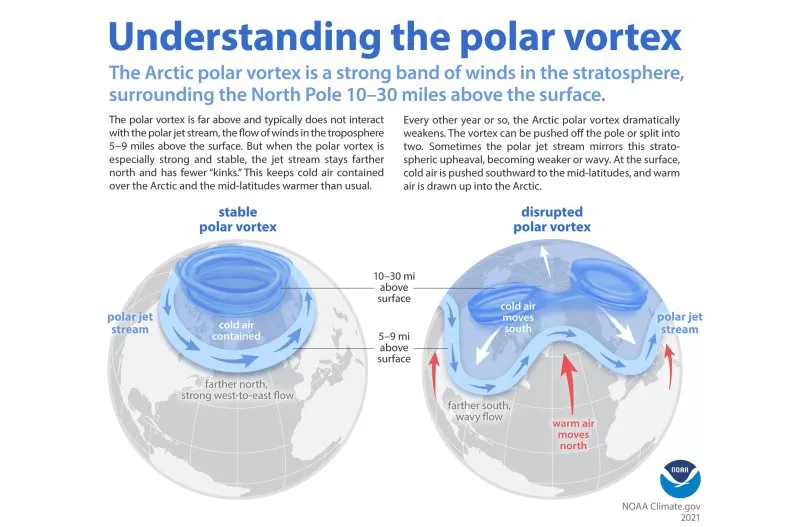
According to meteorologists, the polar vortex has been slow to strengthen this year. Factors contributing to this include warming in the stratosphere and the Quasi-Biennial Oscillation (QBO), a 24-28-month cycle of equatorial winds. The QBO is currently in a negative phase, which produces easterly winds that can weaken the vortex during the fall and early winter.
What to Expect
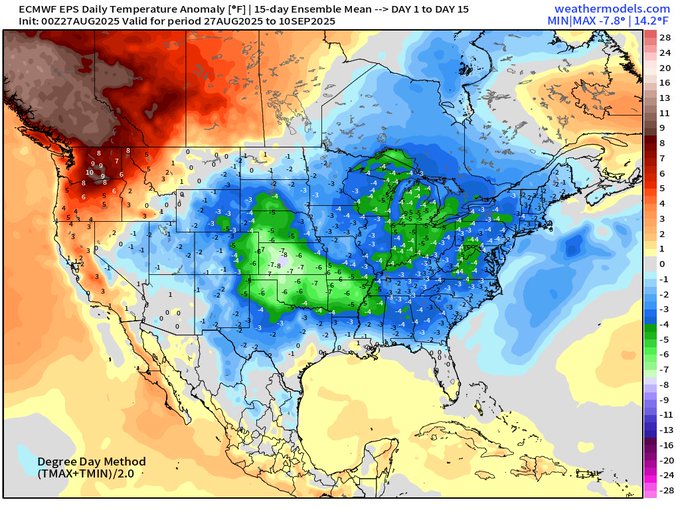
A forecast map from meteorologist Ryan Maue for the period of August 27 to September 10 suggests a broad area of the country could experience cooler-than-normal temperatures. AccuWeather’s fall forecast predicts that the first and most pronounced cold air will arrive in the Upper Midwest, including North Dakota, South Dakota, Minnesota, Iowa, Wisconsin, Illinois, Indiana, and Michigan.
Meteorologist Mark Margavage noted that a “very weak stratospheric polar vortex” is forecast for early September, which is unusual as it typically strengthens during this time of year. This disruption could cause the jet stream to become more erratic, increasing the risk of early cold snaps and heavy precipitation in parts of North America, Europe, and Asia.
While these cold snaps are unusual for early September, the National Weather Service explains that the polar vortex’s expansion southward is a regular occurrence in winter, bringing arctic air to the U.S.