

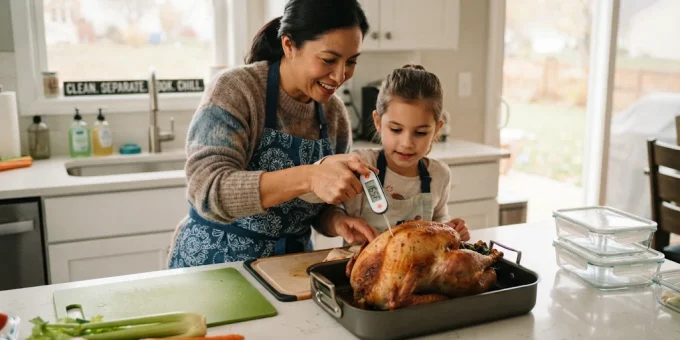
INDIANA — As families prepare for Thanksgiving and winter holiday gatherings, the Indiana Department of Health (IDOH) is urging Hoosiers to follow safe food-handling practices and take precautions against seasonal respiratory illnesses.
With indoor celebrations increasing across the state, health officials are highlighting simple kitchen rules and everyday hygiene habits to keep gatherings safe from both foodborne and viral illnesses.
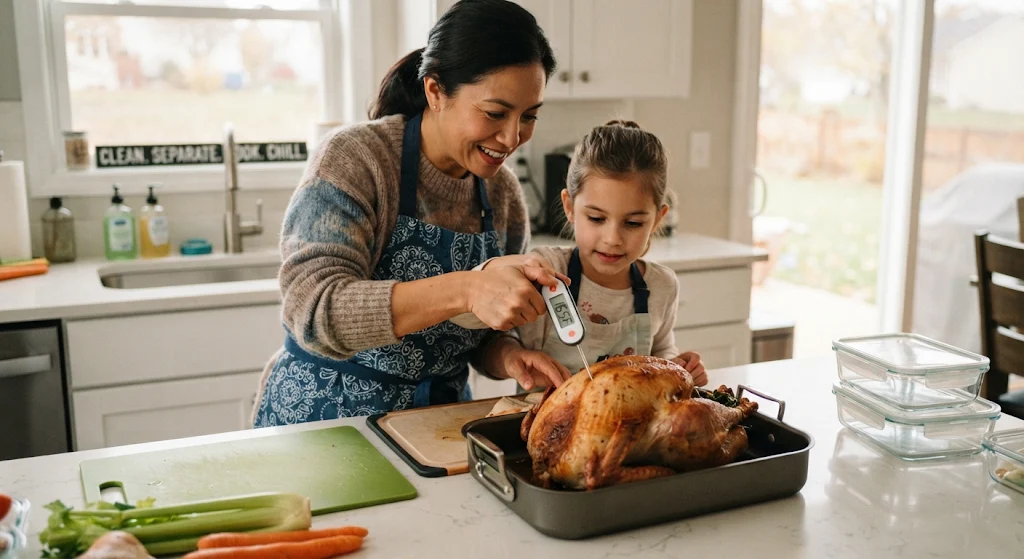
Four Core Rules for Safe Holiday Cooking
To prevent food poisoning, IDOH reminds cooks to follow four core steps—Clean, Separate, Cook, and Chill:
- Clean: Wash hands with soap and warm water for at least 20 seconds before, during, and after handling food, as well as before eating. Clean utensils, cutting boards, and countertops after preparing each item, and rinse fresh fruits and vegetables under running water.
- Separate: Keep raw meat and poultry away from other groceries in the refrigerator. Use one cutting board or plate strictly for raw meat and poultry, and a separate one for ready-to-eat foods like produce and bread.
- Cook: Use a food thermometer to verify that dishes reach an internal temperature high enough to destroy harmful bacteria.
- Chill: Refrigerate perishable foods at temperatures below 40°F and never leave perishables sitting out at room temperature for more than two hours (or one hour if exposed to temperatures above 90°F, such as inside a warm car). Keep cold dishes like deli platters and chicken salad chilled at or below 40°F.
Turkey Preparation and Leftover Guidelines
Health officials emphasized proper turkey handling from freezer to table. Keep turkeys frozen until ready to thaw, and thaw them safely in the refrigerator, in cold water, or in a microwave—never on the counter.
IDOH also warns against washing or rinsing raw turkey, noting that USDA research shows one in four people who rinse poultry spread bacteria to surrounding foods and kitchen surfaces. Instead, rely on proper cooking to eliminate germs. A turkey is safe to eat once a food thermometer reads 165°F (74°C) in three locations:
- The thickest part of the breast
- The innermost part of the thigh
- The innermost part of the wing
After the meal, store leftovers in airtight packaging or sealed containers within two hours, eat them within three to four days, and reheat all leftovers to at least 165°F before serving.
Anyone experiencing foodborne illness symptoms—such as nausea, vomiting, stomach cramps, diarrhea, dehydration, headache, or fever—should stay home until symptom-free for at least 24 hours.
Guarding Against Seasonal Respiratory Viruses
Beyond kitchen safety, IDOH noted that Indiana is seeing rising viral respiratory activity, including influenza and COVID-19, as more people gather indoors. Officials encourage residents to speak with a health care provider about getting vaccinated before holiday events and to practice the “3 C’s”:
- Clean: Wash hands frequently.
- Cover: Cover coughs and sneezes using your inner arm or elbow.
- Contain: Stay home from work, school, and public gatherings when feeling sick to avoid spreading illness to others.
Additional resources on foodborne and respiratory illnesses are available on the Indiana Department of Health website at www.health.in.gov.