


FORT WAYNE — Indiana Governor Mike Braun visited the Indiana State Police (ISP) Fort Wayne Post today to meet with detectives and forensic scientists utilizing advanced DNA technology to crack decades-old cold cases, hold offenders accountable, and bring long-awaited answers to victims’ families.
During the visit, Braun toured the ISP Fort Wayne Regional Laboratory to observe firsthand how modern forensic science is breathing new life into unsolved investigations. He met with members of the ISP Cold Case Unit, including First Sergeant Jeffrey Coffey, a 31-year ISP veteran who commands the unit, and retired ISP Captain Kevin Smith, who now serves as a civilian investigator.
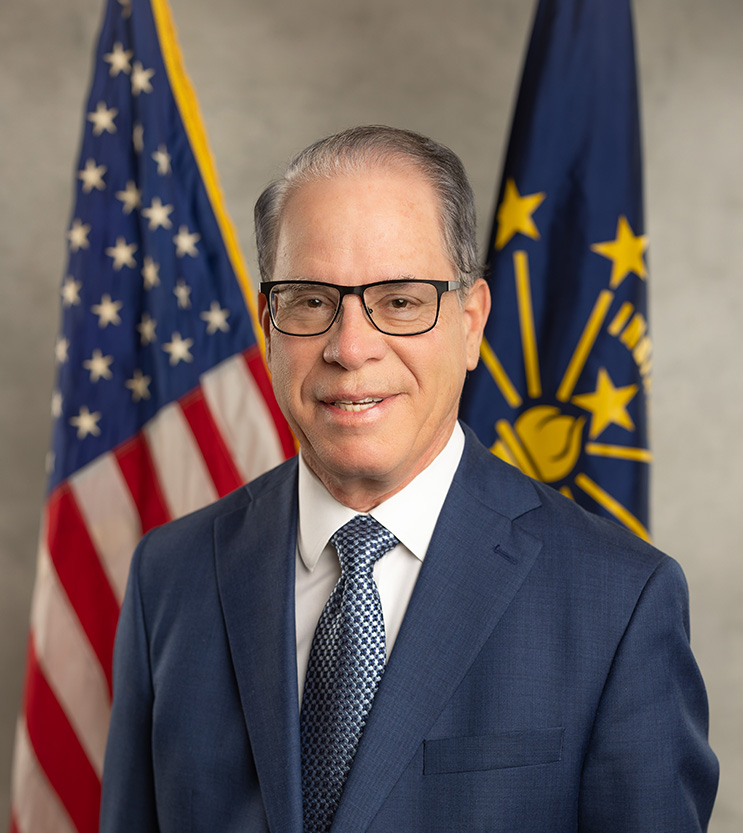
“Public safety is one of my top priorities, and that includes making sure victims and their families get closure and justice,” Braun said. “Time should not stand in the way of justice. I’m proud of the work our Indiana State Police are doing to use new technology, follow every lead, and bring answers to families who have waited decades. Criminals should know that in Indiana, we will find you, no matter how long it takes.”
Specialized Unit and In-House Genetic Genealogy
Established in 2024, the ISP Cold Case Unit pairs five detectives with five civilian investigators stationed across the state to focus exclusively on unsolved homicides and missing persons cases.
Indiana State Police is also among the first state law enforcement agencies in the country to employ an in-house forensic genetic genealogist. By combining advanced DNA analysis with deep genealogical research, scientists and detectives work side-by-side to trace family trees, identify unknown suspects, and generate fresh leads in stagnant investigations.
Recent Cold Case Breakthroughs
State officials highlighted two major investigations recently solved through ISP’s forensic genetic genealogy program:
- 1986 LaGrange and Steuben County Sexual Assaults: Nearly four decades after a woman was abducted, held against her will, and sexually assaulted across LaGrange and Steuben counties, forensic genetic genealogy linked DNA evidence from the case to a specific family line. Following additional investigative work, detectives narrowed the evidence to a single suspect. On Feb. 10, 2025, 62-year-old Ricky Devonne McLatcher of Quincy, Michigan, was arrested on charges of criminal deviate conduct, burglary, and criminal confinement.
- 1997 Angela Saco Homicide: In 1997, 25-year-old Angela Saco was found dead on Huntington County Reservoir property. In February 2026, forensic genetic genealogy identified Stephen L. Shlater as a potential suspect, and subsequent DNA testing confirmed his link to crime scene evidence. According to Huntington County Prosecutor Jeremy Nix, Shlater—who is now deceased—would face a murder charge if he were alive today.
State leaders emphasized that these breakthroughs underscore the power of pairing seasoned law enforcement investigators with emerging forensic science to pursue justice, regardless of how much time has passed.