

INDIANA — The Centers for Disease Control and Prevention (CDC) has issued an official Health Alert Network advisory to inform the public and healthcare providers about a nationwide rise in human exposures to rabid or potentially rabid animals.
Indiana is one of several U.S. regions highlighted for increased rabies inquiry rates and exposure events, driven primarily by wildlife like bats.
Bats are the most frequent source of rabies in Indiana, though other wildlife such as skunks, foxes, raccoons, and coyotes are also high-risk vectors. High-profile cases—such as a Greenwood, Indiana, resident who required preventive treatment after a bat encounter—have drawn attention to local exposure risks.
The Indiana Department of Health (IDOH) prioritizes testing for wild reservoir species like bats, while maintaining standard rabies prevention and bite reporting guidelines through local health departments.
Federal health officials reported receiving 17% more rabies-related inquiries from July through August compared to the same timeframe last year. The spike includes multiple reports of “mass exposure events,” leading to an increased demand for post-exposure treatments across several states.
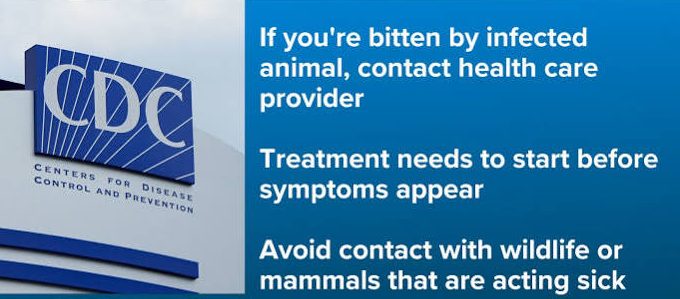
In response to the surge, the agency is reminding the public to strictly avoid contact with unfamiliar, wild, or visibly sick animals and to seek medical assistance immediately if bitten or scratched.
Understanding Rabies Risk and Transmission
Rabies is a fatal yet entirely preventable viral disease affecting the central nervous system of mammals. The virus is typically transmitted through the saliva of an infected animal via a bite, scratch, or direct contact with mucous membranes.
- Primary Wildlife Carriers: In the United States, rabies is most commonly found in wild animals, particularly bats, raccoons, skunks, and foxes. Bats remain the leading cause of human rabies deaths in the country.
- Domestic Risk: Unvaccinated pets and livestock can contract the virus from wildlife and pose a direct transmission risk to humans.
- Symptom Onset: Once clinical symptoms—such as fever, hyperactivity, confusion, difficulty swallowing, or hydrophobia (fear of water)—appear, the disease is nearly 100% fatal.
Prevention and Post-Exposure Steps
Health authorities emphasize that prompt post-exposure prophylaxis (PEP) treatment is virtually 100% effective in preventing the disease if administered before symptoms begin.
If an individual is bitten, scratched, or exposed to a potentially rabid animal, the CDC advises taking the following immediate steps:
- Wash the Wound: Thoroughly wash all bites or scratches immediately with soap and water for several minutes to reduce viral load.
- Seek Medical Care: Contact a doctor, urgent care center, or emergency room right away to undergo a professional risk assessment.
- Report the Incident: Notify local animal control or health departments to assist in capturing or testing the animal, if safely possible.
- Complete PEP Treatment: If prescribed, receive the full post-exposure series, which typically consists of a dose of Human Rabies Immune Globulin (HRIG) and a four-dose regimen of the rabies vaccine given over 14 days.
The CDC also advises pet owners to keep domestic animals up-to-date on rabies vaccinations and to supervise pets outdoor to prevent contact with local wildlife.