

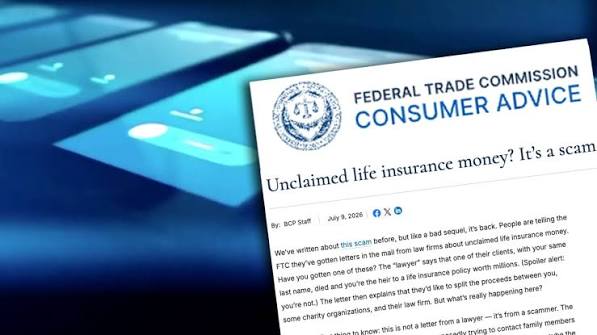
INDIANA — The Federal Trade Commission (FTC) is raising the alarm over a classic phishing scheme making a dangerous comeback in mailboxes across the country: fake letters from non-existent law firms promising large sums of unclaimed insurance money.
The scam works by casting a wide net to lure unsuspecting victims into giving up sensitive personal and financial details.
How the “Unclaimed Insurance” Scam Works
Recipients receive an official-looking letter sent by a supposed “law firm.” The letter claims that one of the firm’s clients recently passed away, sharing the exact same last name as the reader, and left behind a substantial life insurance payout or inheritance with no listed beneficiaries.
“They send that to as many people as possible in hopes that someone will respond,” said Terri Miller, a consumer education specialist at the FTC. “They’re casting a wide net with that phishing scam… but the spoiler alert here is that you’re not eligible for this money. The money doesn’t actually exist at all.”
The letter urges the reader to call a provided phone number immediately to claim their share of the funds. Once a victim calls, scammers use high-pressure tactics to request personal identifiers, such as Social Security numbers, dates of birth, or direct bank account details under the guise of “verifying” the claim.
AI Tech Making Scams Look More Convincing
While variations of the “long-lost relative” or “unclaimed inheritance” scheme have existed for decades, federal regulators note a troubling modern twist.
The FTC suspects fraudsters are increasingly leveraging Artificial Intelligence (AI) writing tools to draft these letters. This allows scammers to eliminate obvious spelling and grammatical errors, adopt convincing legal terminology, and tailor tone dynamically—making fake correspondence appear far more legitimate than in years past.
How to Protect Yourself and Others
The FTC advises consumers who receive these letters to take the following steps:
- Do Not Respond: Never call the phone number, email the sender, or scan QR codes provided in unsolicited letters.
- Keep Information Private: Never share financial details or personal information with anyone promising large financial rewards out of the blue. A legitimate payout will never require you to send personal data or upfront fees to an unknown entity.
- Warn Friends and Family: While tech-savvy individuals may spot the red flags quickly, older adults or vulnerable family members are often targeted by physical mail scams.
- Report It: Help federal authorities track and fight fraud by reporting deceptive letters directly to the FTC at ReportFraud.ftc.gov.