


WEST LAFAYETTE — Purdue University’s campus is home to the only nuclear reactor of its kind in the U.S.
The nuclear reactor generates power equivalent to about 10 microwaves. Purdue University Reactor Number One, known as PUR-1, has specific features that no other reactor in the U.S. has but can be expected to make an experience in the next generation of reactors.
Future reactors could be safer, more efficient, less expensive, and easier to maintain, leading to increased use of carbon-free nuclear energy.
PUR-1 is the first all-digital reactor to be licensed by the U.S. Nuclear Regulatory Commission. This means the “nervous system” of the reactor, its instrumentation and control system, is fully digital.
“Our switch to digital instrumentation and control signaled to the nuclear industry that this is possible in the U.S.,” said Seungjin Kim, the Capt. James F. McCarthy, Jr. and Cheryl E. McCarthy Head of Purdue’s School of Nuclear Engineering and facility director of PUR-1.
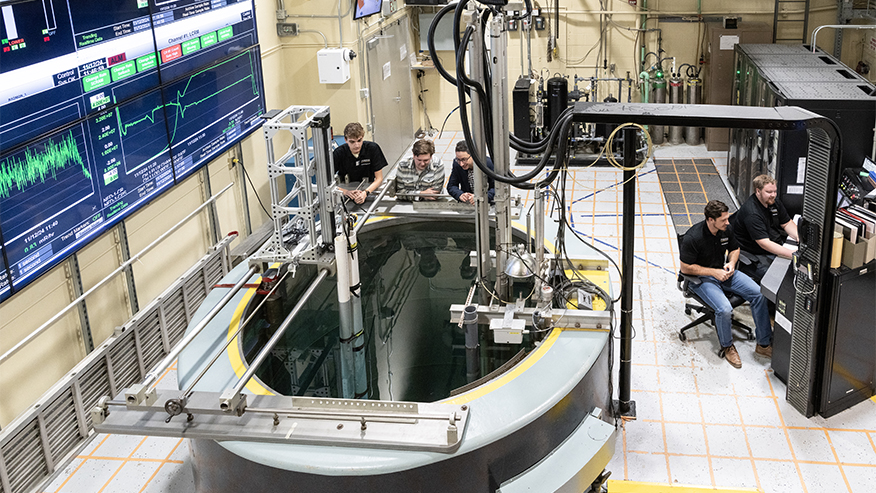
Built in 1962, PUR-1 was converted to digital operation in 2019 with support from the Department of Energy’s Office of Nuclear Energy. Since then, Purdue researchers have used the reactor to study technologies that could improve advanced reactors, including small modular reactors and microreactors.
In 2023, the lab of Purdue nuclear engineering assistant professor and associate PUR-1 director Stylianos Chatzidakis finished building a “digital twin” of PUR-1. The data collected from this computer-based model has allowed Chatzidakis research group and collaborators to predict performance, test new approaches and improve reactor operations.
Data collected from PUR-1’s digital twin can also help researchers identify potential problems with reactors before they occur, allowing future reactors to be monitored remotely. This would reduce operating costs and improve safety.
Purdue researchers are also exploring cybersecurity solutions for digitally controlled reactors. Their work has shown that AI and machine learning can help distinguish abnormal from normal cybersecurity activity, while studies are examining the potential of quantum encryption to protect reactor communications.
Through PUR-1, Purdue is helping shape the future of nuclear energy by developing digital technologies that could make advanced reactors safer, smarter and more accessible.

