

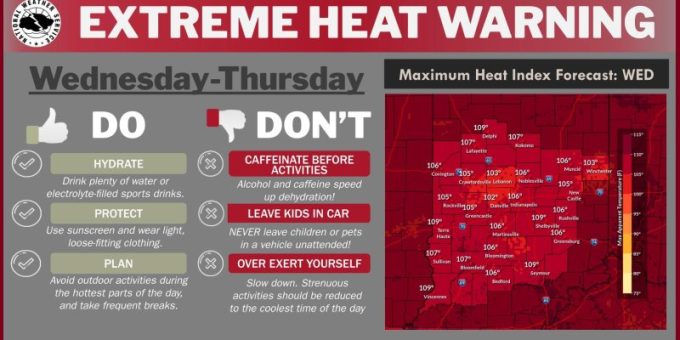
INDIANA — A dangerous stretch of summer weather is taking a turn for the worse across the Hoosier State. The National Weather Service in Indianapolis has officially upgraded the regional weather advisory to an Extreme Heat Warning, which will remain in effect through Thursday night.
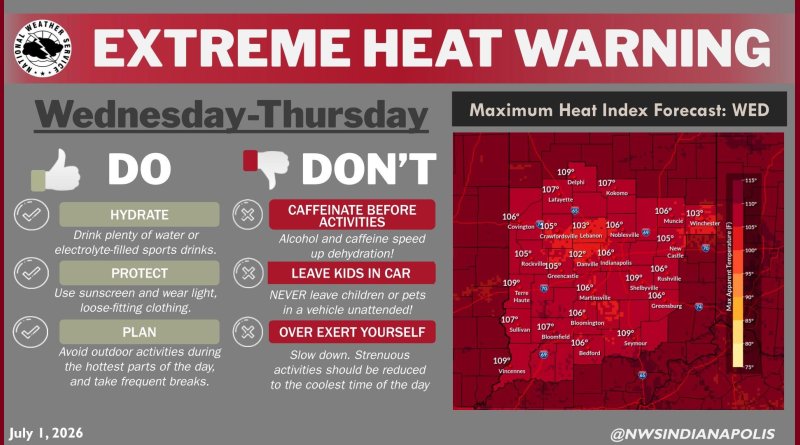
Meteorologists report that the afternoon high temperature of 95°F is combining with suffocating humidity to produce a real-feel heat index of 107°F. Compounding the risk, overnight low temperatures are expected to hover near 80°F, offering little to no atmospheric relief. Emergency management officials warn that the likelihood of heat exhaustion and heat stroke increases significantly during prolonged, multi-day spikes like this.
Red Cross Issues Triple-Threat Defense: Hydrate, Cool, and Connect
To combat the hazardous conditions, the Indiana Region of the American Red Cross has issued critical safety guidelines centered around three primary actions:
- Stay Hydrated: Even if you do not actively feel thirsty, you should drink a full glass of water every 15 to 20 minutes. Public health experts strongly advise skipping sugary, highly caffeinated, or alcoholic beverages, as they accelerate dehydration.
- Stay Cool: Spend as much time as possible in air-conditioned environments. If your home lacks proper cooling equipment, take cool baths or showers, or seek refuge in a public shopping mall or library. KCII Radio+ 1
- Stay Connected: Actively check in on neighbors, friends, and family members. The demographic groups facing the highest clinical risk from extreme heat include pregnant women, newborns, children, the elderly, and individuals battling chronic medical illnesses. The Republic News
Protecting Your Four-Legged Family Members
Lawrence County Emergency Management emphasizes that extreme heat can quickly turn fatal for family pets, who suffer from heat stroke just like humans.
PET HEAT STROKE WARNING SIGNS:
• Excessive panting or drooling
• Extreme lethargy and weakness
• Vomiting
• Sudden collapse
Emergency Action: If your pet displays any of these symptoms, immediately move them to a cool, air-conditioned space, apply cool (not freezing) water to their fur, and contact a veterinarian right away.
To keep pets safe over the next few days, animal control officers recommend the following precautions:
- Water Access: Ensure a continuous supply of fresh, cold water is available at all times.
- Shade is Mandatory: If a pet must go outdoors briefly, they require immediate access to deep shade and a cool resting spot.
- Adjust Exercise Schedules: Limit physical training or play during the hottest peak hours of the day. Instead, walk dogs early in the morning or late in the evening. Korn Country 100.3
- The Pavement Test: Before walking your dog, press the back of your bare hand firmly against the asphalt. If the pavement is too hot for your hand to hold comfortably for seven seconds, it is hot enough to severely burn your pet’s paw pads.
- The Zero-Vehicle Rule: Never leave a pet unattended inside a vehicle under any circumstances. Even with the windows cracked on a 95-degree day, interior vehicle temperatures can soar past 120°F in less than ten minutes, creating a lethal environment.

