

MITCHELL — A traffic stop for a speeding side-by-side off-road vehicle escalated into a felony arrest Saturday night after a local man allegedly fled from a sheriff’s deputy, hid behind hay bales in a tree line, and physically resisted being handcuffed.
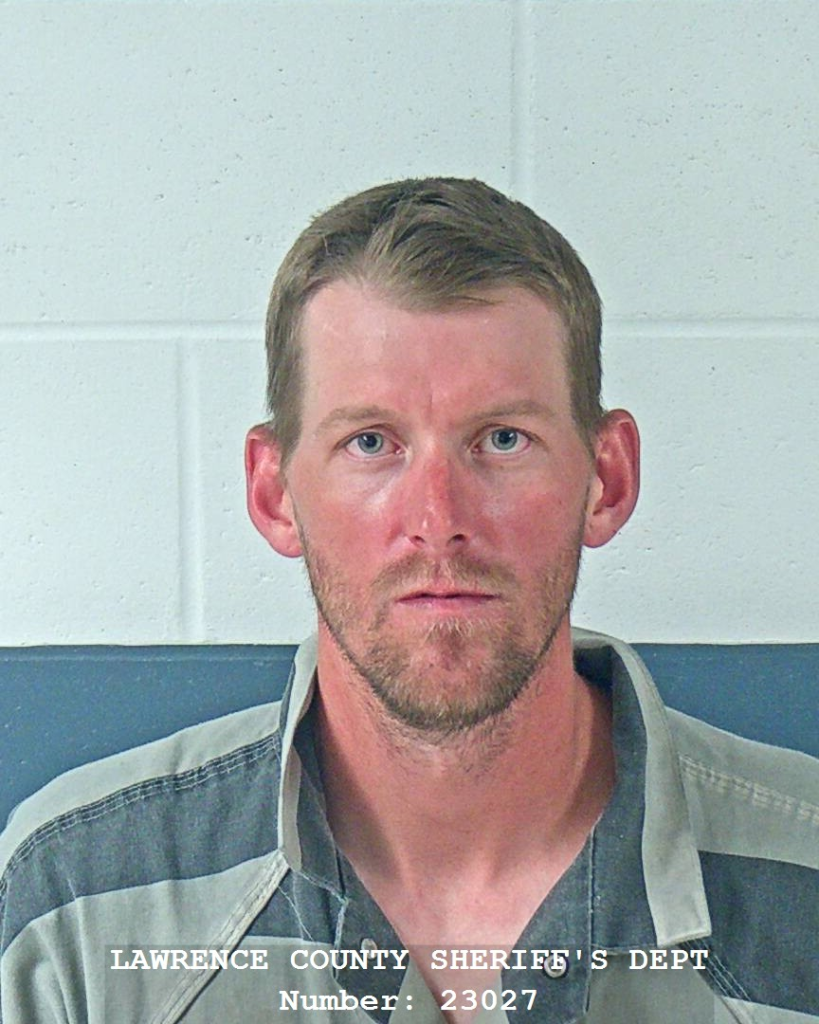
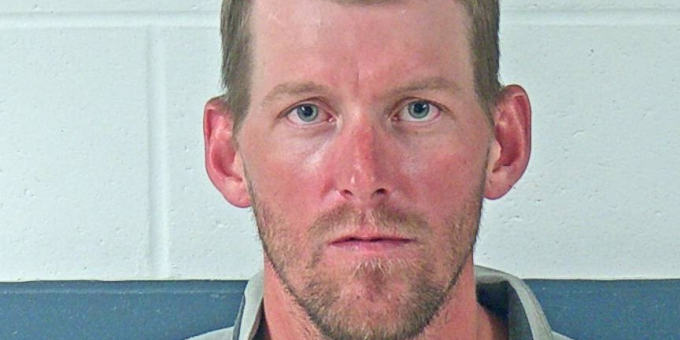
Tanner S. Ray, 32, of Mitchell, Indiana, was arrested by the Lawrence County Sheriff’s Department on May 30, 2026. He faces multiple criminal allegations, including felony counts of resisting law enforcement with a vehicle and operating a vehicle while intoxicated with a prior conviction.
According to a probable cause affidavit filed by Lawrence County Sheriff’s Deputy Kyle Long, the incident began at approximately 8:17 p.m. on State Road 60 West near Porter Burton Road. Deputy Long utilized his patrol vehicle’s speed detection equipment to clock a black Can-Am side-by-side traveling at 68 MPH in a posted 55 MPH zone.
When the deputy turned around to initiate a traffic stop, the off-road vehicle failed to yield, even after the deputy activated his emergency red and blue lights on Porter Burton Road. Deputy Long pursued the speeding Can-Am until it disappeared around a sharp curve near 565 Porter Burton Road.
Upon backtracking, Deputy Long spotted fresh tire tracks cutting off the asphalt and leading straight into a nearby wooded area. As the deputy searched the vicinity, he discovered Ray attempting to conceal himself and peering out from behind a stack of hay bales. Ray complied with verbal commands to step out with his hands visible and was immediately detained.
While questioning the suspect, Deputy Long detected a strong odor of alcohol and observed that Ray’s eyes were glassy. Ray claimed he had only driven behind a nearby barn to use the restroom, was unaware police were trying to stop him, and believed he had permission from the property owner to be there. The property owner later arrived on scene and disproved this claim, telling officers he had no idea why Ray was on his land.
Ray admitted to drinking at his in-laws’ residence but confidently claimed he “would have no problem passing” sobriety tests. For officer safety, Deputy Long removed a pocket knife protruding from Ray’s pocket and temporarily removed his handcuffs to prepare for the physical sobriety tests as backup arrived.
The situation rapidly deteriorated when Ray pulled out his cell phone and demanded to call his wife. Deputy Long ordered him to put the phone away because an active investigation was underway.
According to police records, Ray ignored the commands. When Deputy Long attempted to grab the phone, Ray snatched his hand away. As the deputy grabbed Ray’s right arm to place him back into restraints, Ray actively resisted by pulling away and refusing to place his hands behind his back, forcing the deputy to physically push him against the rear of the patrol vehicle to secure the cuffs.
Once a sheriff’s supervisor, Sergeant Robin Compton, arrived on the scene to de-escalate the situation, Ray calmed down and agreed to complete the Standardized Field Sobriety Tests (SFSTs).
The testing heavily indicated severe impairment. A preliminary breath test on the scene yielded a 0.200% BrAC. Ray was subsequently transported to the Lawrence County Jail, where a certified chemical breath test registered an official 0.190 g/210L—more than double Indiana’s legal driving limit of 0.08%.
Deputy Long later returned to the property to photograph the Can-Am side-by-side. The vehicle was found intentionally wedged into the tree line to hide it from the road, with broken tree limbs scattered inside and pressed against the chassis, proving it had been driven forcefully into the woods.
Ray was issued a traffic citation for speeding, and a formal use-of-force report was generated regarding the physical struggle over the cell phone.
Ray faces charges of resisting law enforcement using a vehicle, OWI with a prior conviction, resisting law enforcement by force, OWI endangerment, and OWI with a blood-alcohol content of 0.15 percent or more
All individuals are presumed innocent until proven guilty in a court of law. This article is based on the information provided in the probable cause affidavit and does not represent a final determination of guilt or innocence.

