


INDIANA — The “sparkle” of an engagement ring is being eclipsed by the shadow of a price tag. New research suggests that today’s couples are feeling the heat to go big on their proposals—but the pressure isn’t coming from their families or even their partners.
According to a survey of 2,000 U.S. adults conducted by Talker Research on behalf of the banking app Chime, society and social media have become the primary drivers of engagement anxiety.
The Social Media Tax
The study found that 51% of respondents feel pressure from society to have an expensive engagement, while 49% feel the same pressure from social media platforms. In contrast, internal circles are far more relaxed: only 37% felt pressure from family, and just 35% felt it from their partner.

“We’re watching a real cultural tug of war,” said Janelle Sallenave, Chime’s Chief Spending Officer. “Social media has reshaped expectations, turning proposals into events that need to be ‘social media worthy.’ But the real milestone isn’t the post; it’s starting a marriage on solid ground.”
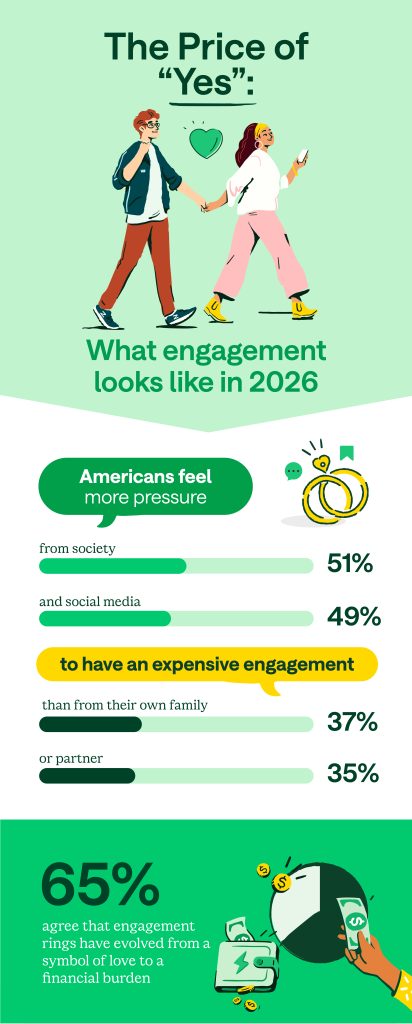
Indeed, 65% of those polled now view engagement rings as a financial burden rather than a symbol of love.
The Death of the “Three-Month Rule”
The traditional “rule of thumb” that a ring should cost three months’ salary appears to be fading into history.
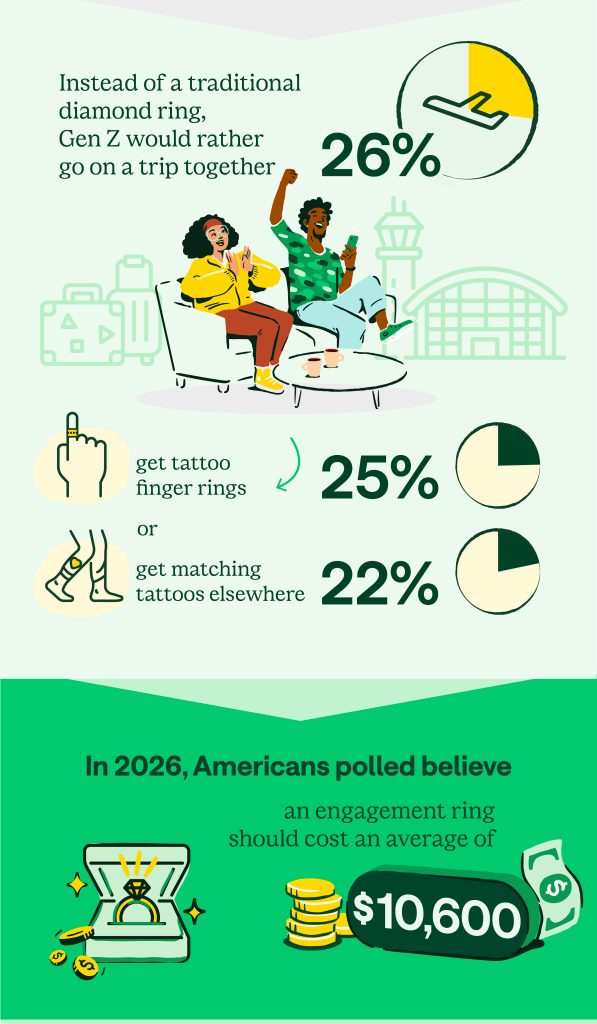
- The 2026 Ideal: On average, respondents believe a ring should cost $10,600.
- The Reality: With an average reported income of $62,100, following the three-month rule would require a spending of $15,525.
- The Shift: Most Americans are now opting to spend closer to 17% of their annual income—roughly two months’ salary—on the ring.
| Generation | Average Annual Income | “Perfect” Ring Price Tag |
| Millennials | $65,800 | $13,000 |
| Gen Z | $60,600 | $11,400 |
| Gen X | $60,800 | $10,800 |
| Baby Boomers | $61,000 | $6,500 |
Interestingly, Gen Z remains the most likely to adhere to old standards; 40% of married or engaged Gen Z respondents reported spending three months’ salary, compared to just 10% of Baby Boomers.
Tattoos and Trips: The New Alternatives
As costs rise, younger generations are looking for the exit ramp from the diamond industry. Gen Z and Millennials are leading the charge toward non-traditional symbols of commitment:
- Stones & Travel: 30% of Gen Z would consider a non-diamond stone, while 26% would prefer to skip the ring entirely in favor of a trip.
- Ink over Ice: Roughly 25% of Gen Z and 21% of Millennials would opt for finger tattoos or matching tattoos elsewhere as an alternative to jewelry.
Financial Readiness
What does it mean to be “ready” to get engaged? The answer depends on who you ask. For Baby Boomers, it’s as simple as having a secure job (42%). For Gen Z, readiness is tied more specifically to the event itself, with many waiting until they can afford their “dream” engagement or a specific ring.
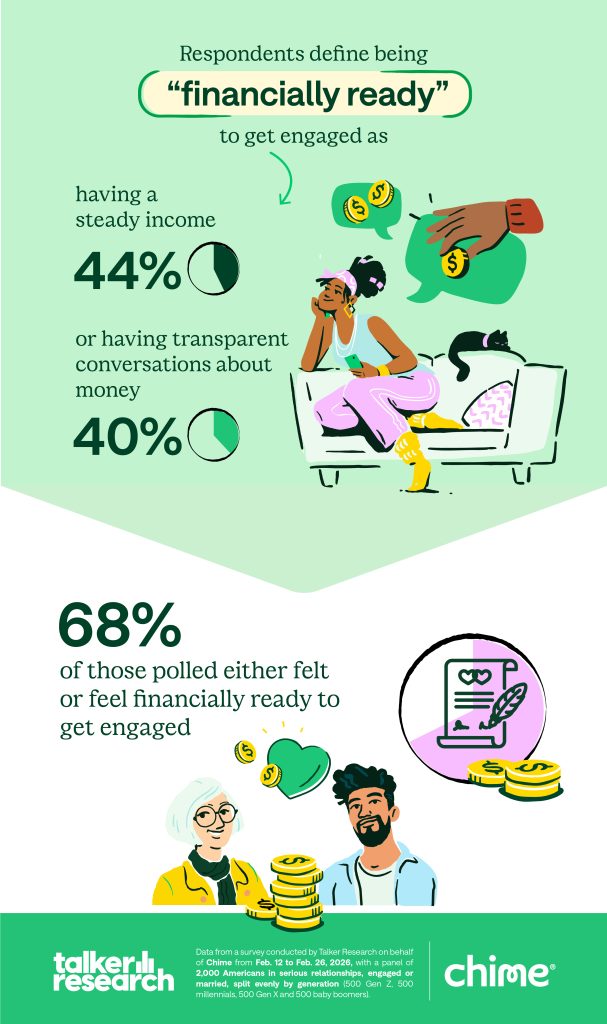
Despite the varying definitions, the sentiment is shifting toward long-term stability. The survey found that 74% of Americans would rather start their married life debt-free than have an expensive ring.
As Sallenave noted, “Americans want to reshift the focus back to love rather than luxury.”

