

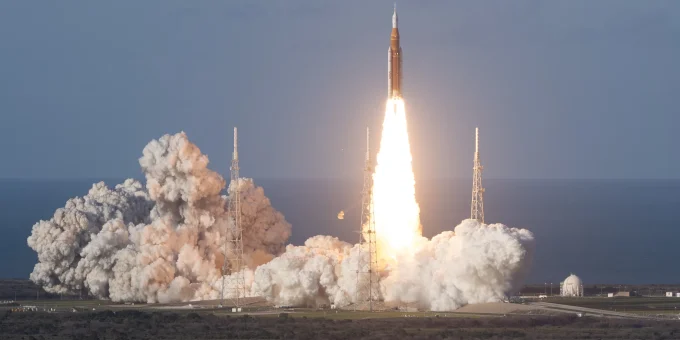
KENNEDY SPACE CENTER, FL — For the first time in more than half a century, humanity is headed back to the vicinity of the moon. Four astronauts successfully blasted off from Florida’s Space Coast on Wednesday, marking the beginning of the monumental Artemis II mission.
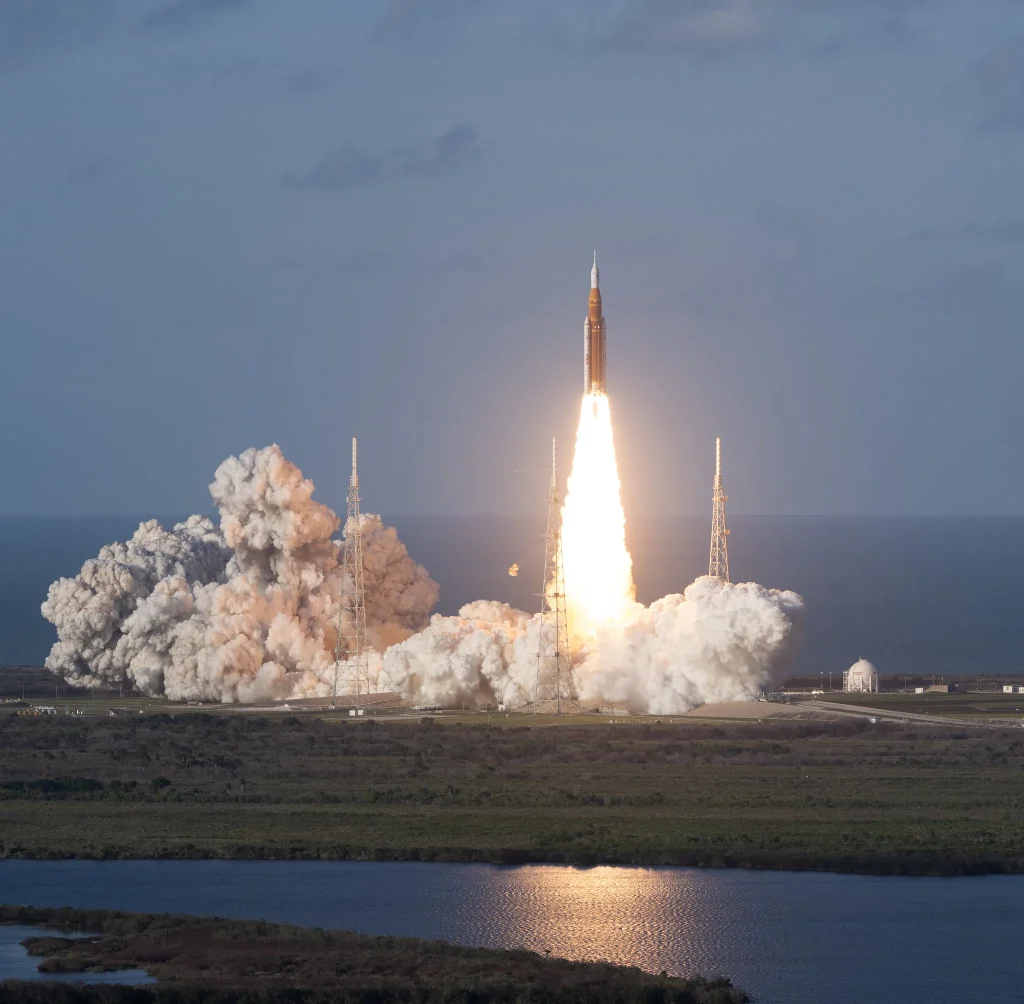
The 10-day flight is a high-stakes test of NASA’s deep-space capabilities, serving as a critical precursor to returning humans to the lunar surface.
A Giant Leap for the Artemis Generation
While Artemis II will not land on the lunar surface, its trajectory is designed to test the life-support systems of the Orion spacecraft in the harsh environment of deep space. The success of this mission is required before NASA can move forward with future crewed landings at the moon’s largely unexplored South Pole.
The crew consists of a diverse team of veteran and first-time deep-space flyers:
- Reid Wiseman (NASA): Mission Commander
- Victor Glover (NASA): Pilot
- Christina Koch (NASA): Mission Specialist
- Jeremy Hansen (Canadian Space Agency): Mission Specialist
Critical Maneuvers Ahead
Following a flawless launch on Wednesday, the crew is entering a high-tempo phase of the mission. Today, the astronauts are scheduled to complete a critical engine burn. This maneuver is essential to provide the necessary velocity to propel the Orion capsule out of Earth’s orbit and toward its lunar destination.
Paving the Way for the Future
This mission ends a 50-year hiatus of crewed lunar exploration that has persisted since the conclusion of the Apollo program in 1972. By venturing into the lunar vicinity, the Artemis II crew will validate the technologies needed for Artemis III, which aims to put the first woman and first person of color on the moon.
The world will be watching closely over the next week as the Orion capsule loops around the far side of the moon before beginning its high-speed reentry and splashdown back on Earth.

