

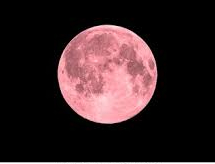
NATIONWIDE — Skywatchers looking up this Wednesday evening might think they are seeing an April Fools’ Day prank, but the celestial event is very real. On April 1, 2026, the “Pink Moon” will reach its full phase, bringing with it a wave of spring tradition and a striking visual trick of the light.
Despite its name, the moon will not actually change color. According to the Old Farmer’s Almanac, the term “Pink Moon” is a Native American name inspired by the Phlox subulata, a pink wildflower native to eastern North America. Commonly known as creeping phlox or “moss pink,” these flowers typically reach full bloom just as the April full moon appears.
The moon is set to reach its peak illumination at 10:12 p.m. ET. However, many observers will find the moon looks most impressive as it first climbs above the horizon.
NASA explains that this is due to a phenomenon called the “moon illusion.” When the moon is near the horizon, the human brain compares it to foreground objects like trees or buildings, making it appear significantly larger than when it is high in the dark sky.
While the moon will be technically full for everyone, local weather may interfere. Rain is predicted for the evening of April 1, which may obscure the view for some residents.
The Pink Moon carries various names across different Native American cultures, many of which reflect the changing seasons and the return of wildlife:
- Breaking Ice Moon (Algonquin)
- Frog Moon (Cree)
- Moon When the Ducks Come Back (Lakota)
- The Sucker Moon (Anishinaabe) refers to the ideal time to harvest sucker fish.
- Budding Moon of Plants and Shrubs (Tlingit)
2026 Full Moon Calendar
If you miss this week’s display, there are plenty of celestial events remaining in the 2026 calendar, including a rare “Blue Moon” in May and a partial lunar eclipse in August.
| Date | Time (ET) | Name |
| May 1 | 1:23 p.m. | Flower Moon |
| May 31 | 4:45 a.m. | Blue Moon |
| June 29 | 7:57 p.m. | Strawberry Moon |
| July 29 | 10:36 a.m. | Buck Moon |
| Aug. 28 | 12:19 a.m. | Sturgeon Moon (Partial Eclipse) |
| Sept. 26 | 12:49 p.m. | Corn Moon |
| Oct. 26 | 12:12 a.m. | Hunter’s Moon |
| Nov. 24 | 9:54 a.m. | Beaver Moon |
| Dec. 23 | 8:28 p.m. | Cold Moon |
For the best view of the Pink Moon this Wednesday, experts recommend finding a clear area with an unobstructed view of the eastern horizon just after sunset.