

INDIANA – Toxicology data is derived from analysis of specimens submitted by Indiana coroners in the event of a suspected overdose death.
The findings can inform prevention efforts and identify trends in substance use and the drug supply; however, substances detected may or may not be the actual cause of death.
Data shown is as of February, 16, 2026.
Key Findings, Q4 2025
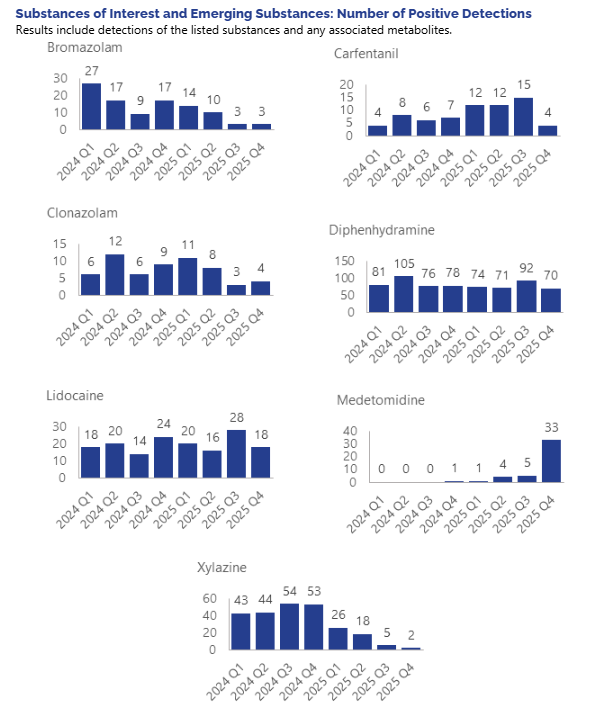
Indiana had 43 Carfentanil detections in toxicology data in 2025, a 72% increase from 2024, which had 25 detections
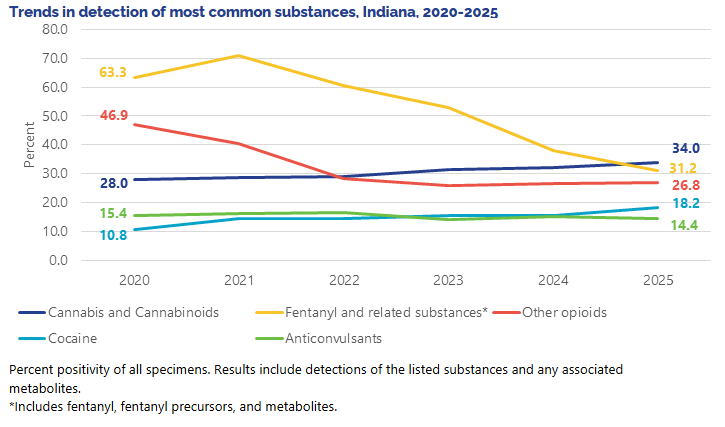
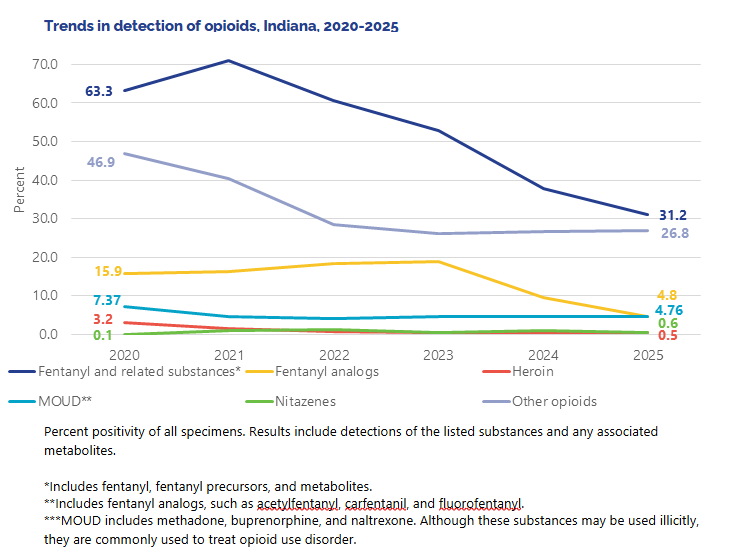
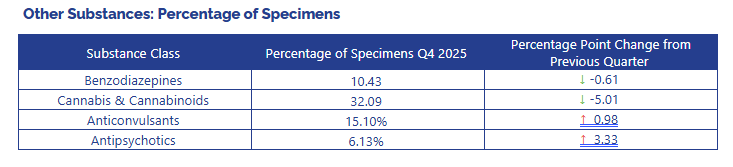
Notable decreases in quarter 4, compared to the previous quarter, include the fentanyl & fentanyl analogs, other opioids, and cannabis & cannabinoids categories.
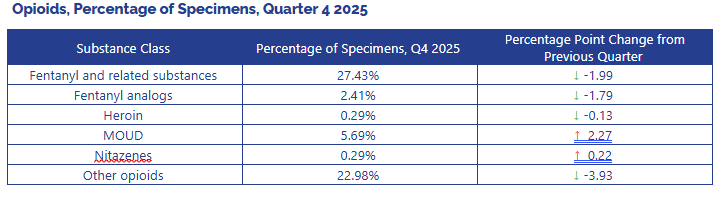
Notable increases in quarter 4, compared to the previous quarter, include the medications used for opioid use disorder (MOUD) and antipsychotics categories.
Medetomidine counts continue to increase, while xylazine counts continue to decrease. Indiana saw 43 detections of medetomidine in toxicology data in 2025, up from only 1 detection in 2024. Most of these detections (33) occurred in quarter 4 of 2025.
More Information about Substances of Interest
Carfentanil: A synthetic opioid approximately 10,000 times more potent than morphine and 100 times more potent than fentanyl. A lethal dose of carfentanil can be .002 mg, compared to Fentanyl at 2 mg. Carfentanil has been increasing in the toxicology dataset since 2024.
- DEA’s Carfentanil resource.
Xylazine: Xylazine is a non-opioid agent that the FDA originally approved as a sedative and analgesic for use in veterinary medicine. Xylazine is not approved for use in people but has been identified in combination with heroin, fentanyl, and stimulants.
Medetomidine: An alpha-2 agonist intended for veterinary use, similar to xylazine , with no approval for use in humans. Medetomidine is being seen as a potential replacement for Xylazine in the drug supply.
- IDOH’s Medetomidine resource
Lidocaine: A local anesthetic and a synthetic compound useful in medical procedures. Lidocaine is being found as an illicit drug supply adulterant, specifically with cocaine, fentanyl, heroin, and methamphetamine.
- CFSRE Lidocaine & Other Local Anesthetics resource
Bromazolam: A designer benzodiazepine being found under street names like XLI-268 and Fake Xanax. It is frequently reported in combination with other drugs, most often with the opioid fentanyl. The substance went from 4% of the national overall novel or designer benzodiazepine supply in 2021 to 73% of the supply in the first six months of 2023. Indiana has seen a decline in this substance in 2025.
- IDOH’s Bromazolam resource
Clonazolam: A combination of two other benzodiazepines (clonazepam and alprazolam) that is also known as clonitrazolam, Clon, Clam, and C-lam. It has been temporarily scheduled as a Schedule 1 drug in the US through July 2026, but still being found in the Indiana drug supply.
- DEA’s Clonazolam and related Benzodiazepine resource
Diphenhydramine: An adulterant in illicitly manufactured drugs that can produce hallucinogenic, euphoric, and sedating effects. Commonly found as an adulterant in the Midwest, namely, Chicago. The substances are typically found with opioids, PCP, cocaine, and methamphetamine.
- CFSRE Diphenhydramine resource
Questions about toxicology data may be directed to Allison Martin at allimartin@health.in.gov.