

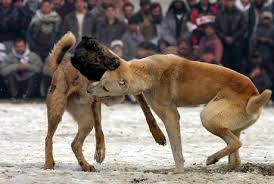
WASHINGTON, D.C. – U.S. Secretary of Agriculture Brooke L. Rollins, alongside U.S. Attorney General Pam Bondi, U.S. Secretary of Homeland Security Kristi Noem, and U.S. Secretary of Health and Human Services Robert F. Kennedy Jr., together are taking historic actions to hold chronic companion animal welfare violators accountable and prosecute those who fight dogs to the highest extent of the law in an effort to end this horrific practice once and for all.
The suite of actions will boost compliance with existing laws, protect our companion animals, and reiterate that the Trump Administration stands with the majority of Americans who own companion animals.
Today, dogs are the most popular pet in the United States, with 65.1 million households owning a pet dog. About half of pet owners (51%) not only consider their pets to be a part of their family but say they are as much a part of their family as a human member.
“Let me be clear,” said Secretary Brooke Rollins. “If you are breeding dogs and not meeting the Animal Welfare Act’s humane standards of care, your time is up. We will not allow a handful of bad actors to tarnish the reputation of responsible American breeders or compromise the humane treatment of animals. Together, President Trump’s cabinet is working together to support our great dog breeders across the country, while stepping up enforcement on recurring bad actors and working to end dog fighting once and for all.”
Over the past 15 years, USDA has significantly strengthened its oversight of dog breeding facilities. Compliance with the Animal Welfare Act (AWA) among facilities that breed dogs has risen from an average of 67% in 2015 to over 92% in 2025, reflecting both regulatory improvements and industry cooperation across the country over the last decade. Despite this progress, several breeding facilities continue to tarnish the industry with recurring and chronic violations. To address this, USDA will:
- Root out bad actors with a history of noncompliance through initiation of enforcement actions against the licenses of persistent AWA violators and in worse cases, remove those offenders from the industry altogether.
- Deploy and expand Animal Care’s compliance and enforcement specialist team to aggressively identify and investigate unlicensed activities under the Animal Welfare Act, and intensify enforcement against individuals importing dogs for resale without the required permits.
- Improve consistency across the industry with AWA inspections through increased inspector training, compliance tracking, and processing.
- Expand information sharing with Federal and state partners so they can factor in USDA’s inspections when considering when to conduct their own inspections.
- Help state and local partners pursue enforcement action against breeders who do not fall under the USDA’s authority but impact the welfare of dogs.
Since announcing the strike force to combat animal cruelty, the USDA has taken swift action to target bad actors. USDA has cancelled, denied, suspended and revoked licenses issued to six dog breeders who failed to provide humane care to their dogs, filed administrative enforcement cases against two chronically noncompliant dog breeders, referred a case to the U.S. Department of Justice (DOJ) involving a facility that has repeatedly prevented USDA officials from conducting animal welfare compliance inspections, and partnered with DOJ to pursue a dog breeder who skirted laws aimed at protecting animals by supporting the humane placement of over 100 dogs, among other things. Our work to protect dogs and promote animal welfare will not stop here.
Today, the USDA opened a Request for Information (RFI) to allow the public and stakeholders, including those regulated by the AWA, the opportunity to provide input on the current standards governing the humane care of dogs under the AWA. USDA wants to ensure federal standards reflect current best practices and scientific evidence to promote dog welfare. The comment period will be open for 30 days.
In 2025, there have been a number of high-profile dog-fighting cases. In January 2025, a Maryland man was sentenced to Federal Prison in connection with a multi-state dogfighting conspiracy. In February 2025, a Florida man was sentenced to 84 months in prison after pleading guilty to conspiring to violate the dogfighting prohibitions of the AWA and being a felon in possession of a firearm. According to court filings, the man conspired with others to purchase, acquire, and breed dogs for use in dogfights. He also staged dog fights at his home and traveled to dog fights in Massachusetts, Florida, and Connecticut.
Cases such as these are an unfortunate reality, which is why USDA and DOJ have signed a Memorandum of Understanding to strengthen our interagency collaboration on enforcement of the AWA with a hyperfocus on dog fighting.
Together, these collective actions represent a historic commitment to animal welfare by targeting the worst offenders, removing chronic violators from the industry, and prosecuting the most egregious actors to the greatest extent of the law.
DHS’s Customs and Border Protection (CBP), working in close coordination with USDA’s Animal and Plant Health Inspection Service (APHIS) and HHS’ Centers for Disease Control and Prevention (CDC), will focus on individuals importing dogs for resale who attempt to evade regulations that ensure humane treatment. Frontline operators will continue protecting our borders from pests, parasites, and diseases.
Consumers have many options for acquiring dogs, but above all, they want confidence that their animals were treated humanely, whether adopted or purchased. To this end, USDA encourages the public to use the USDA Animal Care Public Search Tool to look up inspection records and licensing information on dog breeders. This tool empowers consumers to make informed decisions and identify breeders who meet the USDA’s humane care standards.
Consumers have many options for acquiring dogs, but above all, they want confidence that their animals were treated humanely—whether adopted or purchased. In the first of its kind event, Secretary Rollins hosted a dog adoption event on December 17, 2025. The event highlighted the importance of animal rescue, responsible ownership, and providing dogs the opportunity to find homes forever. In 2026, USDA looks forward to highlighting and hosting similar events that promote animal adoption from both rescues and USDA-licensed professional dog breeders. Interested partners should contact the USDA APHIS Animal Care Division to express interest.
If you or someone you know has a concern about an animal covered under the Animal Welfare Act, please share detailed information in the USDA’s Animal Welfare Complaint Form. USDA provides weekly updates on its work to the U.S. Department of Agriculture, Office of Inspector General, as well as the U.S. Department of Justice.

