

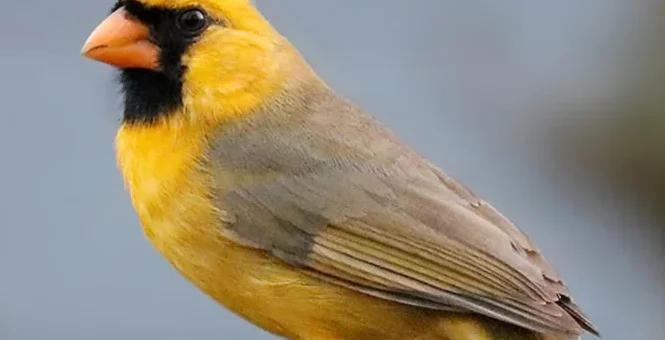
INDIANA — Birdwatchers across the Hoosier state are being urged to keep their binoculars ready this spring. A “one-in-a-million” genetic anomaly is turning the iconic crimson image of the Northern Cardinal on its head, replacing deep reds with a stunning, vibrant yellow.
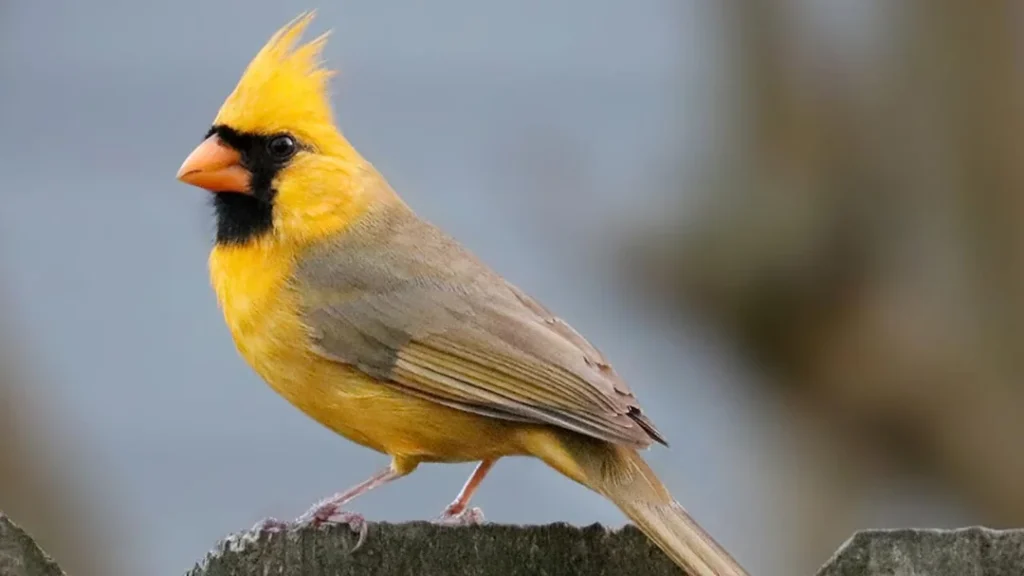
The phenomenon, known as xanthochroism, is a rare genetic mutation that disrupts a bird’s natural pigment processing. Typically, male cardinals ingest yellow carotenoids through a diet of seeds and berries. An internal enzyme then converts these pigments into the signature red feathers we recognize.
In xanthochroic birds, this conversion process fails. The result is a healthy, “saffron-colored” cardinal that retains its yellow base layer rather than turning red.
Experts estimate that only 10 to 15 of these yellow cardinals exist across all of North America at any given time. While Northern Cardinals are year-round residents in Indiana—from the urban neighborhoods of Fort Wayne to the rural woodlands of the south—a yellow variant is a true biological needle in a haystack.
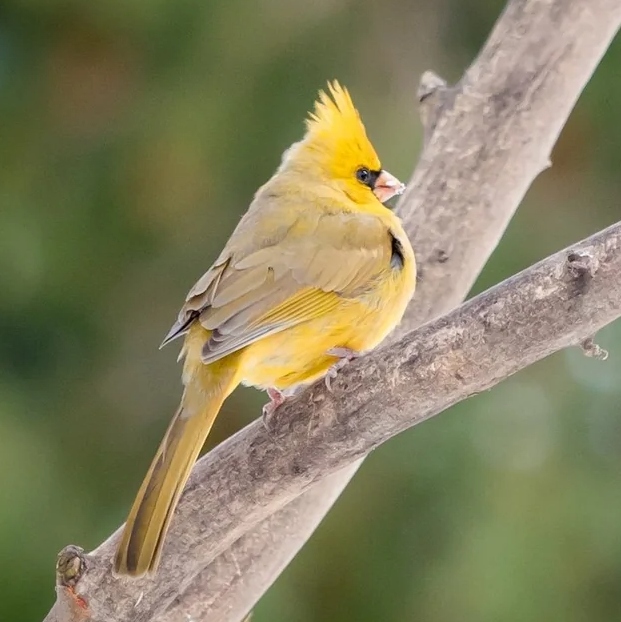
“Any yellow cardinal spotted in Indiana is likely a fleeting visitor,” experts warn. Their bright plumage doesn’t just catch the eyes of birders; it also makes them more susceptible to predators who can easily spot the unusual color against the landscape.
While there are only one or two reports of leucistic (white or pale) cardinals in Indiana annually, the yellow mutation is even more elusive. However, recent years have proven they are out there in 2024, confirm sighting in Bath, Michigan, and in 2025 in the St. Louis, Missouri area.
Ornithologists emphasize that these birds are not a separate species, nor are they a sign of environmental distress. They are simply a natural, albeit extremely rare, variation of the Northern Cardinal.
Because these birds often visit a specific feeder only once or for a very limited window, residents are encouraged to:
- Document immediately: Take clear photos or videos to verify the sighting.
- Report the find: Upload data to bird-monitoring platforms like eBird to help researchers track these rare genetic occurrences.
- Check your feeders: Providing black-oil sunflower seeds during the spring breeding season is the best way to attract cardinals to your yard.
While the odds are slim, the next bird at your feeder might just be the rarest backyard visitor in North America.

