

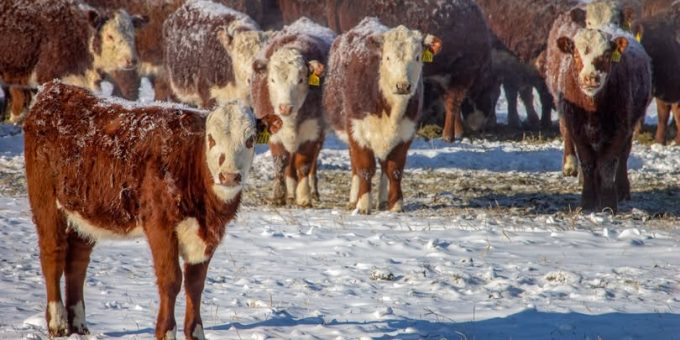
BEDFORD – With prolonged cold temperatures and a major winter storm approaching, the Lawrence County Cattlemen’s Association-Indiana is sharing winter weather guidance for beef cattle producers developed by the University of Kentucky Beef Extension.
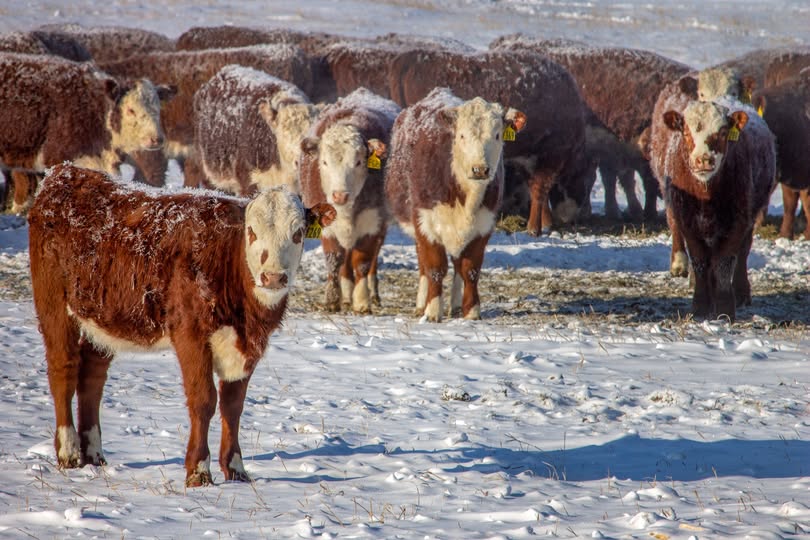
Producers are encouraged to plan ahead by setting out multiple days of hay before winter weather arrives and ensuring cattle have consistent access to clean, unfrozen water. Water tanks can freeze quickly during single-digit temperatures, and reduced water intake can lead to reduced feed intake, increasing the risk of cold stress. Water sources should be checked frequently, and producers should have a backup plan for delivering water if needed.
Understanding lower critical temperature, or LCT, is also important during winter conditions. Cattle with a dry winter coat have an LCT of approximately 18 degrees Fahrenheit, while cattle with a wet winter coat have an LCT of approximately 55 degrees. When cattle become wet, they must expend more energy to maintain body temperature.
Energy requirements increase as temperatures drop below the LCT. For every one degree Celsius below the LCT, cattle require approximately one percent more maintenance energy. For example, if the LCT is 55 degrees Fahrenheit and air temperatures fall to 25 degrees, maintenance energy needs increase by approximately 17 percent.
Feed quality plays a critical role during cold stress. Poor-quality hay is high in fiber and can limit intake, preventing cattle from consuming enough feed to meet increased winter energy demands. Energy supplementation may be necessary, particularly for lactating cows and those in late gestation. During periods of cold stress, caloric intake is more important than protein, with supplementation options including corn, soyhulls and high-fat supplements.
Shelter and bedding are also important considerations. Windbreaks or natural shelter can help reduce heat loss, while dry bedding or unrolled hay can help prevent frostbite. Barns with poor ventilation or wet bedding may make it more difficult for cattle to maintain body temperature and can be more harmful than beneficial.
Producers are urged to monitor water access and frozen pond safety. When traditional water sources freeze, cattle may seek water at ponds and step onto unsafe ice. Ice thickness can vary widely, and cattle can break through thin ice, leading to hypothermia, injury or drowning. If possible, access to frozen ponds should be limited, and a reliable alternative water source should be provided. Producers are advised not to walk onto frozen ponds to rescue livestock and instead use equipment such as ropes, boards or loaders from solid ground.
Producer safety is also emphasized during winter weather conditions. Individuals should avoid icy areas, use caution when traveling or operating equipment on snow or ice, dress appropriately for wind chill and keep an extra set of dry clothes available. Producers working alone are encouraged to let someone know where they will be.

