

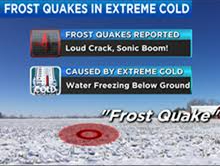
INDIANA — Hoosiers across Indiana, particularly those in northern parts of the state, may hear loud, unexplained booming noises this week. Still, experts say the sound is likely a harmless weather phenomenon known as a frost quake, or cryoseism.
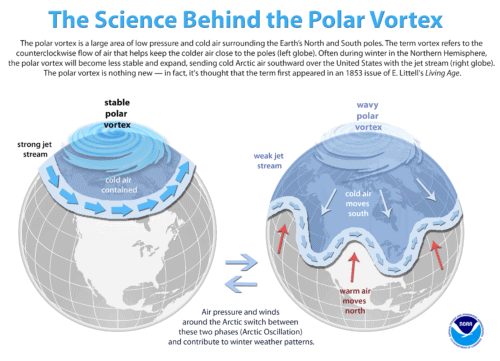
As bitter, Arctic air sweeps into the region, causing temperatures to plunge rapidly into the single digits and low teens, conditions are becoming ideal for these startling events. Indiana Weather Online reports that these booms have already been heard recently across parts of Northern Indiana, and more activity is anticipated this week.
What is a Frost Quake?
A frost quake, or cryoseism, is a non-seismic event that mimics the sound and feel of a minor earthquake.
- The Cause: They occur when water that has saturated the soil freezes suddenly and rapidly.
- The Physics: As water turns to ice, it expands, building tremendous pressure beneath the ground’s surface.
- The Result: When the stress exceeds the ground’s capacity, the earth abruptly cracks or pops, releasing the pressure in a burst of sound.
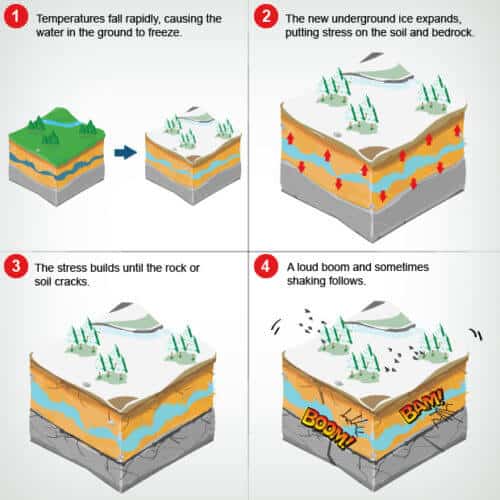
This sudden cracking action creates a loud, resounding boom that can sometimes be powerful enough to rattle windows or briefly shake the ground.
No Danger, Just Noise
While the noises can be alarming, especially when heard in the middle of the night, experts stress that frost quakes are not dangerous.
“During extreme cold events, you may hear a loud boom and feel like you have experienced an earthquake. However, this event was more likely a cryoseism… and they’re nothing new,” stated Accuweather, noting that cryoseisms were observed in the United States as far back as 1818.
Frost quakes are not actual earthquakes and are not associated with tectonic activity. They do not typically cause structural damage and are simply a natural reaction to extreme cold occurring just beneath the frozen soil.
The phenomena occur most frequently when the ground is heavily saturated, and temperatures fall rapidly, allowing the top layer of soil to freeze before deeper moisture has a chance to drain—a scenario perfectly aligned with the Arctic blast currently moving into Indiana.

