

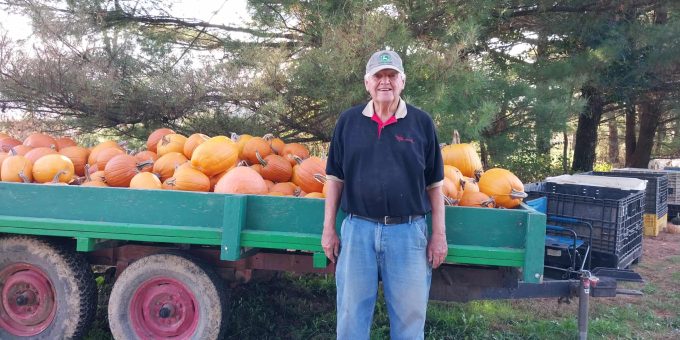
BEDFORD — For more than two decades, Hoffman’s Pumpkin Farm has been a staple of fall in Lawrence County. Tucked away at 808 Todd Lane, the farm offers acres of bright orange pumpkins, friendly conversation, and a deep sense of tradition that keeps locals coming back year after year.
The farm’s founder, John Hoffman, has been in agriculture nearly his whole life. “I started farming when I was about 16,” Hoffman said. “I was in 4-H, so I really started about 10 with showing cattle. And after high school and a couple of years in college, I was out on the farm.” What began as a cattle operation eventually grew into something that would define his autumn seasons — pumpkins. “We started selling pumpkins about 25 years ago,” he said with a grin.
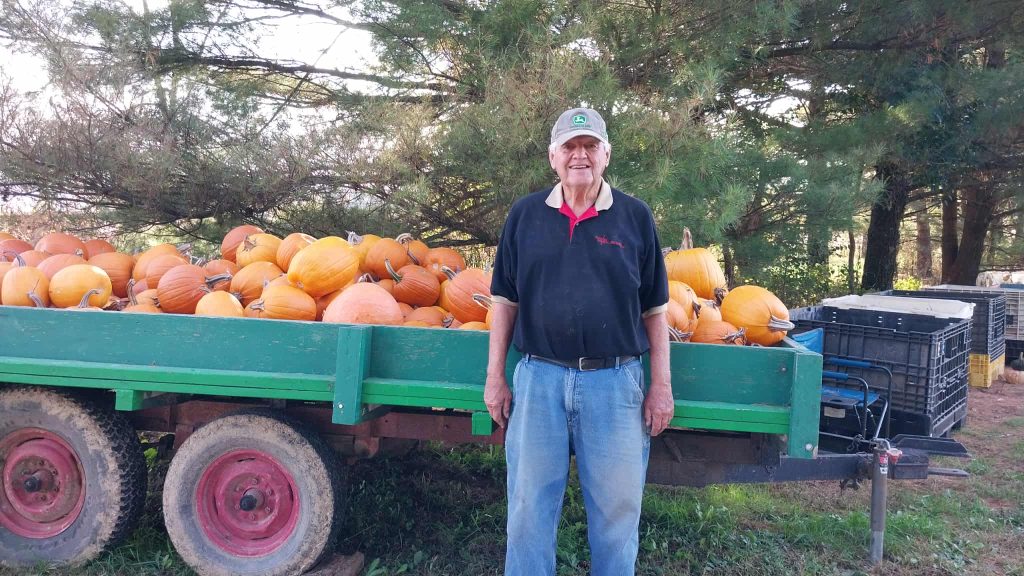
Today, Hoffman’s Pumpkin Farm spans nine acres, bursting with dozens of varieties in all shapes, sizes, and shades of orange. Prices range from $1 to $5, depending on the pumpkin, and visitors can browse at their own pace, choosing the perfect one for carving or decorating. Hoffman doesn’t keep track of how many he sells each season, but it’s safe to say demand is steady. “People just come out, pick out what they want, and then we talk about prices,” he said.
It’s a full family operation. John’s son, Scott Hoffman, helps run the business and sells pumpkins at the Bedford Farmers Market, while John sells at the Orleans Market. Together, they’ve created a rhythm that keeps their pumpkins on tables, porches, and hayrides all across southern Indiana.
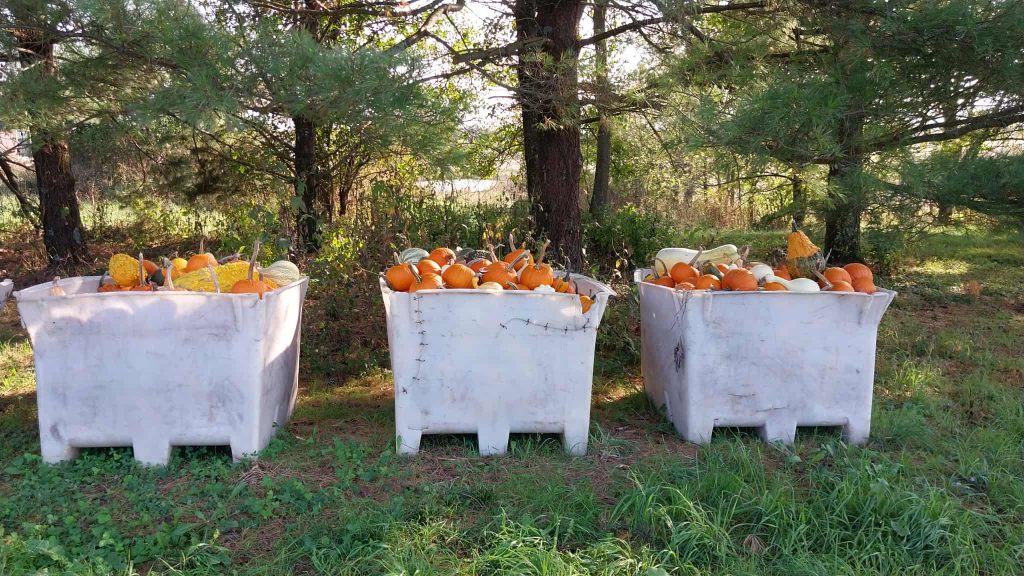
Pumpkins and gourds of all sorts are stacked high in large white bins and green trailers, ready for you to sort through.
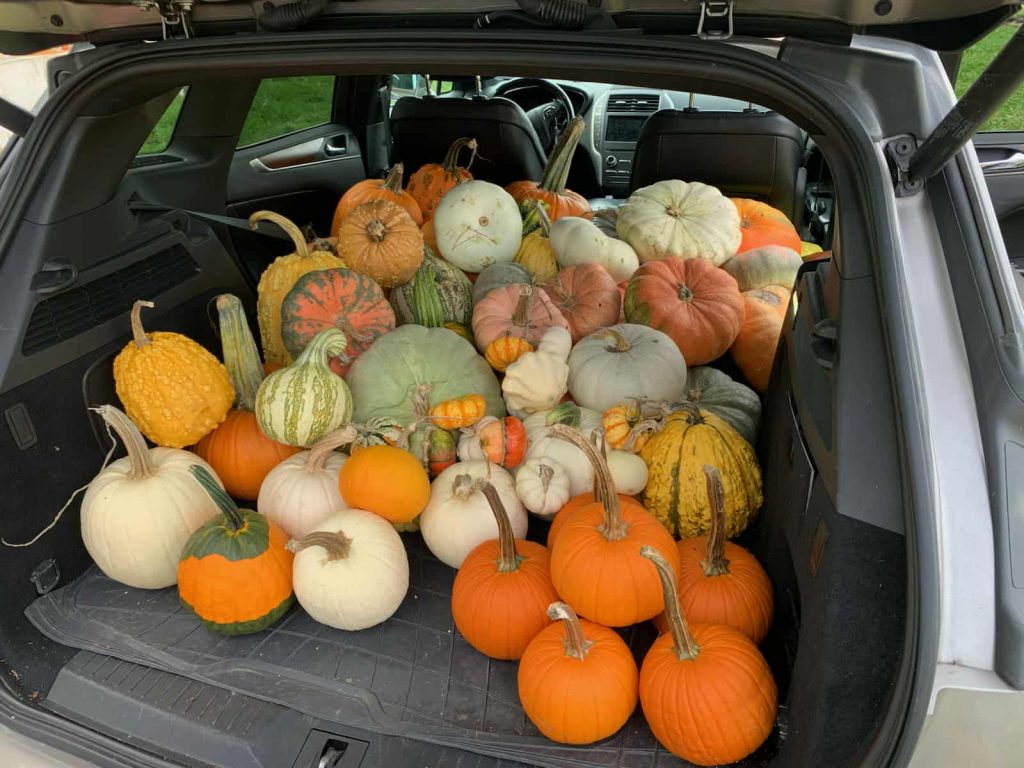
Longtime visitor Holly Davis and her husband visit Hoffman each year. “Greg and I have been coming to Hoffman’s Farm for years — it’s one of our favorite fall traditions. I absolutely love decorating the outside of our house this time of year, and I don’t mess around when it comes to pumpkins. I usually haul home somewhere between 50 and 75 of them… yes, really. I love going to Hoffman’s because it’s local, and I get to dig through the bins to find the weirdest, wobbliest, most unique shapes and colors. It’s like a treasure hunt — I get way too excited. Plus, when you’re buying that many pumpkins, you’ve gotta get the best price around. Greg pretends to keep me on a ‘pumpkin budget,’ but let’s be honest, he’s mostly just here to load the pumpkins and love on John’s farm dogs. And I always look forward to catching up with John and hearing how his season’s going. It just wouldn’t feel like fall without a trip (or three) to Hoffman’s.”
When the season ends, the pumpkins that aren’t sold don’t go to waste. “We feed them to the cows,” Hoffman explained. “They really like them.” The pumpkins are planted each June and are usually ready for picking around Labor Day, with several long days spent in the fields as the weather cools.
Even at 84 years old, John Hoffman still works hard every day, though he admits the heat makes it tougher each year. “It depends on the weather,” he said. “It was so hot this year. But we hired some boys from the high school, and they did a really good job.” If you didn’t know already, there’s no easy gadget these days to pick a pumpkin; it’s all manual labor, picked by hand.
For those wondering why they should shop local instead of grabbing a pumpkin at a big-box store, Hoffman keeps it simple. “You’re doing business local,” he said. “We’re usually under them on price, and we have better choices. We raise about 50 different varieties, so we can pretty well please anyone decorating.”
It’s clear that Hoffman’s Pumpkin Farm is more than just a business — it’s a piece of Bedford’s seasonal charm. Whether it’s the fresh air, the family-run feel, or the satisfaction of picking out your own pumpkins, a visit to 808 Todd Lane is a reminder of what community agriculture is all about.
And though John Hoffman says his son is gradually taking over, it’s hard to imagine the farm without him. “I’m lucky,” he said with a smile. “I’ve been doing this a long time. As long as we can get it done, we’ll keep doing it.”

