


INDIANA – A new nationwide survey from Amerisleep.com reveals that more than half of Americans have taken paid time off or called in sick specifically to engage in “bed rotting”—a viral trend that involves staying in bed for hours on end while watching TV, scrolling through social media, or simply doing nothing. The study highlights a startling shift in how Americans are using their downtime—and what it may be doing to their health.
According to the findings, the average American now spends 364 hours a year bed rotting, the equivalent of 15 full days. Gen Z is driving the trend, with nearly 9 in 10 admitting to bed rotting for 498 hours per year—about 21 days.
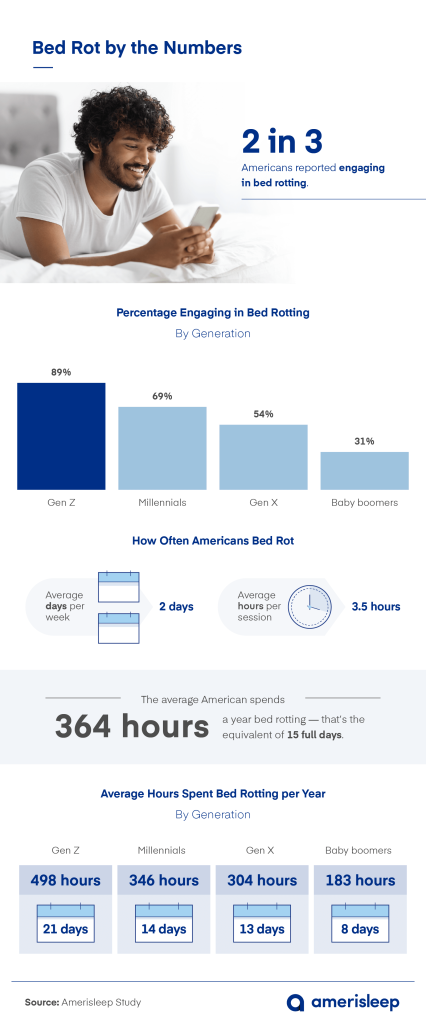
“While occasional rest is necessary, the data suggests that chronic bed rotting may be doing more harm than good,” says April Mayer, a sleep expert and the lead researcher behind the study. “People who avoid bed rotting report significantly better outcomes in productivity, energy levels, and overall well-being.”
Key Findings:
- 57% of Americans have taken a PTO or sick day just to bed rot.
- 89% of Gen Z spend time on bed rot, averaging 3.2 hours per day on YouTube alone.
- Bed rotting is most popular in the morning (42%), with Gen Z favoring evenings (27%).
- 53% of bed rotters report feeling guilty afterward.
- Those who don’t report bed rot experience higher levels of productivity (74% vs. 61%), better energy (66% vs. 40%), and greater satisfaction with life (68% vs. 47%).
Despite its portrayal online as a self-care ritual, the research reveals a stark contrast in health and productivity metrics between those who regularly practice bed rest and those who don’t. While bed rotting may feel comforting in the moment, it often coincides with feelings of guilt, low energy, and reduced mental well-being.
“The difference between intentional rest and avoidance behavior is subtle but important,” Mayer adds. “Lounging for an hour to unwind is very different from staying in bed all day to escape responsibilities.”
The survey, which polled over 1,000 Americans, also uncovered generational and occupational differences. Hybrid workers were most likely to be bedridden (73%), followed by in-person (68%) and remote workers (63%). Gen Z (62%) was also most likely to cancel social plans due to bed rot.
The full report is available here: https://amerisleep.com/blog/bed-rotting-survey/
About Amerisleep
Founded in 2010, Amerisleep creates eco-friendly, high-performance mattresses made in the USA. With a mission to improve rest and recovery for all, Amerisleep pairs cutting-edge materials with sleep science to help people wake up energized—and avoid the downward spiral of excessive bed rest.

