

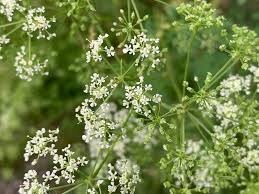
INDIANA—Authorities in Indiana are issuing a stark warning to the public about the rapid spread of poison hemlock (Conium maculatum), an invasive weed that poses a significant threat to humans, animals, and other plant life. This highly toxic plant can cause sickness and, in extreme cases, be fatal if ingested or even through direct contact or inhalation of its pollen.
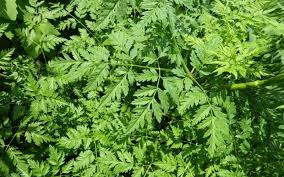
Mark Evans, a Purdue Extension Agriculture Educator, experienced the plant’s dangers firsthand. After chopping down an infestation in his yard, he began to feel sick within 15 minutes. “All parts of this plant are poisonous. This, you know, everything’s the seed, the pollen, the leaves, the stems, the roots,” Evans stated.
The plant’s danger extends beyond direct contact. When the flowers mature, a gust of wind can disperse pollen, posing a risk to anyone who inhales it. For this reason, Evans recommends mowing the plant before the seeds mature. “Now would be a great time to mow this. The pollen’s not there yet. The pollen’s kind of, you know, these are starting to flower here,” Evans advised.
Poison hemlock is found nationwide, often spreading along roadsides, fields, and fence lines. It can reach up to 9 feet tall and has a hollow stem usually marked with small purple spots. Its leaves are delicate, similar to those of parsley, and its white taproot can sometimes be confused with that of wild parsnips.
All parts of the plant, including the leaves, stem, fruit, and root, are poisonous, with the highest toxicity occurring in the spring when the plant flowers. Ingestion is frequently fatal for livestock, with as little as three ounces of green leaves potentially poisoning sheep, leading to respiratory paralysis and death within 2 to 3 hours. Humans should also avoid ingesting any part of the plant; poisoning often occurs when individuals mistake hemlock root for wild parsnip, leaves for parsley, or seeds for anise. Even whistles made from the hollow stems have caused death in children.
Symptoms of poisoning include nervous trembling, lack of coordination, pupil dilation, respiratory paralysis, rapid and weak pulse, coma, convulsions, bloody feces, gastrointestinal irritation, and skeletal defects in calves. While direct touch typically won’t cause a rash, sensitive individuals may develop dermatitis. Severe cases of hemlock poisoning in humans can lead to complications such as a slow heartbeat, low blood pressure, muscle paralysis, and kidney failure.
Authorities strongly advise against mowing or burning poison hemlock. For small populations, hand-pulling with gloves is recommended, followed by bagging the plant to prevent seed dispersal. For larger areas, herbicides can be effective, particularly before the plant flowers.
Officials recommend learning to differentiate poison hemlock from harmless look-alikes, such as wild carrot or Queen Anne’s Lace. Wild carrot has fuzzy stems, while poison hemlock has smooth stems with purple splashes. Beyond the danger to humans and animals, poison hemlock can also “choke out native species, plants, flowers, or trees that might be trying to come up in those spaces,” according to officials.

