

CRANE—Crane Army Ammunition Activity (CAAA) is deeply committed to a comprehensive recycling program that benefits the environment, bolsters local and regional businesses, and contributes to the organization’s financial health.
A significant source of recyclable material at CAAA comes from the production processes within its large machine shop. The considerable amount of metal waste generated during manufacturing is diligently collected and regularly sent to nearby recycling companies for processing.
Furthermore, the demilitarization of outdated munitions provides another substantial stream of recyclable materials, including various metals, plastics, and chemicals. CAAA actively targets these components for reuse whenever possible.
“We recycle as much metal as we can,” emphasized Tony Barger, a demilitarization commodity manager for CAAA’s Manufacturing and Engineering Directorate. “We work hard to be environmentally responsible, especially when evaluating items to be demilitarized. We remove as much metal (from munitions) as we can before sending an item to a detonation or burn range. We often collect a lot of plastic as well.”
Barger explained that separating or breaking down munitions by their material composition creates greater efficiencies in the subsequent recycling processes. The recovered aluminum, brass, and other metals eventually find their way into new products for both industrial and consumer markets. Moreover, selling pre-separated metals allows for a greater return of taxpayer dollars as it simplifies the recycling process for private industry partners.
“We do everything we can to remove as much of the items that can be recycled versus simply throwing things away in a landfill or otherwise destroying them,” Barger stated. “We spend a lot of time and effort in doing so because it’s the right thing to do.” He further added that the CAAA team is dedicated to being both good financial and environmental stewards.
Wadie Shahat, an explosives operator supervisor at CAAA, highlighted the diverse range of scrap materials generated during the demilitarization of munitions. “When we demil old ammunition that’s been sitting in storage magazines for years and years and years, we create a lot of waste that we need to get rid of.”
This critical process ensures the replacement of outdated or unusable munitions, making space for newer, more modern ammunition essential for supporting the readiness of the U.S. Army and Joint Forces.
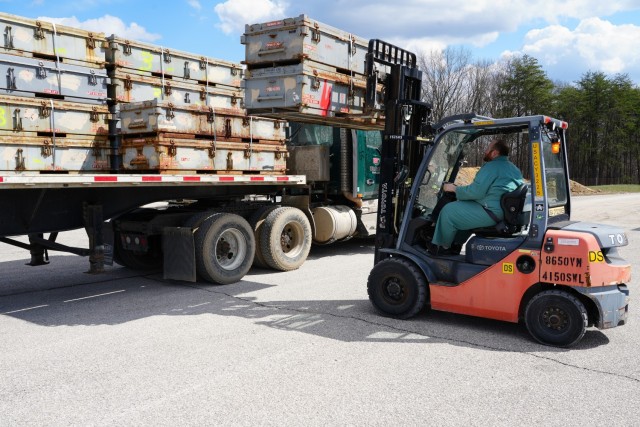
Shahat also emphasized that the demilitarization process includes rigorous certification to ensure that all materials slated for recycling are entirely free of any explosive hazards or potential harm.
In the Fiscal Year 2023, CAAA’s demilitarization operations alone accounted for nearly 3,200 tons of metal destined for processing. While this figure slightly decreased to 2,800 tons in FY24, the overall amount of material collected for recycling has remained relatively consistent and even shown some progress over the past five years under Barger’s involvement with the program.
Barger noted that the revenue generated from the recycling program has been approximately $370,000 per year for the past three years. These funds are reinvested to support various operations within CAAA and associated depots.
“There’s a need to remove old, possibly unusable, ammunition from our inventories,” Barger concluded. “Recycling demilitarized products makes sense as the best way to handle the byproducts with the bonus of recouping some tax dollars and helping local businesses along the way.”
Crane Army Ammunition Activity plays a vital role in producing and providing conventional munitions to support the readiness of the U.S. Army and Joint Force. Established in October 1977, CAAA is located on Naval Support Activity Crane and is a part of the Joint Munitions Command and the U.S. Army Materiel Command, encompassing arsenals, depots, activities, and ammunition plants.
Information provided by Randy Tisor.

