

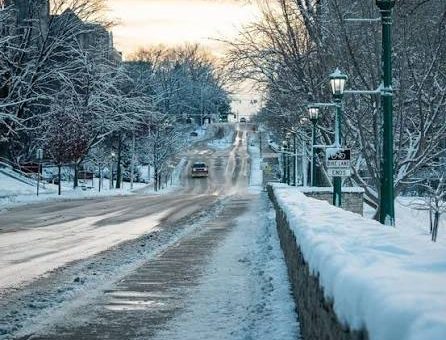
INDIANAPOLIS – Indiana Gov. Mike Braun prepared Hoosiers for the upcoming winter season during a press conference Thursday alongside the Indiana Department of Transportation, Indiana State Police and the Indiana Department of Homeland Security. The event coincided with Winter Weather Preparedness Week (Nov. 8-14), which reminds Indiana residents of the necessary precautions to take this winter.
“I want every Hoosier to take the necessary precautions to keep themselves safe this winter,” said Gov. Braun. “That means when there’s a storm, leave room for snow plows and emergency crews to work, have an emergency kit ready in your vehicle, and always use Hoosier common sense on the roads. Our agencies prepare all year for inclement weather and will be ready when the first storm hits.”
Throughout the winter months, snow, ice, and freezing rain all present travel challenges. Roads can become slick, even after pre-treatment and ongoing efforts during a storm.
“We spend the majority of the year preparing and refining our response plans,” said INDOT Commissioner Lyndsay Quist. “We have more than 1,000 plow trucks statewide and nearly 200,000 tons of salt on hand. Our crews work around the clock during winter events to keep Indiana’s roads and bridges as safe as possible.”
INDOT operations crews monitor forecasts several weeks in advance and prepare for winter storms based on the type of expected precipitation, conditions leading up to an event, and extended forecasts. If conditions allow, roads are pre-treated with salt brine and are regularly treated with rock salt. In colder temperatures, salt and brine alone take longer to activate, so chloride additives are used to boost effectiveness.
“Winter weather can change road conditions quickly, and no destination is worth risking your safety,” said ISP Superintendent Anthony Scott. “The Indiana State Police encourages motorists to slow down, increase following distance, eliminate distractions, and make sure their vehicles are prepared for winter travel. Taking a few extra minutes to drive cautiously can help prevent crashes and keep everyone on Indiana roadways safe.”
“Without taking proper precautions, winter weather can be extremely dangerous,” said Jonathan Whitham, IDHS’ Executive Director. “IDHS encourages Hoosiers to get prepared by keeping an emergency kit in their vehicle and ensuring they have multiple ways to receive alerts and warnings, such as a weather radio or cellphone notifications.”
To stay safe this winter, INDOT, ISP and IDHS offer the following tips:
- Slow down and adjust travel to conditions, especially on snow-covered roads. Conditions can change quickly.
- Know before you go – check conditions, forecasts and travel restrictions before you hit the road; allow plenty of time to reach your destination safely.
- Don’t crowd the plow – never tailgate or drive beside a snowplow, as the driver’s visibility may be limited. If you must pass a snowplow, do so carefully.
- Leave extra room between your vehicle and the one in front of you; it takes extra time and distance to stop or slow down on snowy roads.
- Be prepared in case of a crash or potentially becoming stranded; always carry an emergency kit in your vehicle with essential supplies.
- Keep your vehicle full of gas and check your battery, fluids and spare tire.
- Remove snow or ice from your vehicle’s windows, lights, and signals before traveling.
- Prepare your home in the event of a power outage or conditions that don’t allow travel to get supplies.
- Avoid using alternative heat sources such as space heaters and fireplaces, if possible, but practice proper safety precautions if you must do so.
For real-time information about road conditions during a winter storm, visit 511in.org to view plow/traffic cameras on INDOT’s TrafficWise map, or download the app on your mobile device.
Other ways to stay connected include subscribing to text and email updates at alerts.indot.in.gov and following INDOT on social media for regional updates and other resources. Learn more winter safety tips at getprepared.in.gov.
To view travel information for your local area, visit IDHS’ Travel Advisory Map and the National Weather Service’s Indiana Briefing page for weather advisories, watches, and warnings.