

INDIANA — Residents impacted by recent severe weather must navigate a multi-step recovery process involving insurance claims, federal disaster assistance, and potential low-interest loans.
Federal officials emphasize a specific sequence of delivery for aid, designed to cover uninsured or underinsured needs or assist when insurance benefits face significant delays.
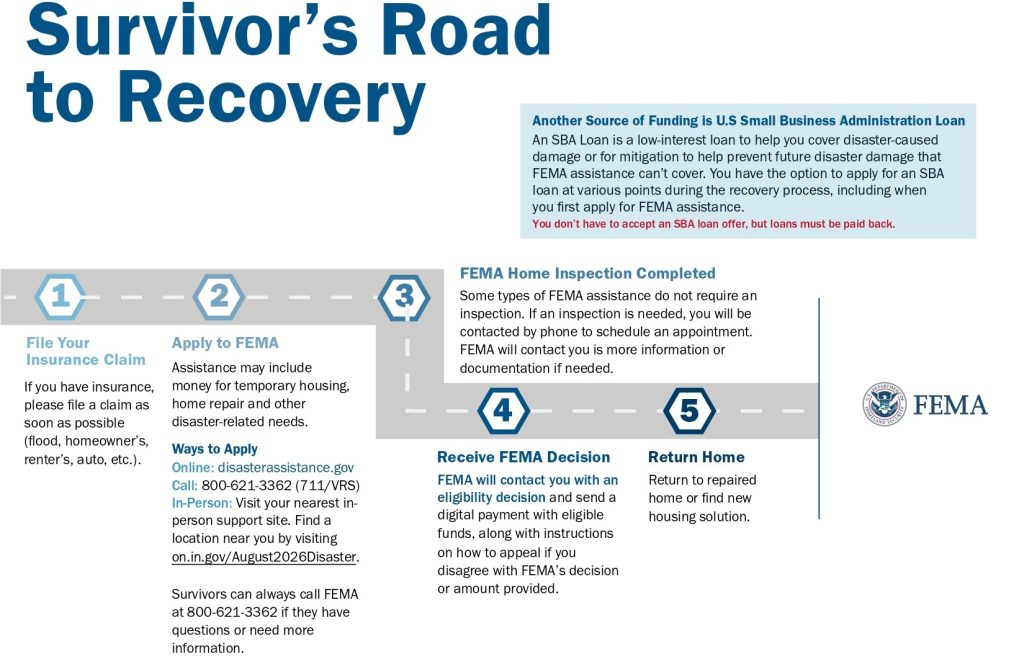
The Recovery Roadmap
Survivors are advised to follow a structured path to secure available recovery funds:
- File an Insurance Claim: Homeowners, renters, and vehicle owners with coverage should file their claims as soon as possible for flood, homeowner’s, or auto damage.
- Apply to FEMA: Assistance can provide funds for temporary housing, home repairs, and other disaster-related necessities. Applications can be submitted online at disasterassistance.gov, by calling 800-621-3362, or in person at a local support site listed at on.in.gov/August2026Disaster.
- Home Inspection: Following an application, FEMA may coordinate a phone call to schedule a property inspection, though not all assistance types require one.
- Receive Decision: FEMA will issue an eligibility decision and digital payment if approved, along with instructions on how to appeal if a resident disagrees with the outcome.
- Return Home: The final step involves returning to a repaired residence or establishing a new housing solution.
Understanding Available Aid
Federal and local programs break down assistance into distinct categories:
- Housing Assistance: FEMA provides financial support for lodging expense reimbursement, rental assistance, and home repair or replacement.
- Other Needs Assistance (ONA): Jointly administered by FEMA and state, territorial, or tribal governments, ONA covers serious needs, cleaning and sanitizing supplies, medical, dental, childcare, moving and storage, personal property, transportation, and group flood insurance policies.
- Small Business Administration (SBA) Loans: Low-interest SBA loans are available to cover disaster-caused damages or mitigation efforts that FEMA cannot address. Real property owners can apply for loans up to $500,000, while personal property owners and renters can access loans up to $100,000.
- Voluntary Agencies: Voluntary and mass care organizations step in to provide emergency food, shelter, clothing, and medical care, as well as handle remaining unmet needs once federal assistance has been maximized.
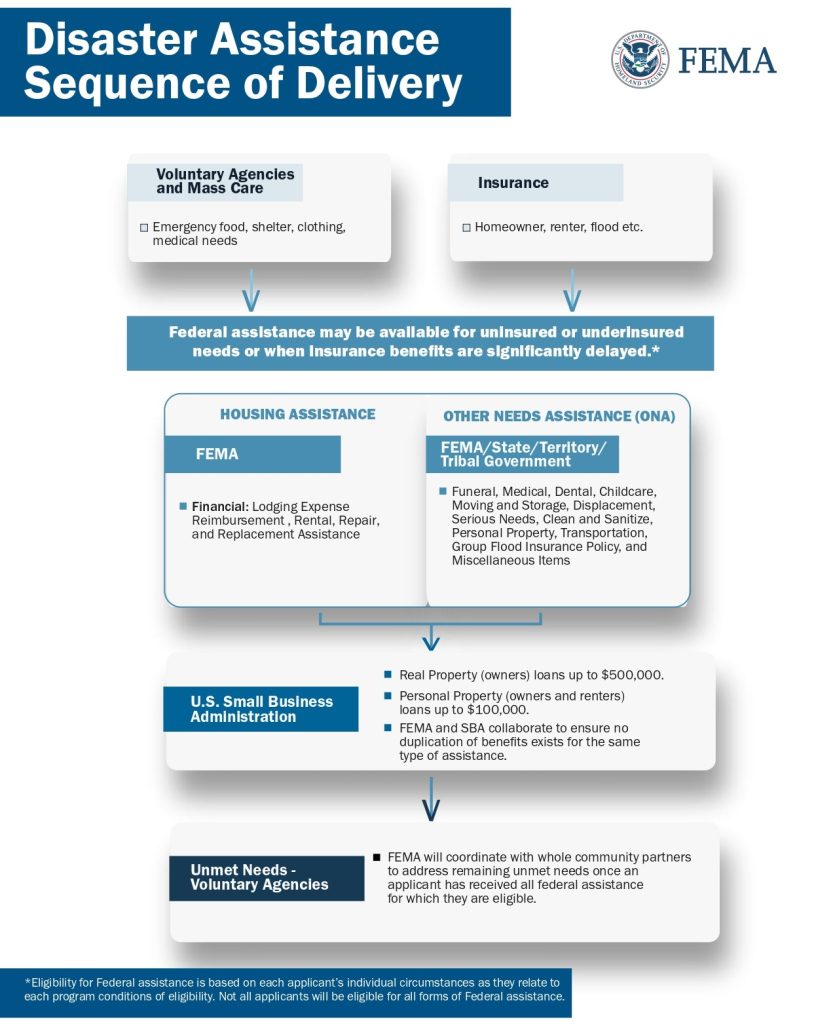
Officials note that FEMA and the SBA collaborate to prevent any duplication of benefits for identical types of assistance. While accepting an SBA loan is optional, applicants are reminded that loans must be paid back.