

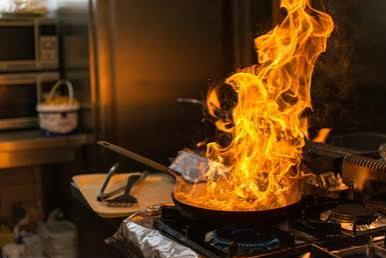
INDIANA — While many view kitchen fires as rare or isolated accidents, federal safety officials caution that cooking equipment remains the single leading cause of home fires across the United States.
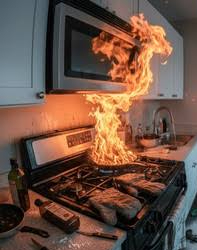
According to data from the U.S. Consumer Product Safety Commission (CPSC), cooking equipment is responsible for an estimated 147,400 residential fires annually. Additionally, cooking incidents account for the highest share of home fire-related injuries, causing approximately 3,450 injuries each year. Safety officials emphasize that unattended cooking is the primary driver behind these incidents.
Common Hazard Scenarios
Safety experts identify several recurring conditions and behaviors that frequently cause kitchen fires to ignite:
- Unattended Food: Leaving active stovetops or ovens unattended, even for brief moments.
- Loose Clothing: Wearing loose or baggy sleeves that can easily ignite when passing over open flames or hot burners.
- Grease Accumulation: Allowing grease and food residue to build up on stovetops, inside ovens, or on range hoods.
- Combustibles Near Heat: Leaving flammable household items—such as potholders, paper towels, and dish towels—too close to active heat sources.
- Unattended Equipment: Forgetting to turn off stovetop burners or oven controls after cooking is complete.
- Unsupervised Children: Allowing young children to play near active stovetops or access burners unsupervised.
Recommended Safety Guidelines
To prevent kitchen fires and minimize burn risks, federal officials recommend following key safety practices:
- Stay in the Kitchen: Always remain in the cooking area when actively preparing food. If you must step away, turn off the burners.
- Monitor High-Heat Cooking: Keep a close eye on grease and oils, which can reach ignition temperatures quickly without visible warning signs.
- Dress Appropriately: Wear short or tight-fitting sleeves while cooking to prevent loose fabrics from contacting hot surfaces or open flames.
- Maintain Clean Surfaces: Regularly wipe down stovetops and ovens to eliminate built-up grease, which acts as a fire accelerant.
- Clear the Cooking Area: Keep curtains, towels, potholders, and other flammable materials well away from burners, whether they are currently in use or not. Never place items on an unused burner.
- Double-Check Controls: Always confirm that all stove knobs and oven controls are turned completely off before leaving the kitchen.
- Handle Grease Fires Correctly: Never pour water on a grease fire. Instead, smother the flames by covering the pan with a metal lid or use a fire extinguisher specifically rated for grease fires.
- Keep Equipment Nearby: Store a working kitchen fire extinguisher in an easily accessible location and familiarize yourself with its operation before an emergency occurs.
- Supervise Children: Watch children closely around heat sources, teach older kids safe cooking habits, and never allow young children to stand on stools near hot burners.
- Install Working Smoke Alarms: Place smoke detectors in or directly adjacent to the kitchen area and test them monthly.
Consumers can report dangerous products or product-related injuries directly to the CPSC by visiting SaferProducts.gov or by calling the agency’s hotline at 800-638-2772.