


BLOOMINGTON — Indiana University’s Institute for the Study of Contemporary Antisemitism and the Woodrow Wilson International Center for Scholars in Washington, D.C., have been awarded a $6 million grant from the National Endowment for the Humanities to co-lead a three-year initiative examining antisemitism’s historical roots and its resurgence globally.
The award will fund scholarly research, international conferences, publications and a podcast series aimed at deepening public understanding of antisemitism, while equipping educators, journalists and policymakers with historically grounded and rigorous tools to recognize it. NEH awarded $41.4 million for 81 humanities projects this cycle; the $6 million grant is the largest among these projects.
“Indiana University’s faculty have long helped our world address the most difficult challenges facing society,” IU President Pamela Whitten said. “This grant strengthens ISCA’s work to understand and counter antisemitism with the rigor this moment demands. It places IU at the forefront of critical work to translate scholarship into solutions that dismantle prejudice in all its forms.”
The Institute for the Study of Contemporary Antisemitism project supports three key goals: strengthening antisemitism studies as a field of humanities research; training educators, journalists and public officials to recognize antisemitic rhetoric; and translating that scholarship into accessible resources for civic and policy discussions.
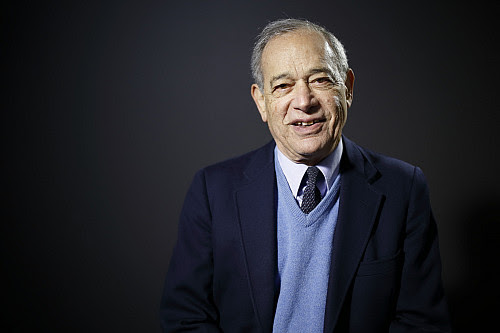
“Widespread hostility to Jews has accelerated in recent years and is an increasingly threatening phenomenon in this country and abroad,” said Alvin Rosenfeld, co-principal investigator on the grant. Rosenfeld is a professor of English and Jewish studies, the Irving M. Glazer Chair of Jewish Studies and the founding director of the Institute for the Study of Contemporary Antisemitism, all in the College of Arts and Sciences at IU Bloomington. “My colleagues and I are dedicated to understanding the various forces that drive such animosity and will aim to formulate the means to contend with it effectively.”
Founded at Indiana University in 2009, the Institute for the Study of Contemporary Antisemitism is one of the world’s leading academic centers devoted to the study of antisemitism. It will lead the project’s scholarly research, organizing five thematic working groups of historians, literary scholars, philosophers, religious studies scholars, and digital humanities researchers who will meet regularly over the three-year period. The groups will examine antisemitism’s historical patterns, its symbolic and narrative forms, its ties to religious and political thought, its relationship to democratic institutions, and its spread through social media and other digital platforms.
In addition, the institute will host two international scholarly conferences on the IU Bloomington campus and will oversee a Social Media and Hate Research Lab that studies how antisemitic content circulates online.
The Wilson Center will lead the project’s public-facing work, convening nine international policy conferences over three years in global capitals and creating a podcast series hosted by Wilson Center fellow and project co-principal investigator Izabella Tabarovsky. The center will also host policy education seminars for members of Congress and international officials.
“Since its inception, ISCA has been a major force for researching and targeting the factors contributing to antisemitism,” IU Bloomington Chancellor David Reingold said. “This funding from the NEH will help build and accelerate that important work on a global stage. It is a testament to the scholarship of Professor Rosenfeld and IU Bloomington that we are in a position to expand and amplify this work with significant investment from the NEH.”
The project will draw on partnerships with antisemitism research centers abroad, including the London Centre for the Study of Contemporary Antisemitism, the Comper Center for the Study of Antisemitism and Racism at the University of Haifa in Israel, the Macdonald-Laurier Institute in Canada, the Center for Holocaust Studies and Human Rights at Gratz College in Philadelphia, and the Jindal School of International Affairs at O.P. Jindal Global University in New Delhi, India.
The project is designed to produce enduring and accessible resources, including a digital archive of conference recordings, transcripts, and research papers that will remain publicly available after the grant period ends. The project also aims to build a lasting network of scholars and public institutions that can be called upon as new questions about antisemitism arise in classrooms, newsrooms and government offices.

