

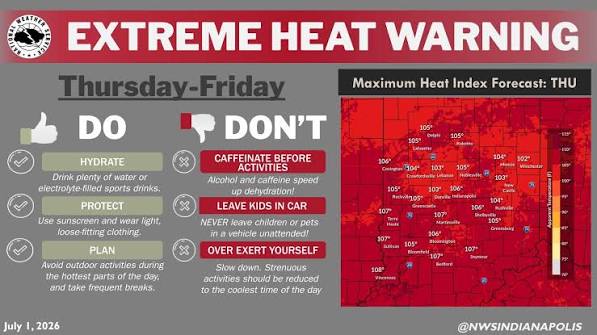
INDIANA – The National Weather Service (NWS) has extended an Extreme Heat Warning as a blistering heat wave continues to settle over the region. The warning is officially scheduled to remain in effect until 8:00 p.m. on Friday.
Weather officials are forecasting dangerously hot and humid conditions, with peak heat index values—a measurement of how hot it actually feels when relative humidity is factored into the air temperature—expected to climb between 105 and 110°F.
Immediate Safety Precautions Urged
With prolonged exposure to high heat index levels greatly increasing the likelihood of sunstroke, heat cramps, and heat exhaustion, authorities are urging the public to take immediate, proactive measures:
- Hydrate Regularly: Drink plenty of fluids, focusing on water and non-alcoholic, decaffeinated beverages. Do not wait until you feel thirsty to start drinking.
- Stay Indoors: Residents are strongly advised to stay in an air-conditioned room as much as possible. If your home lacks functioning air conditioning, seek out public cooling stations, local libraries, or shopping malls.
- Avoid Direct Sun: Stay out of the midday sun. If outdoor activities or labor are necessary, reduce or reschedule strenuous tasks to the early morning or late evening hours when temperatures are cooler.
- Check on Neighbors: Actively check up on relatives, elderly family members, and vulnerable neighbors to ensure they have adequate cooling.
A Deadly Reminder: Look Before You Lock
Public safety and weather officials are underscoring a critical, life-saving reminder: never leave young children or pets in unattended vehicles.
According to the NWS, the internal temperature of a parked car can spike to lethal levels within a matter of minutes, even on mild days or with the windows cracked open. A dark dashboard or car seat can quickly reach temperatures ranging from 180°F to over 200°F, turning vehicles into death traps for children and animals who cannot regulate their body heat as efficiently as adults.
Recognizing the Signs of Heat-Related Illness
The NWS emphasizes the importance of knowing the difference between heat exhaustion and heat stroke, as conditions can escalate rapidly in extreme heat:
| Condition | Common Symptoms | Required Action |
| Heat Exhaustion | Heavy sweating; dizziness; weakness or fatigue; a fast, weak pulse; nausea or vomiting; and cool, pale, clammy skin. | Move the individual to a cool, air-conditioned environment. Loosen clothing, apply cool, wet cloths, and offer slow sips of water. Seek medical help if symptoms worsen. |
| Heat Stroke (Medical Emergency) | Confusion; slurred speech; a body temperature above 103°F; hot, red, dry or damp skin; a rapid, strong pulse; or loss of consciousness. | Call 911 immediately. Move the victim to a cooler area and help lower their temperature with cool cloths or a bath. Do not give them fluids to drink. |
Residents are encouraged to monitor local weather updates closely and prioritize safety until the extreme heat subsides on Friday evening.

